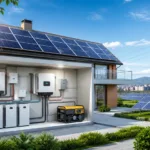
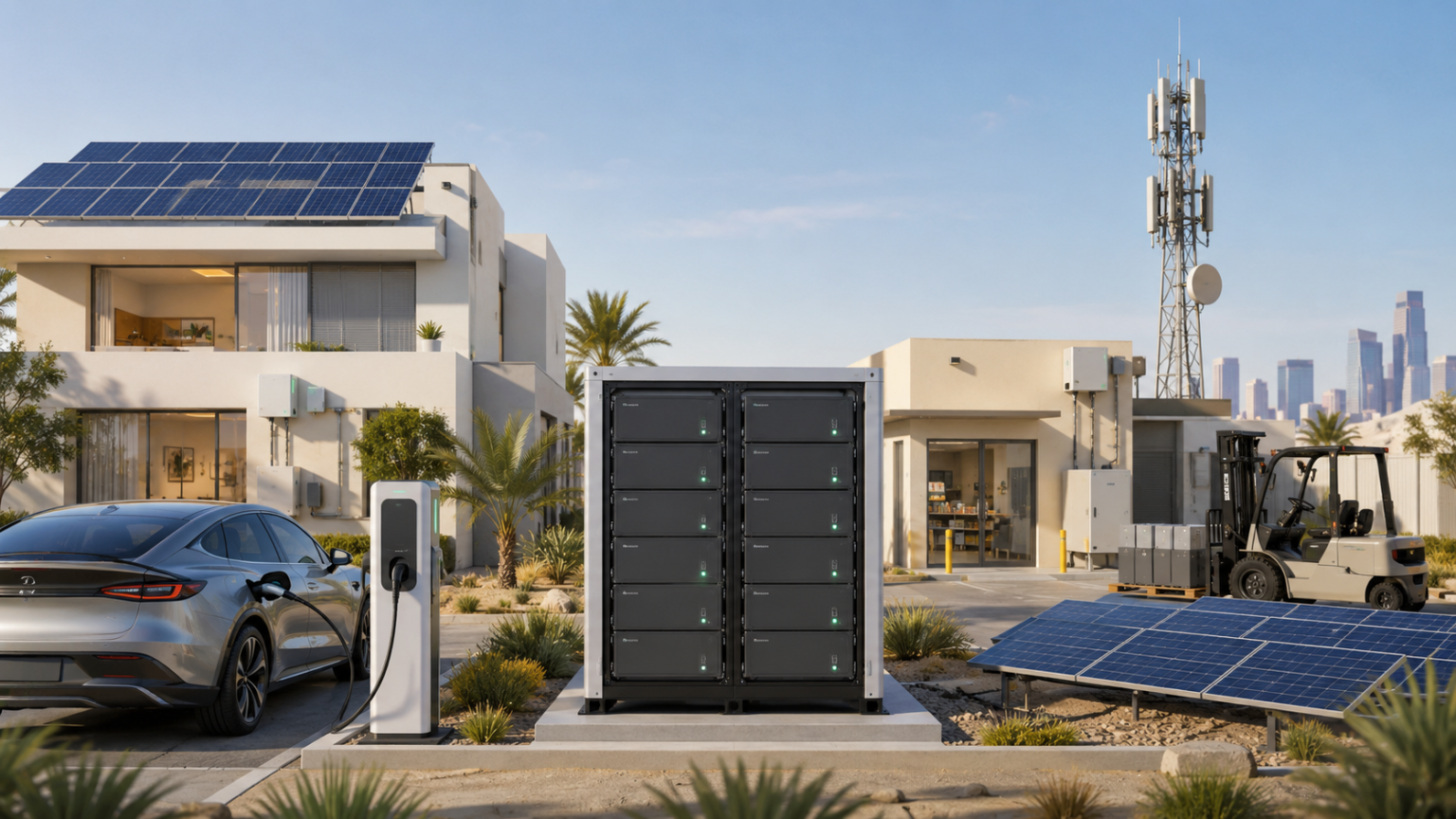
The uses of lithium batteries are expanding with the rapid development of energy storage technologies and the growing reliance on renewable energy, especially solar power. Shahen provides energy and solar solutions, and lithium batteries are an important element in many modern storage systems thanks to their ability to store electricity and make it available when needed. These batteries aren’t limited to solar power; they’re also found in homes, electric vehicles, telecommunications, industrial equipment, and many other applications.

What Are Lithium Batteries?
Lithium batteries are rechargeable batteries that rely on lithium compounds to store and release electrical energy. They have become one of the most widespread battery technologies because they combine high energy density with the ability to be recharged many times, although performance and lifespan vary with the type of cells, the design, and operating conditions.
A battery usually consists of electrical cells, electronic components, and, in many modern products, a battery management system (BMS).
The main components include:
- Battery cells.
- The battery management system.
- Protection circuits.
- Terminals.
- A protective casing.
- Monitoring and communication systems in some models.
Battery design varies with the intended application; it may be made for a small electronic device or for a large energy storage system.
- Components of a solar submersible pump system
- Solar batteries for submersible pumps
- Solar system components
- Types of electrical transformers and inverters
- The best hybrid solar inverter
Why Have Lithium Batteries Become Important?
Several factors have increased reliance on this technology, including the need to store renewable energy and improve the efficiency of electrical systems.
The main advantages of lithium batteries include:
- Good energy density.
- The ability to charge and discharge repeatedly.
- Lower weight than some conventional battery technologies.
- Suitable efficiency for many applications.
- Relatively limited maintenance needs.
- A variety of types to suit multiple applications.
- The ability to integrate advanced management and protection systems.
But choosing a battery should be based on the application and the technical specifications, not on the technology alone.
The Main Uses of Lithium Batteries
The uses of lithium batteries are very diverse, from storing solar energy to powering cars, equipment, and electronic devices.
Below are the main applications that rely on this technology.
Using Lithium Batteries in Solar Power
Storing electricity is one of the most important applications of modern batteries, especially with the growing reliance on solar systems.
Solar panels produce electricity during the day, while users may need power at night or when panel production is low.
This is where the battery comes in, storing part of the energy produced for later use.
The benefits of using batteries with solar power include:
- Storing surplus energy.
- Using electricity after sunset.
- Providing a backup source in suitable systems.
- Improving energy management.
- Reducing reliance on the grid in some applications.
LiFePO4 batteries are among the options used in many energy storage systems, but you must make sure the battery is compatible with the inverter.
For more on:
Components of a solar submersible pump system
Solar batteries for submersible pumps
Solar system components
Types of electrical transformers and inverters
The best hybrid solar inverter
Lithium batteries
Lithium Batteries for Homes
One of the most prominent modern uses of lithium batteries is in homes that rely on solar power.
The battery can store electricity produced during the day and then run some loads at night.
In some systems, it can also be used as a backup power source during power cuts, depending on the inverter design and battery capacity.
Appliances that can be run, depending on the system’s capacity, include:
- Lighting.
- Computers.
- Internet equipment.
- Television.
- Refrigerator.
- Some air conditioners.
- Water pumps.
- Various household appliances.
Having a battery doesn’t mean every appliance in the home can run at the same time; that depends on the inverter and battery capacity and the loads the system was designed for.
Energy Storage for Commercial Projects
Some commercial facilities need to store and manage electricity more flexibly.
Lithium batteries can be used in:
- Shops.
- Offices.
- Warehouses.
- Service facilities.
- Data centers.
- Some factories.
System capacity depends on the size of the loads, the required run time, and the electricity consumption pattern.
In large projects, a detailed technical study covering daily loads, peaks, and emergency requirements should be carried out before sizing the batteries.
Using Batteries in Electric Vehicles
Electric vehicles are one of the best-known modern applications of lithium batteries.
Battery packs store the energy that powers the electric motors.
A vehicle battery’s performance is linked to a number of factors, including:
- Battery capacity.
- Pack weight.
- Motor efficiency.
- Driving style.
- Temperature.
- Charging speed.
- The battery management system.
Electric vehicles need advanced systems to manage the battery and monitor the cells, temperatures, and state of charge.
Electric Bikes and Scooters
Electric cars aren’t the only vehicles that use this technology; batteries are also used in:
- Electric bicycles.
- Electric scooters.
- Electric motorcycles.
- Some light vehicles.
Good energy density helps provide adequate power at relatively low weight.
But you should use a charger compatible with the battery and avoid batteries of unknown origin or that aren’t suited to the vehicle.
Phones and Electronic Devices
Lithium batteries are found in many of the electronic devices we use every day.
These include:
- Smartphones.
- Laptops.
- Tablets.
- Smartwatches.
- Cameras.
- Wireless headphones.
- Portable devices.
Their popularity in these devices comes from the need to store a suitable amount of energy in a relatively small space.
Backup Power Systems (UPS)
Batteries are used in UPS systems that supply power to devices when the main source fails.
Lithium technologies can be used in some modern UPS systems to provide backup power for a range of applications.
The main uses include:
- Computers.
- Networks.
- Servers.
- Telecommunications equipment.
- Security systems.
- Sensitive equipment.
The battery should be chosen according to the UPS system’s capacity and the required run time.
Data Centers
Data centers need a stable power source to avoid servers and digital systems going down.
Batteries are part of the backup power systems used in these facilities.
The advantages of modern storage solutions include suitable energy density and advanced system management, but the system must be designed according to operating, protection, and reliability requirements.
The Telecommunications Sector
Telecommunications sites are an important application for energy storage.
Batteries may be used to supply power when the main source fails, or at sites that rely on solar systems.
They’re used in:
- Telecom towers.
- Network stations.
- Remote sites.
- Backup communication systems.
At remote sites, solar panels and batteries can be combined to reduce reliance on conventional energy sources.
Using Lithium Batteries in Agriculture
Solar power has become an important part of some agricultural applications, especially for running water pumps and irrigation systems.
Batteries can be added to the system when electricity needs to be stored to run some loads at times when there isn’t enough sunlight.
Applications include:
- Irrigation systems.
- Water pumps.
- Farm lighting.
- Monitoring equipment.
- Control systems.
The nature of the loads should be defined before choosing the battery, because pumps and motors may need a higher starting power than their steady running power.
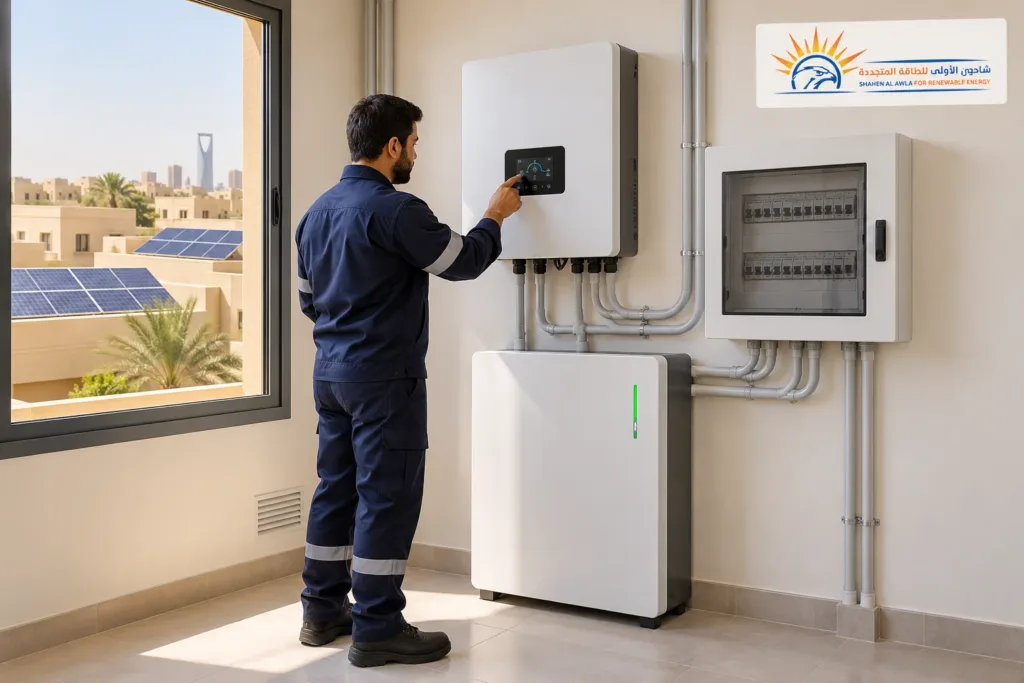
Power Systems at Remote Sites
Some sites don’t have a stable grid supply or can’t easily be reached by the grid.
In this case, a standalone system can be built consisting of:
- Solar panels.
- Batteries.
- An inverter.
- A charge controller where needed.
- Protection systems.
- Suitable cables and connections.
The battery helps provide power during periods of lower panel production.
These solutions are used at some:
- Farms.
- Rest houses.
- Desert sites.
- Monitoring stations.
- Remote industrial sites.
- Telecommunications systems.
Using Batteries in Lighting Systems
Batteries can be used to store energy and run lighting systems at sites that rely on solar power.
The best-known applications include:
- Solar street lights.
- Garden lighting.
- Pathways.
- Remote areas.
- Some outdoor facilities.
In solar lighting systems, the battery should match the lamps’ power and the required number of operating hours.
Using Batteries in Surveillance and Security Systems
Surveillance cameras and some security systems need a continuous power source.
At sites that are hard to connect to the grid, a solar system with a battery can be used to provide power.
Applications include:
- Surveillance cameras.
- Alarm systems.
- Access control systems.
- Sensors.
- Remote monitoring systems.
Managing energy consumption is a key factor when designing this type of system.
Using Batteries in Industrial Equipment
Lithium batteries can be used in some industrial equipment that needs a mobile power source or electricity storage.
Possible applications include:
- Portable electrical equipment.
- Robots.
- Control systems.
- Material handling equipment.
- Some industrial machines.
The type of battery required varies with the power, the nature of operation, and the number of working hours.
Lithium Batteries in Large Storage Systems
Modern energy storage technologies are used in some large projects to store electricity and manage it according to the needs of the grid or the facility.
These systems may be used for:
- Renewable energy projects.
- Storing solar energy.
- Supporting grids.
- Reducing loads at peak times.
- Providing backup power.
Large systems need integrated engineering design and advanced protection and monitoring systems.
The Most Common Types of Lithium Batteries
Battery characteristics differ according to their chemical composition.
LiFePO4 Batteries
Lithium iron phosphate batteries are used in many energy storage applications.
Their characteristics include:
- Good thermal stability.
- Good service life in suitable applications.
- Good suitability for repeated storage cycles.
- Wide use in solar systems.
NMC Batteries
Nickel manganese cobalt batteries are used in various applications, especially when energy density is an important factor.
Choosing them over LiFePO4 depends on the application, performance requirements, and cost.
What Factors Determine the Choice of Battery?
Knowing the uses of lithium batteries isn’t enough to choose the right product; a set of specifications must be studied.
Capacity
Often measured in kilowatt-hours in energy storage systems, it determines how much energy can be stored.
Power
Determines the rate at which the battery can supply energy to the loads.
Number of Charge Cycles
The higher the number of cycles stated under suitable test conditions, the longer the battery can potentially be used, but you should read the test conditions.
Depth of Discharge
Shows how much of the capacity can be used within the recommended limits.
BMS
Helps monitor the cells, provide protection, and manage charging and discharging.
Temperature
The battery must be installed and operated within the permitted temperature range.
Compatibility
Make sure the battery is compatible with the inverter, charger, and other system components.
Advantages of Using Lithium Batteries
This technology has a set of characteristics that have helped it spread.
The most important include:
- Relatively high energy density.
- Good efficiency in many applications.
- Suitable service life.
- The ability to recharge repeatedly.
- Lower weight than some alternatives.
- Electronic monitoring capabilities.
- Lower maintenance needs in some systems.
The Main Disadvantages of Lithium Batteries
Despite their advantages, some challenges should be noted.
These include:
- A higher purchase cost for some products.
- The need for precise compatibility with charging systems and the inverter.
- Performance affected by temperature.
- Variable quality among available products.
- The need for suitable protection systems.
That’s why a product should be chosen based on clear specifications and a reliable source.
How to Extend Battery Life
To get the most out of a battery, follow the manufacturer’s instructions.
The most important tips include:
- Using a compatible charger.
- Staying within voltage and current limits.
- Avoiding high temperatures.
- Not exceeding the discharge rating.
- Monitoring the battery’s condition.
- Keeping connections in good condition.
- Not ignoring error messages.
- Carrying out regular inspections.
- Using a suitable BMS.
Shahen’s Role in Energy Solutions
When batteries are used in a solar system, the battery shouldn’t be chosen separately from the other components.
Shahen provides energy and solar solutions, and choosing a battery can start by studying:
- The required loads.
- Daily consumption.
- Panel capacity.
- Inverter capacity.
- Storage duration.
- The nature of the site.
- The possibility of future expansion.
Based on this data, the right capacity, power, and type of battery for the project can be determined.
Tips Before Buying a Lithium Battery
Before buying a battery, it’s best to review a number of points:
- Determine daily consumption.
- Identify the essential loads.
- Determine the required run time.
- Confirm the battery voltage.
- Review the charge and discharge ratings.
- Confirm BMS compatibility.
- Review the number of charge cycles.
- Confirm the thermal operating conditions.
- Review the warranty.
- Choose a reliable supplier.
- Make sure technical support is available.
The uses of lithium batteries have become very wide-ranging; they aren’t limited to storing solar energy, but extend to homes, electric cars, bikes, electronic devices, UPS systems, data centers, telecommunications, agriculture, remote sites, and industrial equipment.
The right battery varies from one application to another; a battery used to run a home on solar power needs different specifications from one used in an electric car or an electronic device.
So the system’s needs should be defined first, then the capacity, power, battery chemistry, battery management system, and compatibility with the inverter or charger chosen.
LiFePO4 batteries are an important option for energy storage applications, but the final decision should be based on technical specifications, operating conditions, budget, and project requirements.
Correct installation, suitable protection, and following the manufacturer’s instructions are also essential for maintaining performance and safety.
With a detailed technical study and compatible components, lithium technology can be used to build more flexible and efficient storage systems, especially with the continuing expansion of solar and other renewable energy sources.