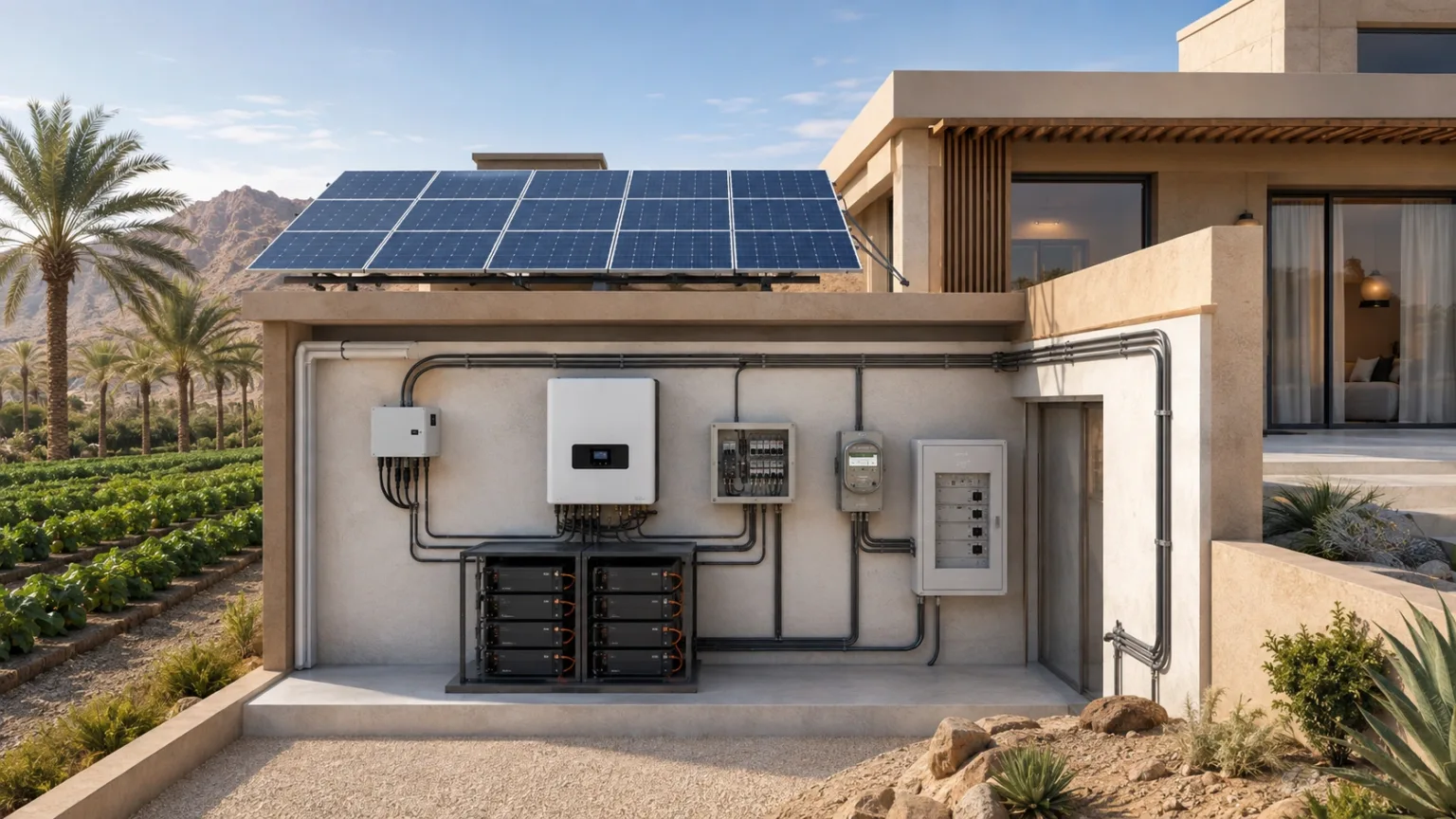
Solar system components have become one of the most important ways to generate electricity and make use of renewable energy in homes, farms, companies, factories, and all kinds of projects. Shahen Al-Awla provides solar-powered solutions tailored to each project’s needs by studying the loads, selecting the right components, and designing the system to achieve efficient operation and reduce reliance on conventional energy sources.
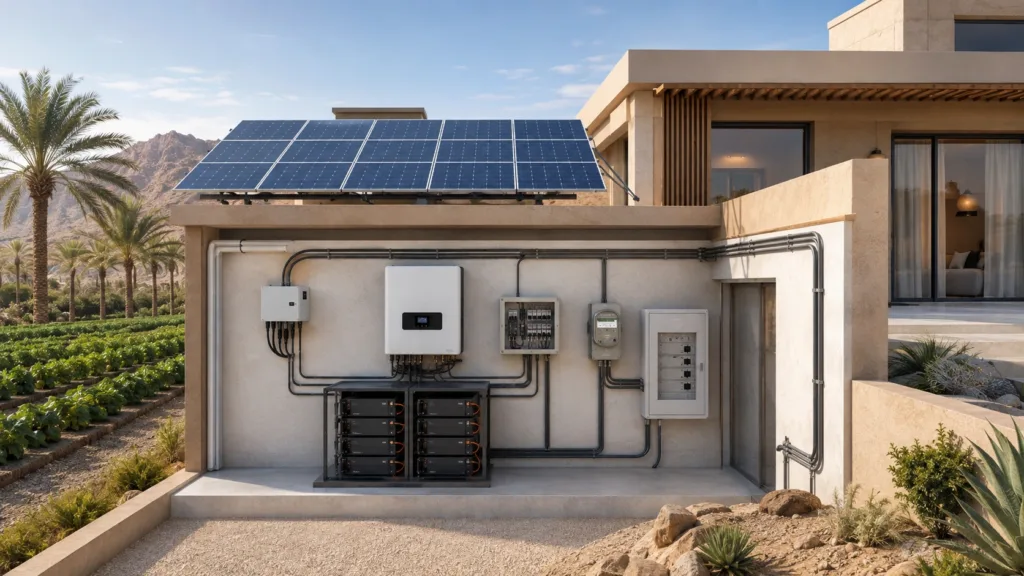
What Are Solar Energy Systems?
Solar energy systems are designed to convert sunlight into electrical energy that can run different appliances and equipment. How a system is designed depends on its use: it may serve a home, a commercial building, a factory, a farm, or a water well.
A system’s efficiency depends on how well all its parts work together, so choosing high-wattage panels alone is not enough. The capacity of the inverter, batteries, cables, protection devices, and other elements must be determined based on the project’s needs.
The main factors that shape a system’s design include:
- The size of the electrical loads.
- Daily operating hours.
- Electricity consumption.
- The space available for panels.
- Hours of sunshine.
- The nature of the loads.
- Whether batteries are needed.
- The type of system used.
- The available budget.
- Future operating requirements.
Read more:
Solar panel prices in Saudi Arabia
Solar batteries in Saudi Arabia
Hybrid solar energy projects
Home solar installation in Saudi Arabia
The cost of solar energy for farms
What Are the Main Solar System Components?
The basic solar system components are a set of devices and equipment that work together to convert solar energy into usable electricity.
The main components include:
- Solar panels.
- The inverter.
- Batteries, in systems that need energy storage.
- A charge controller, when the system design calls for one.
- Cables and connections.
- Panel mounting structures.
- Breakers and protection devices.
- Earthing systems.
- Metering and monitoring devices.
- Electrical distribution boards.
These components can vary depending on the type of system and its application.
Solar Panels
Solar panels are the most important part of the electricity generation process, converting sunlight into electrical energy.
Panels are made of solar cells that produce electricity when exposed to solar radiation. Several panels are connected together to reach the voltage and capacity the system requires.
Types of Solar Panels
There are several solar panel technologies; the best known are:
Monocrystalline panels
They usually offer high efficiency and make good use of space, so they are used in many applications where the area available for panels is limited.
Polycrystalline panels
They were a common choice in solar applications and may suit some projects depending on the budget and required specifications.
Thin-film panels
They use manufacturing technologies that differ from conventional panels and can be used in certain applications depending on project conditions.
The panel type should not be chosen by name alone; compare efficiency, power, dimensions, warranty, and operating conditions.
How Do You Choose Solar Panels?
When choosing panels, pay attention to several specifications, the most important being:
- The panel’s rated power.
- Conversion efficiency.
- Voltage.
- Current.
- Dimensions.
- Temperature coefficient.
- Build quality.
- Warranty.
- Expected operating conditions.
The total energy required should also be calculated before deciding the number of panels.
The Solar Inverter
The inverter is one of the most important solar system components, because it converts the electrical energy produced by the panels or batteries into a form suitable for running electrical loads.
Solar panels usually produce direct current, while many household and commercial appliances need alternating current. This is where the inverter comes in, converting and managing power according to the system design.
Main functions of the inverter
An inverter’s functions can include:
- Converting direct current into alternating current.
- Managing the power coming from the panels.
- Regulating the power going to the loads.
- Managing battery charging in some systems.
- Providing some protection functions.
- Displaying system operating data.
- Controlling some applications, depending on the inverter type.
Types of Solar Inverters
The type of inverter depends on the system design.
Grid-tied inverter
Used in systems that operate in parallel with the electricity grid, relying on the grid as a supporting source according to the design and applicable regulations.
Off-grid inverter
Used in standalone systems that rely on solar power and batteries to supply the loads.
Hybrid inverter
Combines more than one energy source and can manage solar power, batteries, and the grid depending on the system’s characteristics.
The inverter should be chosen based on total loads, panel capacity, battery type, and the nature of the project.
Solar Batteries
Batteries are among the most important elements in systems that need to store energy, but they are not necessary in every solar system.
Their main job is to store the electricity produced while the sun is shining and use it when needed, such as at night or when panel output is low.
Batteries differ in technology, capacity, lifespan, and number of charge and discharge cycles.
The best-known types include:
- Lead-acid batteries.
- AGM batteries.
- Gel batteries.
- Lithium batteries.
- Lithium iron phosphate (LiFePO4) batteries.
How Do You Choose a Solar Battery?
Choosing a battery depends on several factors, the most important being:
- Daily energy consumption.
- The number of operating hours required.
- Load power.
- System voltage.
- Required capacity.
- Depth of discharge.
- Number of charge and discharge cycles.
- The temperature at the installation site.
- Compatibility with the inverter.
It’s best not to choose a battery on its nominal capacity alone, because usable capacity and expected lifespan are important factors when comparing options.
The Charge Controller
In some systems, the charge controller is an essential part of the solar system components, especially in battery-based systems where the controller is separate from the inverter.
Its main job is to regulate the power flowing from the panels to the batteries and help prevent unsuitable charging according to the system’s specifications.
The best-known charge controller technologies are:
PWM
One of the traditional types, it may suit some small, simple systems.
MPPT
It makes better use of the energy produced by the panels under different operating conditions and is widely used in many applications.
The charge controller is chosen based on system voltage, current, panel capacity, and battery type.
Cables and Connections
Cables carry power between the panels, inverter, batteries, and loads, so choosing them correctly affects the system’s efficiency and safety.
The cable cross-section should be determined according to current, voltage, distance, and installation conditions.
Using unsuitable cables can increase electrical losses, raise temperatures, or reduce system efficiency.
Pay attention to the quality of cables and connections, and use products made for solar applications where required.
Solar Panel Mounting Structures
Solar system components are not limited to electrical devices; they also include the structures used to mount the panels.
These structures hold the panels securely and keep them at the right angle and orientation.
The structure should be chosen based on:
- The type of roof or surface.
- The weight of the panels.
- The number of panels.
- Wind conditions.
- The nature of the site.
- The material used.
- Corrosion resistance.
- The mounting method.
Make sure the structure can withstand the environmental conditions expected at the project site.
Breakers and Protection Devices
Solar systems need suitable protection to reduce the risk of electrical faults and protect the equipment.
Protection devices can include:
- DC breakers.
- AC breakers.
- Surge protection devices.
- Suitable fuses.
- Overcurrent protection.
- Earthing systems.
- Combiner and protection boxes.
Protection design varies from one system to another depending on voltage, current, number of panels, inverter type, and the nature of the loads.
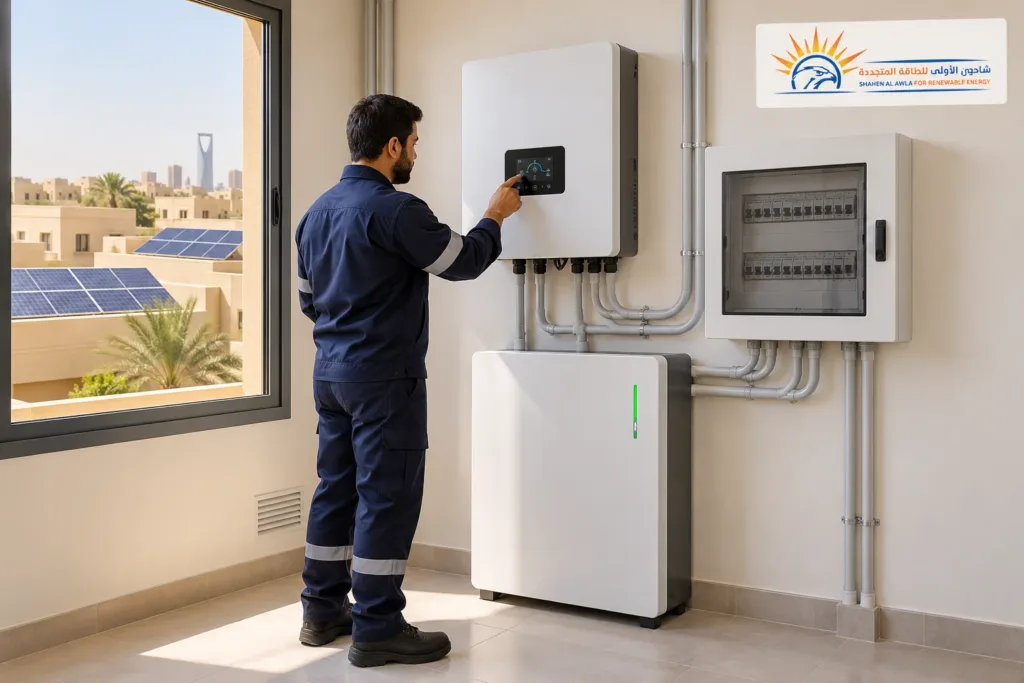
Earthing in Solar Energy Systems
Earthing is an important safety element among solar system components, because it provides a suitable path for unwanted currents according to the system design.
The earthing system must be installed according to technical standards and local safety requirements, with metal components that need earthing connected correctly.
Earthing should not be treated as a secondary item that can be skipped, especially in large systems or sites exposed to varied weather conditions.
Monitoring and Control Devices
Monitoring devices help you see how the system is performing and detect problems early.
Some systems display data such as:
- Panel production.
- Load consumption.
- Battery status.
- State of charge.
- Inverter performance.
- Daily energy.
- Faults and alerts.
This data helps improve energy management and shows whether the system is performing as expected.
Electrical Distribution Boards
Distribution boards are used to organize and distribute electrical power to the loads, and they can contain a range of protection and isolation devices.
The board should be designed according to the actual loads and system requirements, with breakers and internal components specified correctly.
Types of Solar Energy Systems
Solar system components vary according to the type of system used.
Grid-tied solar systems
They operate in parallel with the electricity grid using panels and a grid-tied inverter, and usually don’t need batteries to supply power at night if the system is designed on this model.
These systems suit some homes and facilities that have a stable grid supply.
Standalone (off-grid) solar systems
They operate independently of the grid and usually rely on panels, batteries, and a suitable inverter to power the loads.
They are used in some remote areas and sites without a suitable grid connection.
Hybrid systems
They combine solar power, batteries, and another electricity source such as the grid, allowing power to be managed between sources according to the system design.
These systems offer more flexibility in some applications, especially where a backup source is needed.
How Do You Size a Solar System?
Sizing the system is one of the most important steps in a project, and it can’t be based on the number of appliances alone.
First, list the loads, then determine each appliance’s power and its daily operating hours.
Next, calculate daily consumption and add the factors that affect losses and efficiency.
The calculations usually include:
- Identifying the electrical appliances.
- Recording the power of each appliance.
- Determining daily operating hours.
- Calculating total consumption.
- Determining the required solar capacity.
- Determining the number of panels.
- Choosing the inverter.
- Determining battery capacity, if needed.
- Specifying cables and protection.
- Reviewing the whole design before installation.
Factors That Affect System Efficiency
The efficiency of solar system components is affected by several factors, not by the panels alone.
The most important include:
- Solar irradiance.
- Temperature.
- Shading.
- Dust build-up.
- Panel quality.
- Inverter efficiency.
- Battery condition.
- Cable quality.
- How the panels are installed.
- The nature of the loads.
That’s why the system should be designed for the site’s conditions rather than with generic specifications.
Tips When Buying Solar Components
Some mistakes can increase costs or reduce performance. The most common are:
Choosing components on price alone
A low price doesn’t necessarily mean a product is suitable, and the most expensive product isn’t necessarily the best for every project.
Not calculating the loads
Buying a system before knowing your actual consumption can leave you short of capacity or with an unnecessarily large system.
Ignoring compatibility between components
Make sure the panels, inverter, and batteries are compatible in voltage, current, and capacity.
Neglecting protection
A lack of suitable protection can increase the chance of damage to equipment.
Installing in an unsuitable location
Installing panels in an area with constant shading or at an unsuitable angle can reduce production.
Maintaining Solar Energy Systems
Regular maintenance helps keep solar system components performing well and reduces the likelihood of faults.
The most important maintenance tasks include:
- Cleaning dust off the panels.
- Inspecting cables and connections.
- Monitoring inverter performance.
- Checking batteries, if present.
- Tracking system production.
- Inspecting the mounting structures.
- Making sure no new shading has appeared.
- Reviewing protection devices.
- Watching for any alerts or errors.
Electrical faults should be handled by a specialist technician, especially in high-voltage systems.
Cost of Solar System Components
System costs vary widely from one project to another, and there is no single price for all applications.
Cost is affected by:
- Total panel capacity.
- Type of panels.
- Inverter capacity.
- Number and type of batteries.
- Mounting structures.
- Cables.
- Protection devices.
- Site area.
- Installation costs.
- The nature of the loads.
- Future project needs.
It’s best to get a technical study before setting the final budget.
How Do You Choose a Solar Installation Company?
Choosing who will install the system is just as important as choosing the components themselves.
It’s best to confirm:
- Experience with your type of project.
- The ability to carry out a load study.
- Use of components with clear specifications.
- A suitable warranty.
- After-sales service.
- Attention to electrical protection.
- A clear system design.
- Clear specifications for every component.
- Maintenance and technical support when needed.
Shahen Al-Awla is one of the companies you can turn to for studying solar solutions and choosing the right design for your project’s needs.
Is Solar Energy Suitable for a Home or a Commercial Project?
Solar energy can be used in homes, offices, factories, farms, and commercial facilities, but the system size and components vary with consumption.
A home that uses a limited amount of electricity needs a completely different system from a factory running a large number of electrical loads.
The system should therefore be designed around actual consumption, not just the size of the building.
Tips Before Buying Solar System Components
Before buying solar system components, it’s best to follow some practical steps:
- Calculate your daily electricity consumption.
- Identify your essential loads.
- Decide whether you need batteries.
- Check the space available for panels.
- Make sure there is no significant shading.
- Choose the inverter according to the loads.
- Check that all components are compatible.
- Don’t neglect protection devices.
- Compare warranties and expected lifespan.
- Ask for a technical study before installation.
Solar energy systems are made up of an integrated set of elements that work together to produce, manage, and distribute electricity, including solar panels, the inverter, batteries when needed, the charge controller, cables, mounting structures, protection and earthing, and monitoring devices.
A project’s success depends on choosing solar system components according to actual usage needs, ensuring all parts are compatible, and carrying out the technical calculations before installation.
Regular maintenance, a suitable location for the panels, and monitoring system performance also help keep operation efficient for longer. Relying on a specialist study from an experienced company such as Shahen Al-Awla can help you build a system that meets your current needs and can grow in the future.