
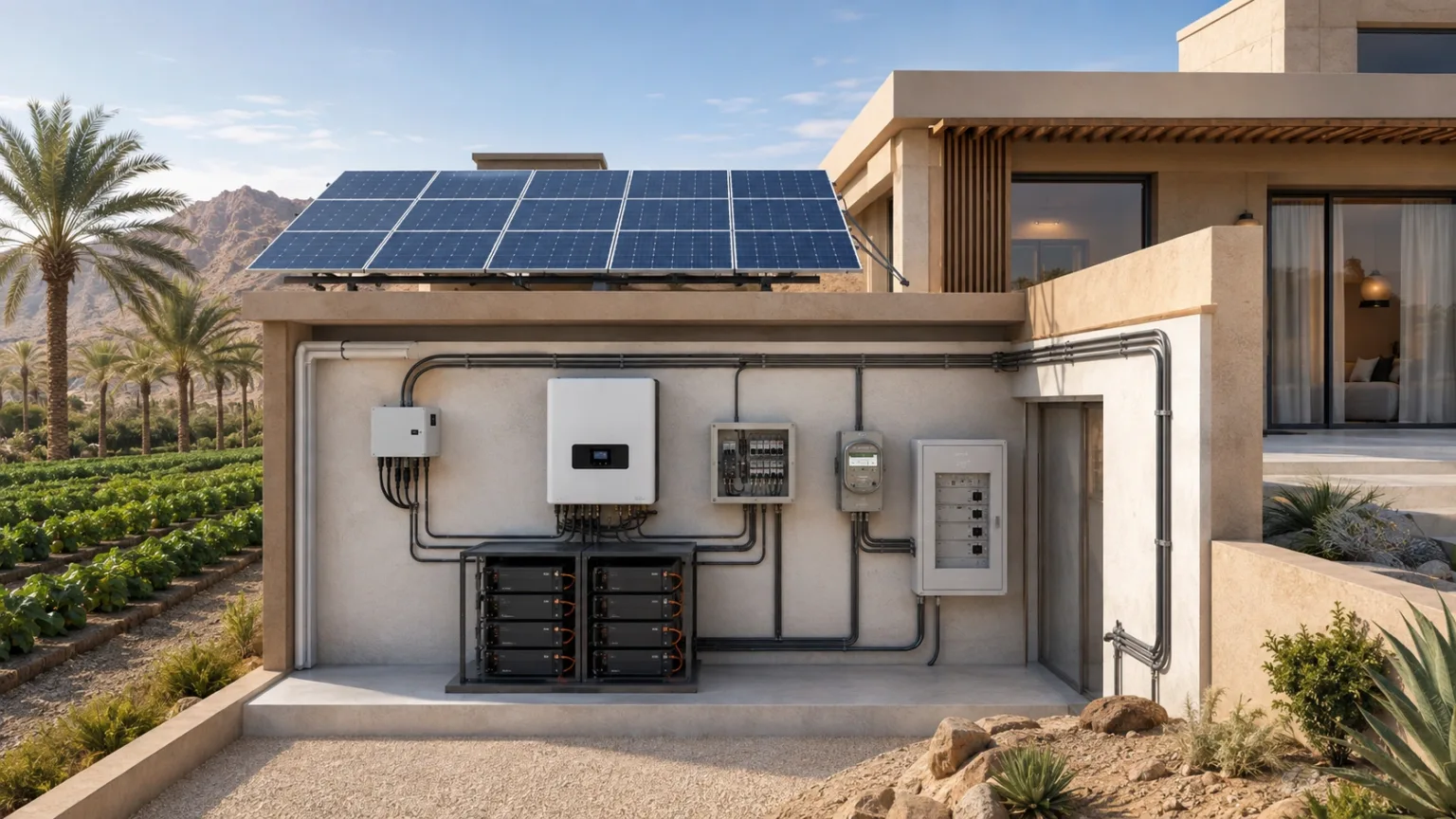
There are many types of electrical transformers used in homes, commercial buildings, factories, and solar energy systems, and each type differs in how it works, its capacity, its use, and its voltage. Shahen Al-Awla provides specialized solutions in power and solar energy systems, selecting the right transformers for the nature of the loads and the requirements of each project to achieve efficient operation and a more stable electrical system.
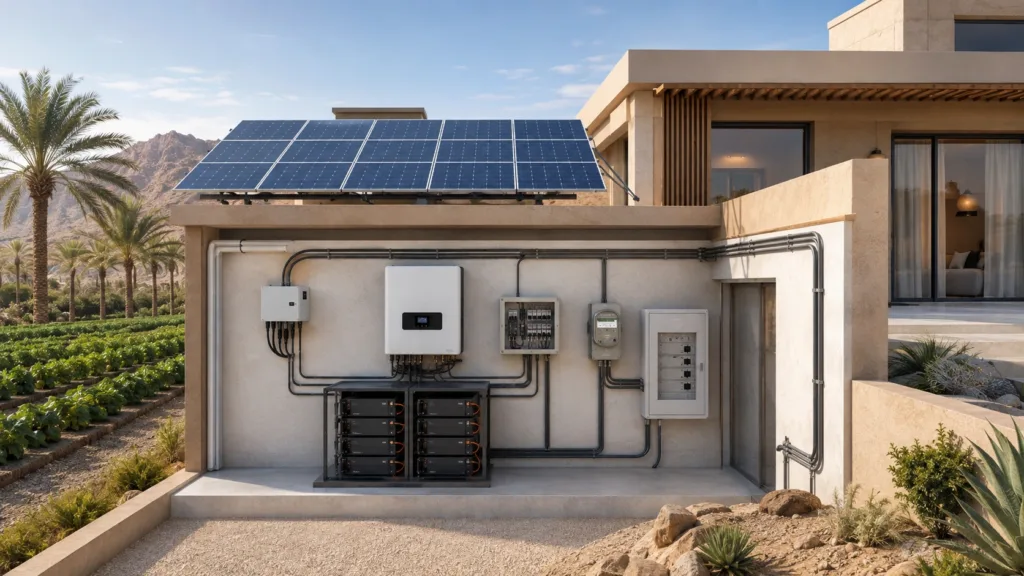
What Is an Electrical Transformer?
An electrical transformer is a device that transfers electrical energy between two or more circuits through electromagnetic induction, and it can step the voltage up or down depending on its design.
A transformer is basically made up of a primary winding, a secondary winding, and a magnetic core; energy passes from the first circuit to the second through the magnetic field.
Transformers are used in many applications, such as:
- Electricity transmission and distribution networks.
- Factories and commercial facilities.
- Buildings and residential complexes.
- Solar energy systems.
- Power stations.
- Industrial equipment and devices.
- Control and backup power systems.
The design of a transformer varies with the required voltage, capacity, type of load, and operating conditions.
Read more:
Best types of solar panels in Saudi Arabia
Components of a solar submersible pump system
Solar batteries for submersible pumps
Solar system components
What Are the Main Types of Electrical Transformers?
They include step-up and step-down transformers, power, distribution, and isolation transformers, single-phase and three-phase transformers, dry-type and oil-filled transformers, as well as current and voltage transformers. The right type is chosen based on capacity, input and output voltage, the nature of the load, the operating environment, and protection and cooling requirements.
Why Are There Different Types of Electrical Transformers?
The many types of electrical transformers exist because different applications need to convert voltage, isolate circuits, or manage power.
A transformer in a large power station is different from one inside a small electronic device, and transformers used in distribution networks differ from those used in solar energy systems.
A transformer is chosen based on several factors, the most important being:
- Input voltage.
- Output voltage.
- Electrical capacity.
- Type of current.
- Nature of the load.
- Number of phases.
- Cooling method.
- Installation conditions.
- Required level of protection.
- Type of use.
The Most Important Types of Electrical Transformers
Types of electrical transformers can be classified in several ways: by function, number of phases, cooling method, or field of use.
The best-known types include:
- Step-up transformers.
- Step-down transformers.
- Isolation transformers.
- Power transformers.
- Distribution transformers.
- Single-phase transformers.
- Three-phase transformers.
- Dry-type transformers.
- Oil-filled transformers.
- Standard and hybrid inverters used in solar energy systems.
Step-Up Transformers
A step-up transformer increases the output voltage compared with the input voltage, taking into account the relationship between voltage, current, and power.
These transformers are used mainly in power transmission networks, where raising the voltage makes it possible to transmit power over long distances with lower current, reducing some transmission losses.
Their main uses include:
- Power generation plants.
- Power transmission networks.
- Renewable energy plants.
- Some industrial applications.
The transformer is chosen according to the voltage levels and capacity the project requires.
Step-Down Transformers
A step-down transformer reduces voltage from a higher level to a lower one that suits appliances or distribution networks.
These transformers are widely used in electricity distribution networks, factories, and buildings.
Examples of their uses:
- Reducing the voltage of distribution networks.
- Supplying electrical equipment.
- Running some control circuits.
- Providing a suitable voltage for appliances.
A transformer should not be chosen on voltage alone; capacity and the nature of the load must also be considered.
Power Transformers
Power transformers are used in high-capacity electrical systems, especially in generation and transmission stations.
They have high ratings and designs suited to continuous operation.
They are selected according to several criteria, including:
- Rated capacity.
- Input and output voltage.
- Number of phases.
- Cooling method.
- Insulation level.
- Site conditions.
- Protection requirements.
Regular maintenance and monitoring of temperature and load are important to keep power transformers performing well.
Distribution Transformers
Distribution transformers are used at the stage where electrical energy reaches consumers and facilities.
They usually step the voltage down to a level suitable for local use, depending on the distribution system.
They are used mainly in:
- Residential areas.
- Commercial buildings.
- Factories.
- Service facilities.
- Agricultural projects.
Distribution transformers come in many designs and ratings to suit different loads.
Single-Phase Transformers
Single-phase transformers are used in applications that run on a single-phase electrical system and are found in many residential, commercial, and small industrial applications.
Their uses include:
- Some household circuits.
- Control systems.
- Small equipment.
- Some electrical appliances.
- Applications that don’t need a three-phase system.
The transformer’s capacity is determined by the loads it will supply.
Three-Phase Transformers
Three-phase transformers are a common solution in large industrial and commercial applications because they suit loads that run on a three-phase system.
They can handle large capacities and supply industrial loads effectively.
They are used in:
- Factories.
- Production lines.
- Large buildings.
- Power stations.
- Industrial equipment.
- Large pumping systems.
A load study should be carried out before choosing a three-phase transformer to make sure it matches the project’s requirements.
Dry-Type Transformers
A dry-type transformer does not use oil as its main insulating or cooling medium, and it is usually used where some of the risks associated with oil need to be reduced.
Dry-type transformers are found in many buildings and facilities, especially where there are specific requirements related to the installation location and safety.
Their advantages include:
- No oil is used.
- They can be installed inside some buildings, depending on the design.
- Their maintenance needs differ from oil-filled transformers.
- They suit some commercial and industrial applications.
A dry-type transformer needs adequate ventilation according to the manufacturer’s instructions.
Oil-Filled Transformers
Oil-filled transformers use oil for insulation and cooling and are widely used in distribution networks and applications of various capacities.
The oil helps transfer heat and insulate the internal parts.
These transformers need regular checks covering:
- Oil level.
- Oil condition.
- Temperatures.
- Leaks.
- Connections.
- Protection systems.
The specifications of an oil-filled transformer vary with its capacity and use.
Isolation Transformers
Isolation transformers provide electrical isolation between two circuits, keeping the same voltage or changing it depending on the design.
They are useful in applications that require electrical separation between the power source and the load.
Their uses include:
- Industrial equipment.
- Control systems.
- Some medical applications.
- Electronic systems.
- Applications that require electrical isolation.
An isolation transformer should be chosen according to the voltage, capacity, and required insulation level.
Current Transformers
A current transformer (CT) is usually used in metering and protection systems, where it reduces a large current to a value that meters and protection devices can handle.
It is used in:
- Distribution boards.
- Protection systems.
- Metering devices.
- Power stations.
- Industrial facilities.
The right ratio should be chosen based on the primary current and the requirements of the meter or protection device.
Voltage Transformers
Voltage transformers are used in metering and protection systems to reduce high voltage to a level that measuring devices can handle.
They help provide safer measurements in high-voltage systems.
The transformer’s specifications must match the system voltage and the metering and protection devices being used.
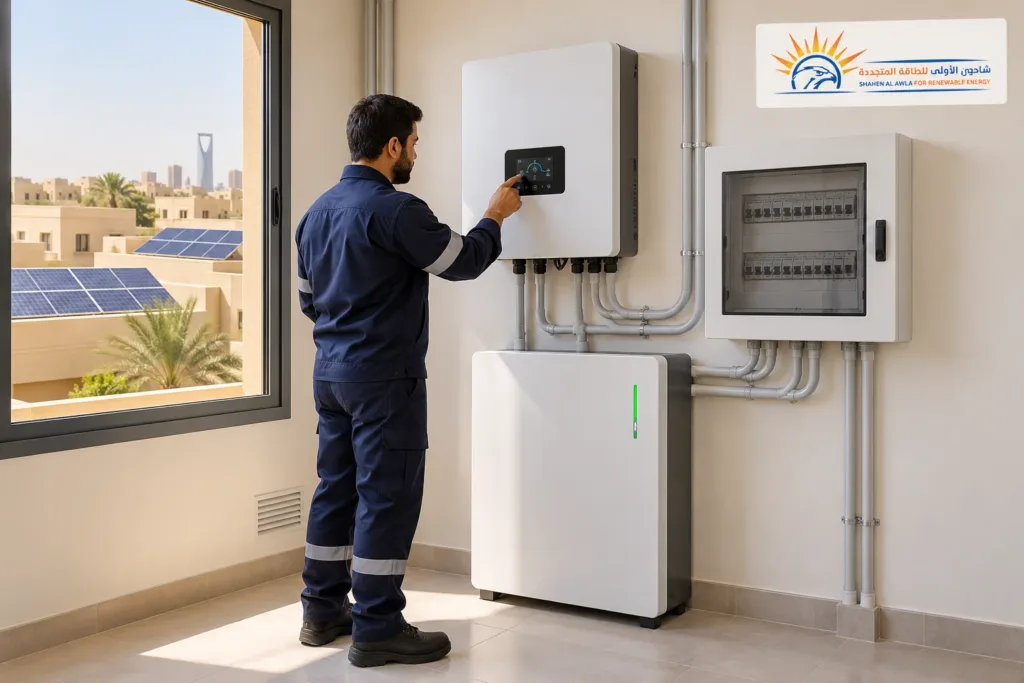
Transformers and Inverters Used in Solar Energy Systems
Transformers and inverters have become an essential part of many solar energy systems, where they are used to manage power and convert it into a form suitable for the loads or the grid.
The types of electrical transformers associated with solar energy include standard inverters and some hybrid systems that combine panels, batteries, and the grid.
The choice depends on the system design and whether it is grid-tied, off-grid, or hybrid.
The Standard Solar Inverter
A solar inverter converts the direct current produced by solar panels into alternating current suitable for running loads.
The system can be connected to the grid or independent of it, depending on the type of inverter and the project design.
The most important factors to consider include:
- Inverter capacity.
- Panel voltage.
- Operating range.
- Type of loads.
- Conversion efficiency.
- Protection features.
- System type.
The Hybrid Inverter
A hybrid inverter can manage more than one energy source depending on the system design, such as solar panels, batteries, and the grid.
It can help improve energy management, especially in systems that need to store electricity or rely on more than one source.
Advantages of hybrid systems include:
- Managing solar power.
- Charging batteries.
- Using stored energy.
- Integration with the grid.
- Greater operating flexibility.
A hybrid inverter should be chosen according to the load capacity, battery capacity, and panel capacity.
The Difference Between a Standard and a Hybrid Inverter
The difference between standard and hybrid inverters is one of the most important things to understand when designing a solar energy system.
A standard inverter may be designed to manage solar power and convert it to run loads or feed the grid, while a hybrid inverter in suitable systems can manage multiple sources such as panels, batteries, and the grid.
The choice depends on the intended use.
A standard inverter suits
- Simple systems.
- Grid-tied applications.
- Projects that don’t need electricity storage.
- Applications with a limited design.
A hybrid inverter suits
- Systems that rely on batteries.
- Projects that need more flexibility.
- Applications that combine solar and the grid.
- Applications that need to manage several energy sources.
How Do You Choose the Right Transformer?
Choosing among the types of electrical transformers doesn’t depend on the transformer type alone; the requirements of the whole project must be studied.
The main steps are:
Determine the voltage
You need to know the input voltage and the required output voltage.
Determine the capacity
Calculate the total loads the transformer will supply, taking into account loads that need a high starting current.
Determine the number of phases
Find out whether the loads are single-phase or three-phase.
Determine the nature of the load
Transformer requirements differ depending on whether the load is resistive, inductive, electronic, or an electric motor.
Determine the operating conditions
Consider temperature, ventilation, humidity, dust, and where the transformer will be installed.
Choose the cooling system
The choice of cooling depends on the transformer’s capacity, how it is used, and where it is installed.
What Is the Difference Between a Transformer and an Inverter?
Transformers and inverters are sometimes confused, even though each device has a different function.
A conventional transformer changes the voltage level of alternating current using electromagnetic induction.
An inverter is usually used to convert direct current into alternating current, and depending on its type it may include advanced functions for managing power, batteries, and the grid.
In solar energy systems, the inverter is an essential component for converting the electricity produced by the panels into power suitable for the loads.
Transformer Efficiency
Efficiency is one of the most important factors when choosing between types of electrical transformers, because it affects how much energy is lost during operation.
A transformer’s efficiency is affected by several factors, including:
- Load level.
- Design quality.
- Quality of materials.
- Temperature.
- Maintenance.
- Operating conditions.
- Age of the transformer.
Choosing a very large transformer does not always mean better efficiency; the capacity should suit the nature of the load.
Transformer Maintenance
Regular maintenance helps detect problems early and keep operation efficient.
Maintenance tasks include:
- Checking temperatures.
- Inspecting connections.
- Making sure there are no unusual sounds.
- Checking protection systems.
- Monitoring the load.
- Testing insulation.
- Checking the oil in oil-filled transformers.
- Cleaning dry-type transformers as operating conditions require.
- Reviewing ventilation.
Inspection and maintenance should be carried out by qualified technicians, especially with high-voltage and high-capacity transformers.
Common Transformer Faults
Problems can arise from overloading, poor ventilation, high temperatures, weak insulation, or connection issues.
Signs that call for an inspection include:
- High temperature.
- Unusual sounds.
- A burning smell.
- Reduced system performance.
- Protection devices tripping repeatedly.
- Oil leaks in oil-filled transformers.
- Damaged connections.
These signs should not be ignored, because continuing to operate with a fault can cause greater damage.
Cost of Electrical Transformers
The cost of a transformer depends on several factors, so there is no fixed price for all types of electrical transformers.
The main factors affecting price include:
- Capacity.
- Voltage.
- Number of phases.
- Transformer type.
- Cooling method.
- Type of insulation.
- Manufacturer.
- Protection requirements.
- Installation location.
- Transport and installation costs.
It’s best to get clear technical specifications before comparing prices, because comparing on price alone can lead to a transformer that doesn’t suit the project.
Mistakes to Avoid When Buying a Transformer
Common mistakes to avoid include:
- Choosing a transformer based on price alone.
- Not calculating the loads accurately.
- Ignoring the starting current of motors.
- Choosing an unsuitable capacity.
- Not confirming the voltage.
- Ignoring the number of phases.
- Neglecting ventilation.
- Overlooking protection devices.
- Installing the transformer in an unsuitable environment.
- Not providing regular maintenance.
Carrying out a technical study before buying is one of the best ways to avoid these mistakes.
Shahen Al-Awla’s Role in Choosing Transformers
Projects that rely on electrical or solar power need compatible components that deliver the required operation and suit the nature of the loads.
Shahen Al-Awla provides solutions in power and solar energy, and you can benefit from its experience in studying a project’s needs and selecting the right transformer based on capacity, voltage, and type of use.
When choosing a transformer, rely on clear technical data covering load capacity, voltage, type of current, number of phases, and operating conditions.
Practical Tips Before Buying a Transformer
Before choosing a transformer, prepare a clear list of the required technical data, including:
- Input voltage.
- Output voltage.
- Required capacity.
- Type of current.
- Number of phases.
- Nature of the loads.
- Operating hours.
- Site conditions.
- Cooling system.
- Protection requirements.
- Whether batteries are needed when using solar energy.
You can then compare the available products on quality, efficiency, warranty, and after-sales service.
Types of electrical transformers differ by function, application, capacity, voltage, and cooling method. They include step-up and step-down transformers, power and distribution transformers, dry-type, oil-filled, and isolation transformers, and instrument transformers, as well as the inverters used in solar energy systems.
No single type can be considered the best for every use, because the right choice depends on the nature of the loads, voltage, capacity, number of phases, and operating conditions.
Inverters used in solar energy systems also need additional study to decide whether the system needs a standard or a hybrid inverter, especially when batteries are involved or more than one energy source has to be managed.
The best way to get a safe and efficient system is therefore to carry out a technical study before buying, make sure the transformer is compatible with every component of the system, and pay attention to correct installation and regular maintenance. Shahen Al-Awla helps provide solutions suited to the requirements of power and solar energy projects according to the nature of each application.