
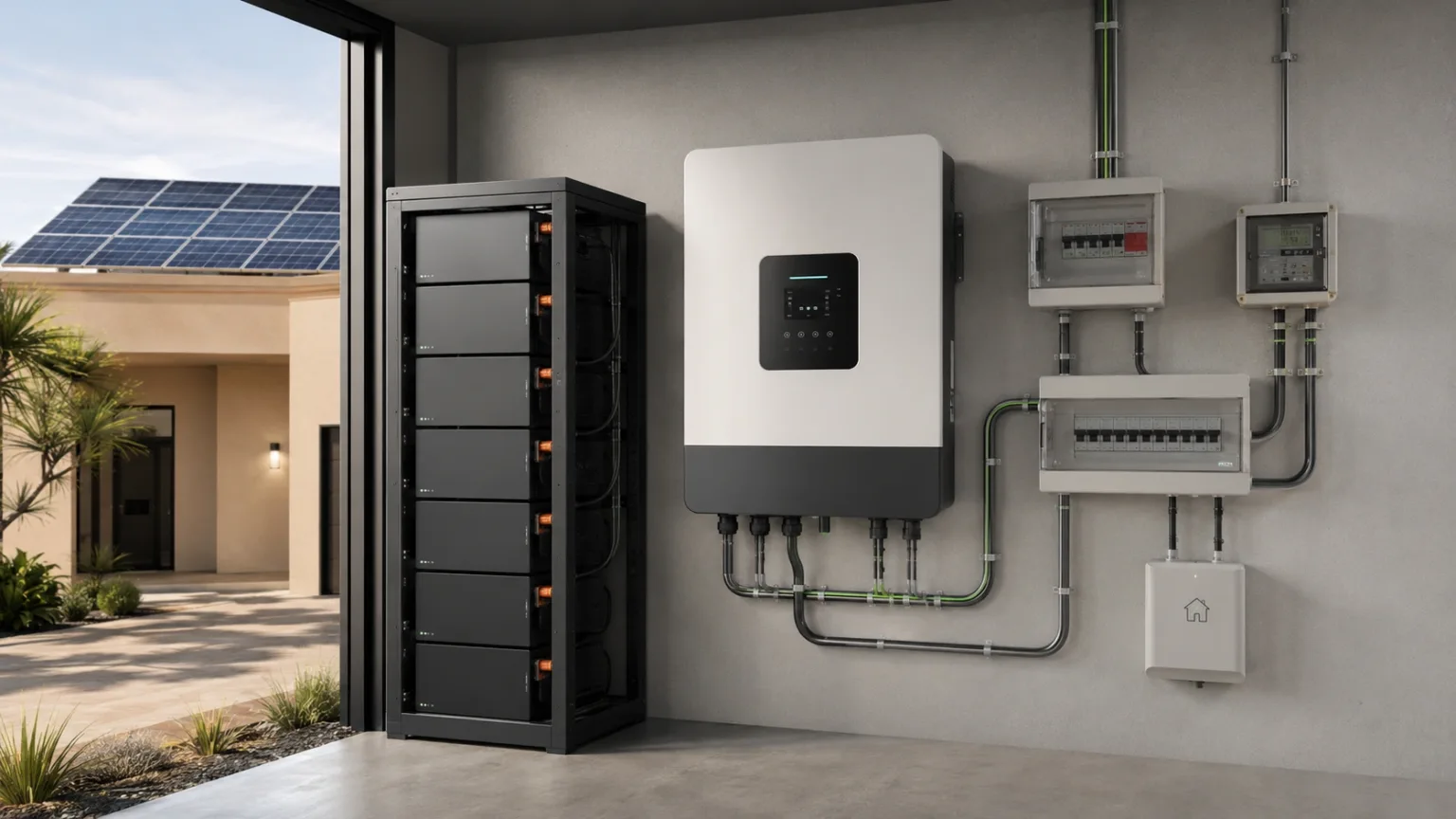
When looking for the best hybrid solar inverter, choosing the most expensive or best-known product isn’t enough; you need to study the project’s needs, load capacity, panel type, battery capacity, and how the system will operate. Shahen helps provide suitable energy and solar solutions for different projects, choosing the inverter based on a technical study that ensures all system components are compatible and makes the best possible use of the available energy.
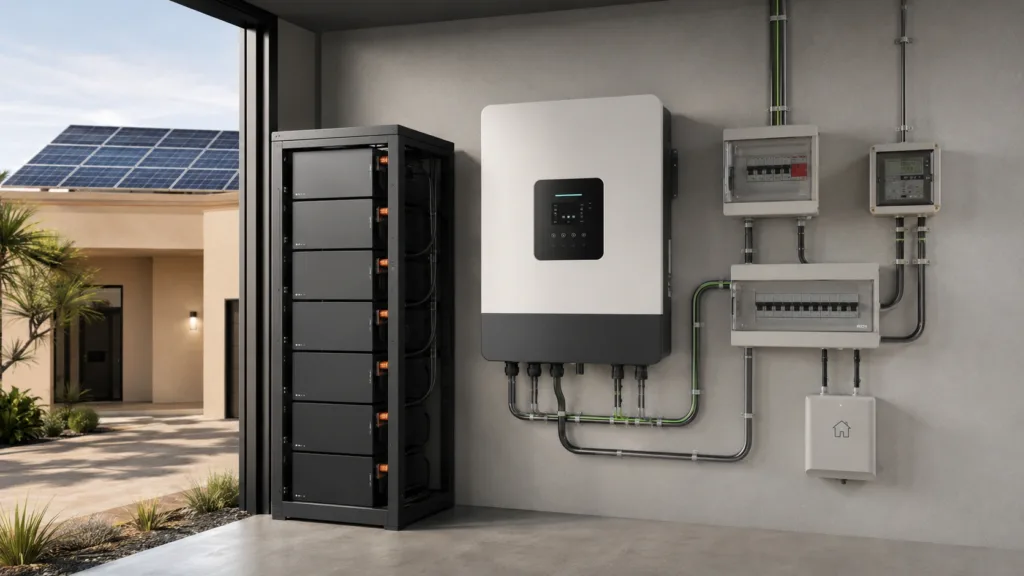
What Is the Best Hybrid Solar Inverter?
Choosing the best hybrid solar inverter depends on load capacity, panel and battery compatibility, the MPPT range, efficiency, and protection systems. An integrated technical study is needed to choose a suitable inverter that ensures the system’s components work together and delivers the best efficiency and operating stability.
For more on:
Components of a solar submersible pump system
Solar batteries for submersible pumps
Solar system components
Types of electrical transformers and inverters
What Is a Hybrid Solar Inverter?
A hybrid inverter is one of the most important components of modern solar systems, managing energy from more than one source according to the system design.
Unlike some conventional inverters that focus on converting solar energy from direct current to alternating current, a hybrid inverter can manage the energy produced by the solar panels, work with batteries, and integrate with the electricity grid in systems that support it.
The functions available vary from one device to another, depending on the manufacturer and model.
The main functions a hybrid inverter may provide include:
- Converting direct current to alternating current.
- Managing the energy produced by the panels.
- Charging batteries.
- Using stored energy when needed.
- Integrating with the electricity grid.
- Running loads according to set priorities.
- Monitoring system performance.
- Providing some protection functions.
Why Do You Need a Hybrid Inverter?
Hybrid systems have become an important choice for many users because they can combine different energy sources.
For example, the system can use solar power during the day, store the surplus in batteries, then use the stored energy when panel production drops or when a backup source is needed.
This makes a hybrid inverter especially suitable for projects that need more flexibility in managing energy.
Its main advantages include:
- Making better use of solar energy.
- The ability to integrate batteries.
- Managing more than one energy source.
- Operating flexibility.
- System monitoring in some models.
- Supporting some applications that need backup power.
How to Choose the Best Hybrid Solar Inverter
Choosing the best hybrid solar inverter should start with studying the whole system, not just comparing prices.
There are several specifications to review before deciding, the most important being:
Inverter Capacity
Inverter capacity is one of the most important factors to determine before buying.
If the loads need more power than the inverter can provide, problems may occur during operation or the system may trip repeatedly when the load increases.
On the other hand, choosing an inverter much larger than needed can increase the cost unnecessarily.
So you need to calculate:
- Total loads.
- Loads that run at the same time.
- Loads with a high starting current.
- Appliances that need to run continuously.
- The possibility of loads increasing in future.
System Voltage
Make sure the inverter’s voltage is compatible with the system design, the batteries, and the panels.
Systems operate at different voltages, so the inverter can’t be chosen on capacity alone.
Review the model’s technical specifications to make sure it’s compatible with the voltage used in the project.
Inverter Compatibility With the Solar Panels
The inverter must be compatible with the solar panels’ capacity and their voltage and current range.
The most important data to review includes:
- Maximum panel voltage.
- MPPT operating range.
- Maximum input current.
- The maximum solar power the inverter supports.
- Number of MPPT inputs.
- Number of panel strings that can be connected.
This data helps design the system to make better use of the panels.
MPPT Technology and Why It Matters
MPPT technology is an important element in hybrid inverters.
MPPT tracks the panels’ maximum power point to help extract as much of the available energy as possible under different operating conditions.
The panels’ optimal power point changes with factors such as:
- Solar radiation intensity.
- Temperature.
- Shading.
- Panel characteristics.
- How strings are connected.
That’s why the number of MPPT channels and their operating range are specifications to watch when choosing an inverter.
Inverter Compatibility With Batteries
If the system relies on energy storage, compatibility between the inverter and the battery is essential.
Make sure of:
- The supported battery type.
- Battery voltage.
- Suitable battery capacity.
- Charging current.
- Discharge current.
- The communication protocol where needed.
- A battery management system (BMS) in systems that require one.
It isn’t advisable to buy the battery and inverter separately without confirming they’re technically compatible.
Types of Batteries Used With Hybrid Inverters
Some hybrid systems can work with different types of batteries, depending on the inverter design.
The most common batteries include:
Lead-Acid Batteries
Used in some systems and widely available, but their operating characteristics and maintenance requirements differ from lithium batteries.
Gel Batteries
A type of lead battery used in some solar applications; the choice depends on the nature of the system and its operating requirements.
Lithium Batteries
They offer good efficiency and a long service life in many applications, but need proper compatibility with the inverter and the battery management system.
LiFePO4 Batteries
Widely used in some modern storage systems, they offer characteristics suitable for many applications, but their compatibility with the inverter must be confirmed.
Does a Hybrid Inverter Work Without Batteries?
Some hybrid inverters support operation without batteries, while some functions require batteries.
So there’s no single answer that applies to every device.
Before buying the best hybrid solar inverter, refer to the manufacturer’s specifications to find out which operating modes the device supports without batteries.
This point is especially important if the user wants to add batteries at a later stage rather than from the start.
Hybrid Inverters and the Electricity Grid
Some hybrid inverters can work with the electricity grid, allowing energy to be managed between the panels, batteries, and grid according to the system settings.
For example, priority might go to solar power, then batteries, then the grid, or the order of priorities can be changed to suit the user’s needs.
These functions vary from model to model, so make sure the inverter supports the required operating mode.
The Backup Function
One of the main reasons for using hybrid inverters is the ability to provide backup power in some systems.
When the grid goes down, the inverter can use the energy stored in the batteries to run the loads the emergency circuit was designed to supply.
But note that having batteries alone doesn’t necessarily mean all of the home’s loads will run during a power cut.
Backup loads must be designed, and the inverter and battery capacity set according to needs.
Which Loads Can It Run?
The loads an inverter can run depend on its capacity and the system design.
Examples of loads include:
- Lighting.
- Televisions.
- Computers.
- Routers.
- Refrigerators.
- Some air conditioners.
- Water pumps.
- Household appliances.
- Some commercial equipment.
Motors, pumps, and air conditioners need special attention because of their starting current, so simply adding up the appliances’ rated power isn’t enough.
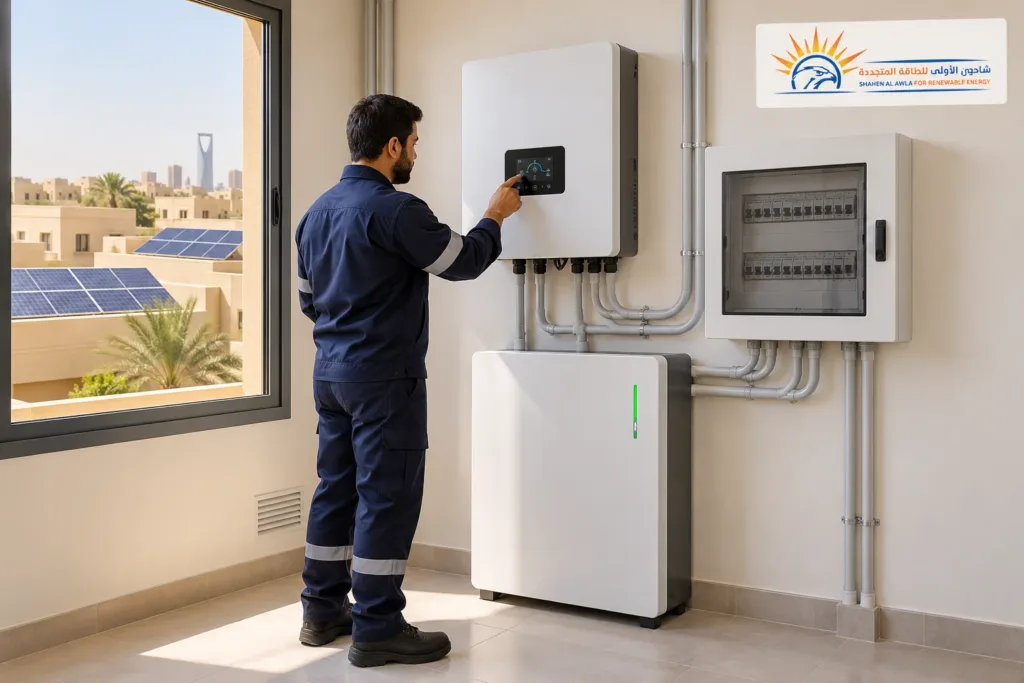
The Importance of Starting Current
Some electrical appliances, such as motors, pumps, and compressors, may need a high current when starting compared with their consumption during normal operation.
This means choosing the best hybrid solar inverter must take into account the inverter’s ability to handle loads with a high starting current.
It’s important to know:
- Motor power.
- Running current.
- Starting current.
- How long the starting current lasts.
- How many appliances start at the same time.
Number of MPPT Channels
Having more than one MPPT channel can be useful in some solar system designs, especially when panels are spread across different orientations or exposed to different conditions.
For example, if some panels face a different direction from another group, using independent MPPT channels can help improve energy management.
But more MPPT channels don’t always mean a better inverter; the number should match the system design.
Hybrid Inverter Efficiency
Efficiency is one of the most important specifications to compare when choosing an inverter.
Efficiency expresses the ratio of useful energy to the energy entering the conversion process.
Efficiency is affected by several factors, including:
- Load level.
- Temperature.
- Operating mode.
- Component quality.
- Type of inverter.
- Age of the device.
- Installation conditions.
It’s best to review the model’s official efficiency data rather than relying on general impressions.
Protection Systems
A suitable inverter should include protection features compatible with the system design.
Protection may include:
- Overcurrent protection.
- Overvoltage protection.
- Undervoltage protection.
- Overtemperature protection.
- Short-circuit protection.
- Battery monitoring.
- Protection against some unsuitable operating conditions.
The system’s external protection should also be designed separately according to the project’s requirements.
Cooling and Ventilation
Electronic components produce heat during operation, so inverters need suitable installation conditions.
You should provide:
- Enough space around the inverter.
- Good ventilation.
- Protection from humidity.
- Reduced direct exposure to the weather if the device isn’t designed for it.
- Unobstructed ventilation openings.
- Operation within the permitted temperatures.
Continuous high temperatures affect the performance and lifespan of electronic components.
Remote Monitoring and Control
Some modern inverters allow the system to be monitored through a display, an app, or an online platform.
These systems may let you track:
- Solar energy production.
- Electricity consumption.
- Battery condition.
- State of charge.
- Energy in and out.
- Alerts.
- Faults.
Monitoring helps detect a drop in performance or a problem before it gets worse.
The Difference Between a Hybrid Inverter and a Standard Inverter
To understand the best hybrid solar inverter, it’s important to know the difference between hybrid and standard inverters.
A standard inverter in a solar system may be designed to convert the electricity produced by the panels into alternating current to run loads or connect to the grid.
A hybrid inverter provides additional functions for managing batteries and different energy sources, according to the device’s capabilities.
Standard Inverter
- A simpler design in some applications.
- Suitable for systems that don’t need storage.
- May suit grid-connected systems.
- Some types may cost less.
Hybrid Inverter
- Supports battery management in compatible systems.
- Can handle more than one energy source.
- Offers more operating flexibility.
- Suitable for systems that need storage or backup power.
When Is a Hybrid Inverter the Best Choice?
A hybrid inverter is a good choice when solar power needs to be combined with batteries and another electricity source, or when the user wants a system that can be upgraded in future.
Suitable cases include:
- Homes that need backup power.
- Farms.
- Commercial facilities.
- Sites that suffer from power cuts.
- Projects that need energy storage.
- Systems that require managing multiple sources.
But if the system doesn’t need batteries or advanced management functions, a conventional inverter may be enough.
How to Calculate Hybrid Inverter Capacity
The calculation starts by identifying the loads that will run at the same time.
For example, if the total simultaneous load reaches a certain power, choose an inverter that can run it with a suitable margin depending on the type of use.
Loads with a high starting current should also be added to the calculation.
The design process includes:
- Preparing a list of appliances.
- Determining the power of each appliance.
- Determining operating hours.
- Identifying simultaneous loads.
- Identifying loads with starting currents.
- Determining panel capacity.
- Determining battery capacity.
- Choosing a compatible inverter.
- Reviewing protection and cables.
- Testing the design before installation.
It’s best for these calculations to be done by a specialist when designing medium and large systems.
Tips When Choosing a Hybrid Inverter
Some mistakes can affect system performance, including:
Choosing the Inverter on Price Alone
Focusing on price can mean ignoring capacity, efficiency, compatibility, and after-sales service.
Not Calculating Loads
The inverter may not be able to run all the required appliances if its capacity is chosen without a study.
Ignoring the Batteries
Make sure the battery is compatible with the inverter before buying.
Not Reviewing the MPPT Range
Ignoring panel voltage and the MPPT range can lead to an unsuitable design.
Neglecting Starting Current
This is very important when running pumps, air conditioners, and motors.
Installing in an Unsuitable Location
High heat or poor ventilation can affect the inverter’s performance.
Maintaining a Hybrid Inverter
Regular maintenance and monitoring help maintain system performance.
The most important measures include:
- Cleaning ventilation openings.
- Monitoring temperatures.
- Reviewing error messages.
- Inspecting connections.
- Monitoring battery performance.
- Monitoring panel production.
- Making sure there’s no moisture.
- Reviewing cables.
- Inspecting protection devices.
The inverter shouldn’t be opened, and no electrical work should be done inside it, except by a qualified technician according to the manufacturer’s instructions.
Hybrid Inverter Prices
The price of a hybrid inverter varies with capacity, specifications, technology, and manufacturer.
The main factors affecting cost include:
- Inverter capacity.
- Number of MPPT channels.
- Supported battery types.
- Maximum panel power.
- Communication and monitoring features.
- Protection systems.
- Backup operation capability.
- Build quality.
- Warranty.
- After-sales services.
So comparing price alone isn’t enough to determine an inverter’s real value.
Shahen’s Role in Choosing the Inverter
Shahen can help study the needs of energy and solar projects and identify suitable components according to the type of use.
When choosing an inverter, it’s important for the study to include:
- Electrical loads.
- Panel capacity.
- Battery capacity.
- System voltage.
- The nature of the site.
- Operating hours.
- Backup power needs.
- Possible future expansion.
This way, the inverter choice is based on real needs rather than on the product name or price alone.
Checklist Before Buying a Hybrid Inverter
Before buying the best hybrid solar inverter, you can review the following list:
- Is the inverter’s capacity suitable for the loads?
- Can it handle motor starting currents?
- Is it compatible with the battery voltage?
- Does it support the type of battery used?
- Is it compatible with the panel capacity?
- What is the MPPT range?
- How many MPPT channels does it have?
- Does it support backup operation?
- Is it compatible with the electricity grid?
- What is its efficiency level?
- What protection systems does it have?
- Can it be monitored remotely?
- How long is the warranty?
- Is after-sales service available?
- Can the system be expanded in future?
Choosing the best hybrid solar inverter doesn’t depend on the brand or price alone; it’s tied to how well the inverter matches the panels, batteries, loads, and grid, as well as its capacity, efficiency, MPPT range, and protection and monitoring functions.
A hybrid inverter is a practical choice for systems that need to manage solar power, batteries, and the grid or provide a backup source, while a conventional inverter may be more suitable for simpler systems that don’t need energy storage.
To reach a suitable design, the loads should be studied, panel capacity and battery capacity determined, and then an inverter chosen that’s compatible with all the system’s components. Installation, ventilation, maintenance, and protection also deserve attention to ensure stable operation over the long term.
Shahen provides energy and solar solutions, and its technical expertise can be used to identify the right system components for each project’s needs, helping build a more efficient, flexible, and scalable system.