
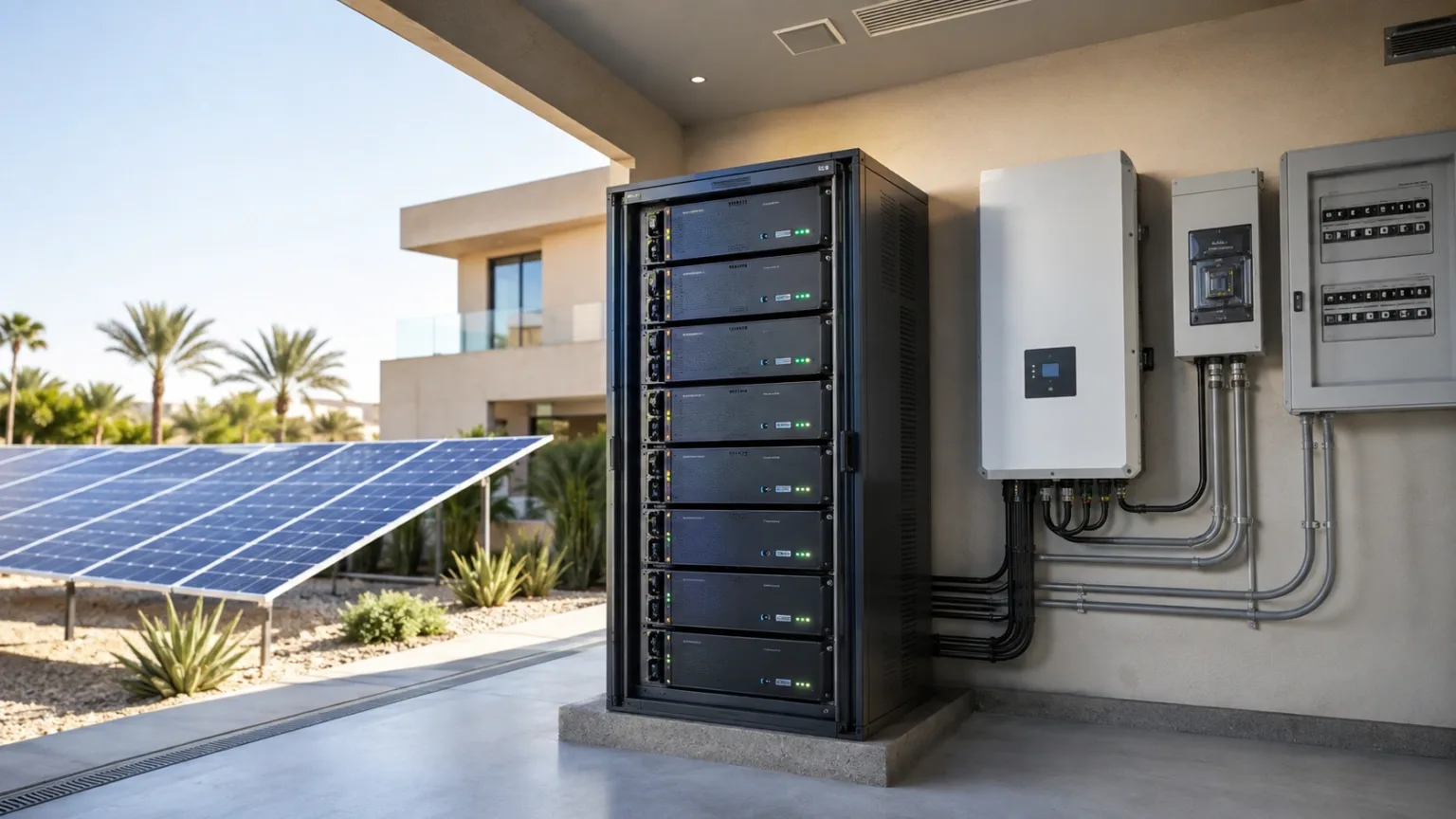
Lithium batteries have become one of the leading energy storage technologies in modern solar systems, thanks to their ability to store electricity efficiently and supply it when needed, especially during periods of low panel production or when the power supply is cut. Shahen provides energy and solar solutions, and choosing the right battery is an essential step when designing any system that needs energy storage, taking into account battery capacity, voltage, the nature of the loads, usage rate, and compatibility with the solar inverter.
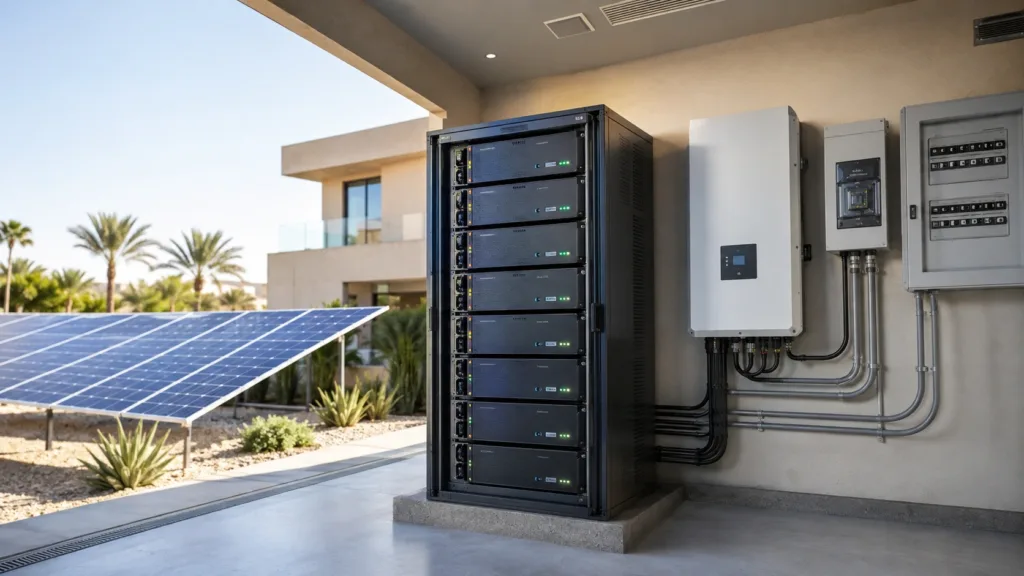
What Are Lithium Batteries?
Lithium batteries are rechargeable batteries that use lithium compounds to store and release electrical energy. This technology has a high energy density compared with many conventional battery technologies, and can achieve a large number of charge and discharge cycles when used within the appropriate specifications.
These batteries are used in many applications, including:
- Solar energy systems.
- Home electricity storage systems.
- Commercial facilities.
- Backup power systems.
- Electric vehicles.
- Electronic devices.
- Industrial applications.
- Telecommunications systems.
Battery performance varies with the type of lithium chemistry, the design, cell quality, the battery management system, and operating conditions.
Why Are Lithium Batteries Used in Solar Systems?
Some solar systems need to store electricity produced during the day for use at times of low solar radiation or at night.
Lithium batteries offer a suitable solution for many of these applications, especially where repeated energy storage is needed.
The main reasons for using them include:
- High energy density.
- The ability to use a large share of the capacity, according to the battery’s specifications.
- Good service life when used correctly.
- Suitable charging speed in many systems.
- Lower weight and size than some conventional battery technologies.
- Relatively low maintenance needs.
- The ability to integrate with advanced management and monitoring systems.
But these advantages don’t mean every lithium battery suits every system, so the specifications should be studied before buying.
The Main Types of Lithium Batteries
There are several chemical compositions within lithium batteries, and each type differs in density, energy, lifespan, safety, and cost.
The best-known types include:
Lithium Iron Phosphate (LiFePO4) Batteries
LiFePO4 batteries are a common choice for energy storage applications because of their suitability for repeated storage and charge/discharge cycles.
They’re used in:
- Solar energy systems.
- Home storage.
- Commercial applications.
- Some backup power systems.
They have thermal and chemical characteristics suitable for many storage applications, but they must be used with a compatible battery management system.
NMC Batteries
Nickel manganese cobalt (NMC) batteries use a different chemical composition and are used in many applications that need high energy density.
Choosing them over LiFePO4 depends on the type of use, cost, and system requirements.
LiFePO4 Lithium Batteries for Solar
LiFePO4 lithium batteries are a common choice in solar storage projects, especially when repeated charging and discharging is a core part of how the system operates.
The most important points to watch include:
- Nominal voltage.
- Capacity in kWh.
- Charging current.
- Discharge current.
- Number of charge cycles.
- Operating temperature.
- The battery management system.
- Compatibility with the inverter.
- Warranty.
Don’t rely on the technology name alone when choosing a battery, because the quality of the cells, electronics, and management system affects final performance.
What Is a Battery Management System (BMS)?
The battery management system (BMS) is one of the most important components of modern lithium batteries.
Its job is to monitor and manage a set of important parameters inside the battery, such as voltage, temperature, and state of charge, and it may provide protection against unsuitable operating conditions.
Possible BMS functions include:
- Monitoring cell voltage.
- Monitoring temperatures.
- Controlling charging.
- Controlling discharging.
- Overcurrent protection.
- Protection against some overvoltage conditions.
- Cell balancing in systems that support it.
- Sending operating data to the monitoring system.
The BMS must be compatible with the battery and the inverter used in the system.
Lithium Batteries vs Conventional Batteries
When comparing lithium batteries with lead-acid batteries, several important differences appear.
Lifespan
Lithium batteries can deliver a large number of charge and discharge cycles when used within specifications, while the lifespan of lead-acid batteries varies with their type, depth of discharge, and operating conditions.
Weight
Lithium batteries usually weigh less relative to the energy stored compared with some conventional batteries.
Maintenance
Some lithium batteries need less operational maintenance, but that doesn’t mean monitoring and inspection aren’t needed.
Cost
The initial purchase cost may be higher than some types of lead-acid batteries, but a proper economic comparison should include lifespan, the number of usage cycles, usable energy, and efficiency.
What Lithium Battery Capacity Is Right?
Determining capacity is one of the most important steps in designing a storage system.
Battery capacity is usually measured in kilowatt-hours (kWh), while the power a battery can supply is measured in kilowatts (kW).
There’s an important difference between energy and power:
- Energy determines how much electricity can be stored.
- Power determines the rate at which electricity is supplied to the loads.
For example, a facility may need a battery with a certain storage capacity, but at the same time need a high discharge power to run several appliances at once.
So looking at the capacity figure alone isn’t enough.
How to Calculate Battery Needs
You can start by determining the consumption of the loads you want to run on the battery.
The steps include:
- Identifying the appliances needed.
- Knowing the power of each appliance.
- Determining operating hours.
- Calculating the daily energy required.
- Defining the autonomy period required.
- Taking system efficiency into account.
- Determining the permitted depth of discharge.
- Choosing a suitable capacity.
You should also allow for possible future increases in loads.
Depth of Discharge and Why It Matters
Depth of discharge (DoD) shows the share of the battery’s capacity used during an operating cycle.
This factor matters when comparing lithium batteries, because how a battery is used affects its lifespan and number of charge/discharge cycles.
When choosing a battery, refer to the manufacturer’s data for the recommended operating range and don’t exceed the specified limits.
Number of Charge and Discharge Cycles
The number of cycles is an important specification when evaluating storage batteries.
Simply put, a cycle represents using and recharging the battery within a specified range.
But be careful when comparing cycle figures between products, because the definition of a cycle, test conditions, depth of discharge, and temperature may differ from one product to another.
So look at the test conditions, not just the figure.
Lithium Battery Efficiency
A battery’s efficiency affects how much energy can be used during charging and discharging.
Efficiency is affected by factors such as:
- Temperature.
- Charging rate.
- Discharge rate.
- Battery age.
- Cell condition.
- Quality of the management system.
- Operating conditions.
That’s why a battery should be chosen based on actual performance data, not just its nominal capacity.
Temperature and Its Effect on the Battery
Temperature affects the performance and lifespan of lithium batteries, so they should be installed in a suitable location within the operating limits set by the manufacturer.
It’s important to:
- Avoid very high temperatures.
- Provide suitable ventilation according to the design.
- Protect the battery from humidity.
- Keep it away from direct heat sources.
- Stay within the recommended charging and discharging temperatures.
Some batteries may include built-in thermal protection and monitoring systems.
Charging Lithium Batteries With Solar Power
When a battery is used in a solar system, charging is regulated by the inverter or charge controller according to the system design.
Charging settings must match the battery’s specifications.
The most important data to review includes:
- Charging voltage.
- Maximum charging current.
- Operating temperature.
- Battery type.
- Communication protocol.
- Protection limits.
Setting the parameters incorrectly can cause the battery to operate outside its recommended range.
Battery and Inverter Compatibility
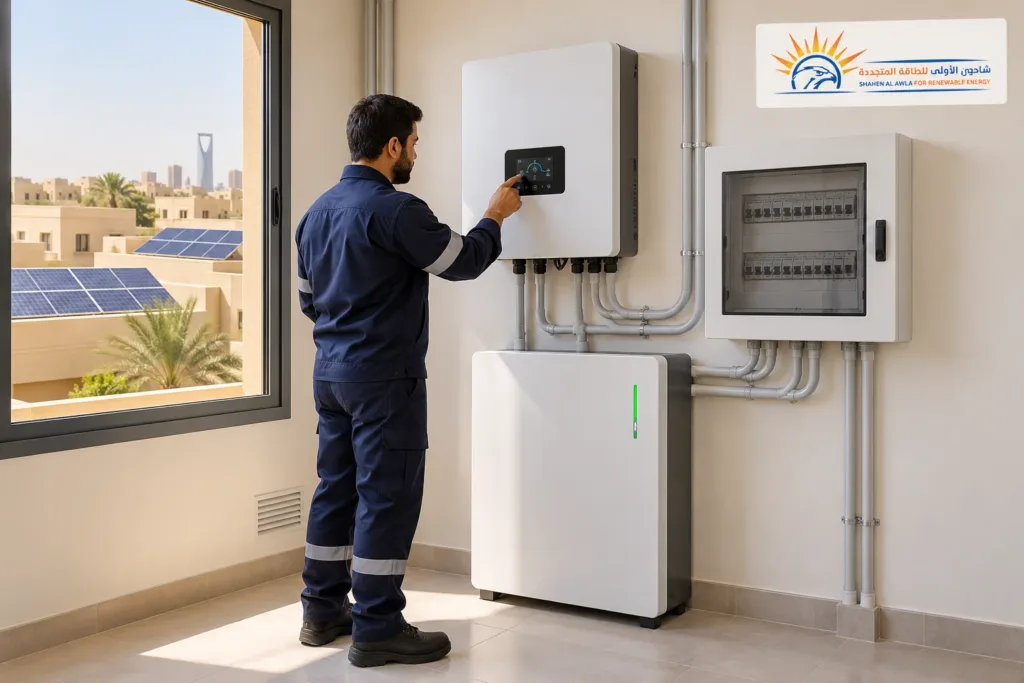
Compatibility between the battery and the inverter is one of the most important criteria for choosing lithium batteries.
Even if the battery’s voltage is compatible, there may be additional requirements for communication between the BMS and the inverter.
So make sure of:
- Voltage compatibility.
- Charging current compatibility.
- Discharge current compatibility.
- Support for the battery type.
- Communication protocol compatibility.
- Approval of the model by the inverter manufacturer where needed.
It’s best not to rely on trial and error or guesswork when connecting a battery and inverter whose compatibility isn’t known.
Using Lithium Batteries in Homes
Batteries can be used to store solar energy at home so it can be used when panel production is low.
They can help with:
- Running essential loads at night.
- Providing backup power.
- Making more use of solar energy.
- Reducing reliance on the grid in some applications.
The battery’s size depends on the home’s consumption, the loads to be run, and the required storage period.
Using Batteries in Commercial Projects
Batteries can be used in commercial facilities to store energy and manage consumption, depending on the nature of the project and the system design.
Commercial projects need a more detailed study because of higher loads and the possibility of equipment with high starting currents.
Possible applications include:
- Offices.
- Shops.
- Warehouses.
- Service facilities.
- Telecommunications systems.
- Some industrial applications.
Using Batteries in Agriculture
Batteries can be integrated with solar systems used in agriculture, especially at sites that need to run some loads after sunset or during periods of low solar production.
Applications include:
- Irrigation systems.
- Water pumps.
- Lighting.
- Monitoring systems.
- Some farm equipment.
Load power and operating hours should be defined before sizing the battery.
Advantages of Lithium Batteries
Lithium batteries have a number of advantages that have made them an important choice for energy storage.
The most notable include:
- Good energy density.
- Long service life in suitable products.
- A high number of cycles in some technologies.
- Good efficiency.
- Lower weight than some alternatives.
- Limited operational maintenance.
- The ability to integrate a BMS.
- Suitable charging speed in many applications.
But the advantages should always be weighed against the project’s needs and operating conditions.
Disadvantages of Lithium Batteries
Despite their advantages, there are some points to consider before buying.
These include:
- A higher initial purchase cost for some products.
- The need for precise compatibility with the inverter.
- The need for a suitable battery management system.
- Performance sensitivity to temperature conditions.
- Large differences in quality between products.
- The need for correct installation and suitable protection.
That’s why a battery shouldn’t be chosen on technology or price alone.
Are Lithium Batteries Safe?
Safety depends on the battery type, its design, cell quality, the battery management system, and how it’s installed and used.
Some lithium technologies, such as LiFePO4, have characteristics suited to energy storage applications, but the manufacturer’s instructions should always be followed.
The most important safety factors include:
- Using a suitable BMS.
- Providing electrical protection.
- Choosing a compatible charger or inverter.
- Staying within voltage limits.
- Not exceeding operating currents.
- Providing suitable installation conditions.
- Keeping the battery away from unsuitable heat sources.
How to Install Lithium Batteries
The battery should be installed according to the manufacturer’s instructions and the system’s requirements.
Installation usually includes:
- Choosing a suitable location.
- Securing the battery safely.
- Connecting cables of the right size.
- Installing protection devices.
- Connecting the battery to the inverter.
- Setting up the BMS where needed.
- Configuring charge and discharge settings.
- Testing the system before full operation.
It isn’t advisable to make the electrical connections for large systems without a qualified technician.
Maintaining Lithium Batteries
Lithium batteries usually need less attention than some conventional battery technologies, but they still need monitoring.
Monitoring measures include:
- Monitoring the state of charge.
- Tracking temperatures.
- Inspecting connections.
- Reviewing alerts.
- Making sure cables are in good condition.
- Tracking battery performance.
- Checking the management system.
- Making sure there’s no swelling or visible damage.
Stop using the battery if unusual signs of damage appear, and call in a specialist.
Common Mistakes When Buying a Battery
There are several mistakes that can easily be avoided.
Choosing Capacity Without Studying Consumption
The battery may end up larger or smaller than the project needs.
Ignoring Discharge Power
A battery may have a large capacity but be unable to supply the power the loads need.
Not Checking Compatibility
Make sure the battery is compatible with the inverter and the battery management system.
Focusing on Price
A low price may not reflect the real long-term cost.
Ignoring the Warranty
Review the warranty terms, coverage period, and services provided.
How to Choose a Suitable Lithium Battery
When choosing lithium batteries for a solar system, it’s best to follow a clear checklist.
Determine Your Consumption
Start by knowing how much electricity you need each day.
Identify Essential Loads
Identify the appliances that must run during power cuts or after sunset.
Choose the Capacity
Determine how much energy you need to store.
Review the Power
Make sure the battery can run the required loads.
Check Compatibility
Make sure the battery is compatible with the inverter.
Check the Warranty
Review the warranty period and its terms.
Pay Attention to Build Quality
Choose a product with clear technical specifications from a reliable source.
The Cost of Lithium Batteries
The cost of lithium batteries varies with capacity, technology, cell quality, the management system, and the manufacturer.
The main factors that affect price include:
- Battery capacity.
- Type of lithium chemistry.
- Number of charge cycles.
- Maximum power.
- The BMS.
- Protection rating.
- Communication capabilities.
- Warranty period.
- Manufacturer.
So comparing the price per kWh of usable energy can be more useful than comparing the total price alone.
Shahen’s Role in Energy Storage Solutions
When designing a solar system that relies on storage, choosing the battery requires studying the loads, panels, inverter, and site conditions.
Shahen provides energy and solar solutions, and its technical expertise can help define the project’s needs and choose compatible components, taking into account capacity, power, the management system, and how the system operates.
Before buying a battery, it’s best to prepare a study covering daily consumption, the required storage period, essential loads, and the possibility of future expansion.
Tips to Extend Battery Life
A number of practices can help maintain battery performance:
- Sticking to the recommended charging settings.
- Not exceeding the permitted discharge current.
- Avoiding unsuitable temperatures.
- Using a compatible inverter.
- Monitoring the battery’s condition.
- Not ignoring alerts.
- Carrying out regular inspections.
- Using suitable cables and protection.
- Avoiding improvised connections.
- Following the manufacturer’s instructions.
Lithium batteries represent an important advance in energy storage, and have become a common choice in solar systems because of their efficiency, service life, and suitability for repeated charge and discharge cycles.
But choosing the right battery doesn’t depend on capacity or price alone; you need to consider the battery chemistry, its charge and discharge capability, number of cycles, operating temperature, BMS, and compatibility with the inverter.
LiFePO4 batteries are an important option for energy storage applications, but the final choice should depend on the project’s needs, the product’s specifications, and the conditions of use.
Correct design and installation are just as important as choosing the battery itself. So a study of the loads and required energy should be carried out and a suitable storage capacity determined before buying, with the necessary protection, ventilation, and monitoring provided.
By relying on an integrated technical study and choosing compatible components, a more efficient and flexible solar storage system can be built, making use of solar energy at different times of day and reducing reliance on conventional energy sources, depending on the type of system.