Solar-powered products have become a practical choice for many needs, from lighting gardens and rest houses to running water pumps and powering some household appliances. Shahen helps you study your site’s needs and choose the right solution, whether you need a standalone lighting product or a complete system with panels, inverters, and batteries. In Saudi Arabia, solar power makes good use of the available sunshine, but success depends on equipment that suits the use, the heat, and the dust, and on good design and installation. So the choice starts with knowing what you want to run, for how long, and where, then comparing specifications, cost, and service.
What Are Solar-Powered Products?
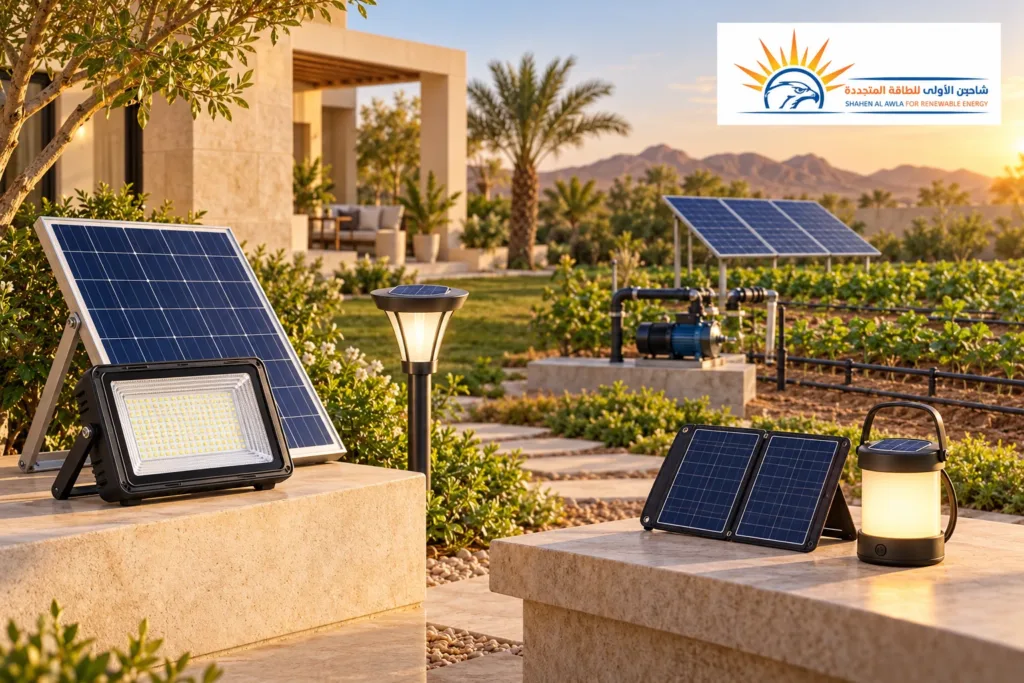
The term solar-powered products covers devices that contain their own panel, battery, and controller, such as some floodlights, and ordinary electrical appliances powered by an external solar system, such as refrigerators and pumps. The difference matters: not every appliance needs a special version to benefit from solar electricity.
A standard appliance can work if the system provides the right voltage, frequency, and power, taking into account its starting current. You can read our guide to what solar panels are made of to understand how electricity is produced before it is used directly or stored.
Why These Solutions Suit Many Uses in Saudi Arabia
Choosing solar-powered products helps supply electricity to applications that are hard to connect to the grid, or reduce reliance on it in suitable conditions. They are especially useful on farms, at remote sites, and at rest houses, as well as for outdoor lighting and some residential and commercial uses.
But the savings aren’t the same for every product or project; they depend on hours of use, the cost of the alternative, battery size, and maintenance. Having sunshine doesn’t remove the need for proper design. Solar energy projects in Saudi Arabia show how solutions differ by sector and need.
Outdoor Solar Floodlights
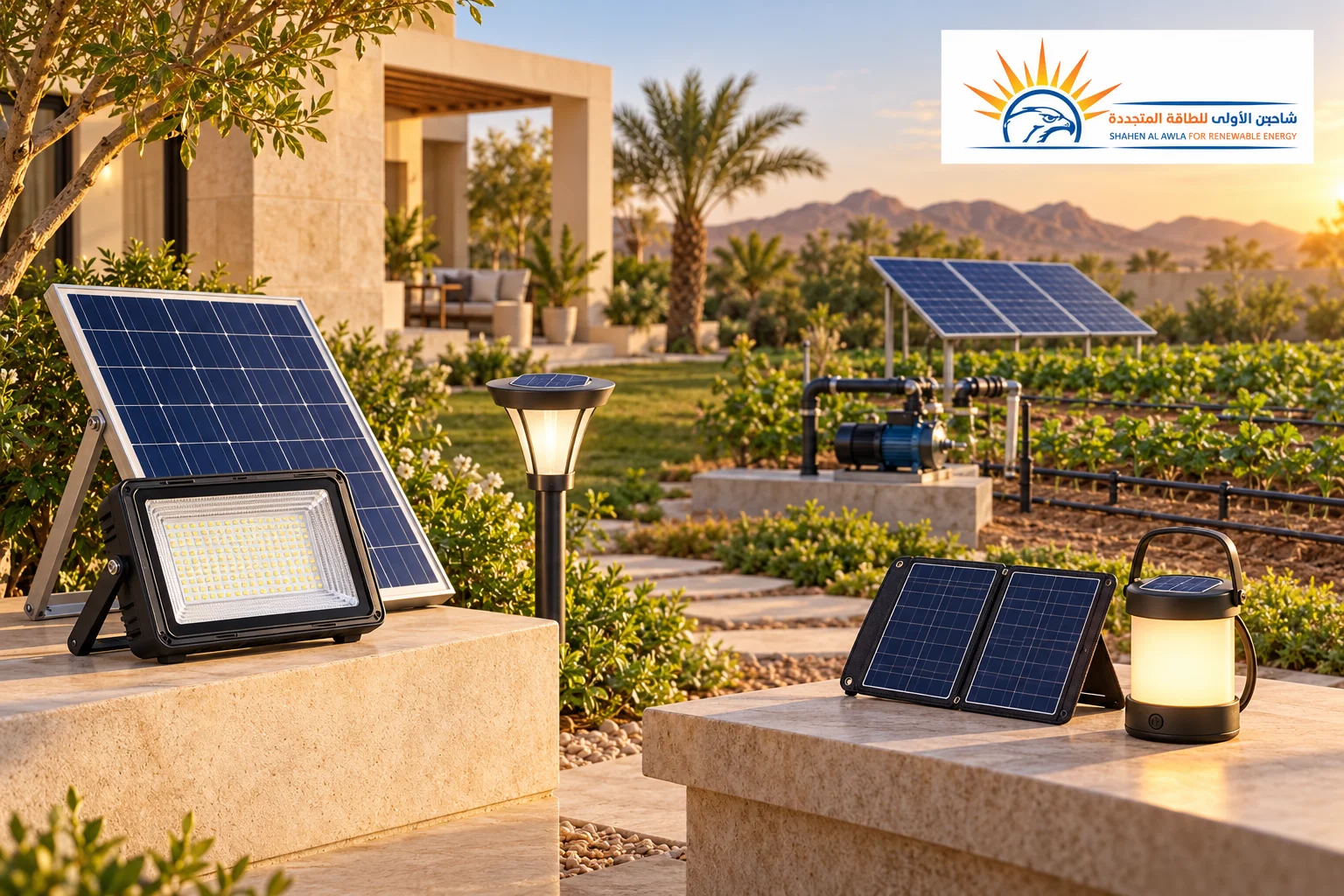
Floodlights are among the most popular solar-powered products for gardens, entrances, yards, and farms. They usually consist of a light unit, a panel, a battery, and charge and operation control, and the panel may come separately so it can be mounted in a sunnier spot.
When comparing, check the luminous flux in lumens, light distribution, battery capacity, and run time in a specified mode. Don’t rely on the marketing wattage alone; it may not reflect actual consumption. Also check resistance to outdoor conditions, the mounting method, whether the battery can be replaced, and the warranty terms.
Lighting for Pathways, Gardens, and Entrances
When looking for solar-powered products for decorative and low-level lighting, consider pathway lights, garden lights, and entrance units. These differ from floodlights designed to light a large area; their purpose may be to mark a path or add accent lighting.
Make sure sunlight reaches the panel during the day and isn’t blocked by plants or walls. If the product has a motion sensor, check the light duration and brightness before and after motion is detected. Lighting for safety or surveillance needs a more careful assessment than just choosing a lamp design.
Solar Water Pumps and Submersible Pumps
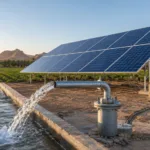
Solar-powered products include solutions for running pumps and submersible pumps on farms and wells. These applications need an engineering study of the water and the motor, not just a random choice of panel capacity.
The design is based on the required flow rate, total head, motor power, voltage, number of phases, and well conditions. Storing water in a tank can make use of daytime pumping without batteries, depending on the need. You can review solar submersible pump systems to see what the study covers before requesting an installation quote.
Appliances That Can Be Powered by a Solar System
Solar-powered products aren’t limited to devices with a built-in panel; a system can be designed to run lighting, communications equipment, a TV, a refrigerator, fans, and more. But whether they run depends on the available power, stored energy, and the inverter’s characteristics.
Air conditioners, refrigerators, and pumps may need starting power that differs from their running consumption, so simply adding up the label figures without studying simultaneous operation isn’t enough. Our guide to home solar installation helps you identify the loads the project is meant to cover.
13 Examples of Solar Products and Applications
The list below shows examples of solar-powered products or appliances that a suitable system can power. They are examples for choosing by use, not a list of models confirmed to be available from Shahen:
| Example | Use | What to check before choosing |
|---|---|---|
| Solar floodlight with separate panel | Yards and entrances | Lumens and panel location |
| All-in-one solar floodlight | Spot lighting | Mounting and sun exposure |
| Solar pathway light | Marking walkways | Light distribution |
| Solar garden lights | Decorative use | Run time and protection |
| Light with motion sensor | Entrances and pathways | Sensitivity and operating modes |
| Portable solar lantern | Trips and light use | Battery and charging time |
| Portable solar charger | Charging small devices | Actual power and outputs |
| Solar-ready camera | Monitoring suitable sites | Connectivity and battery |
| Solar surface pump | Moving water and irrigation | Flow rate and head |
| Submersible pump with solar system | Pumping well water | Well and motor characteristics |
| Solar-powered fan | Targeted ventilation | Power and hours of use |
| Refrigerator on a solar system | Food storage | Daily energy and starting power |
| Lighting system for a rest house | Powering multiple units | Total loads and storage |
Panels, Batteries, and Inverters: Components, Not Loads
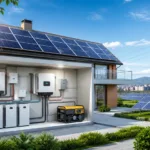
When setting up solar-powered products, distinguish between devices that consume electricity and the components of the system. Panels produce energy, batteries store it, and inverters manage its conversion according to the design, while the load uses electricity to do a job such as lighting or cooling.
That’s why buying a large battery or a high-wattage panel isn’t enough without compatibility. Calculate your appliances’ needs first, then choose the components. You can make use of Shahen’s solar component supply service with clear specifications for your project.
How to Choose the Right Solution for Your Home
Before buying solar-powered products for your home, decide whether you only need garden lighting, want to reduce daytime consumption, or need to run backup loads. Each goal leads to a different design, and batteries shouldn’t be presented as necessary in every case.
Daytime consumption may suit an on-grid system, while independent night-time operation needs storage or another source. You can learn about on-grid systems, making sure to check connection requirements and approvals before installation.
Choosing Products for Rest Houses and Remote Sites
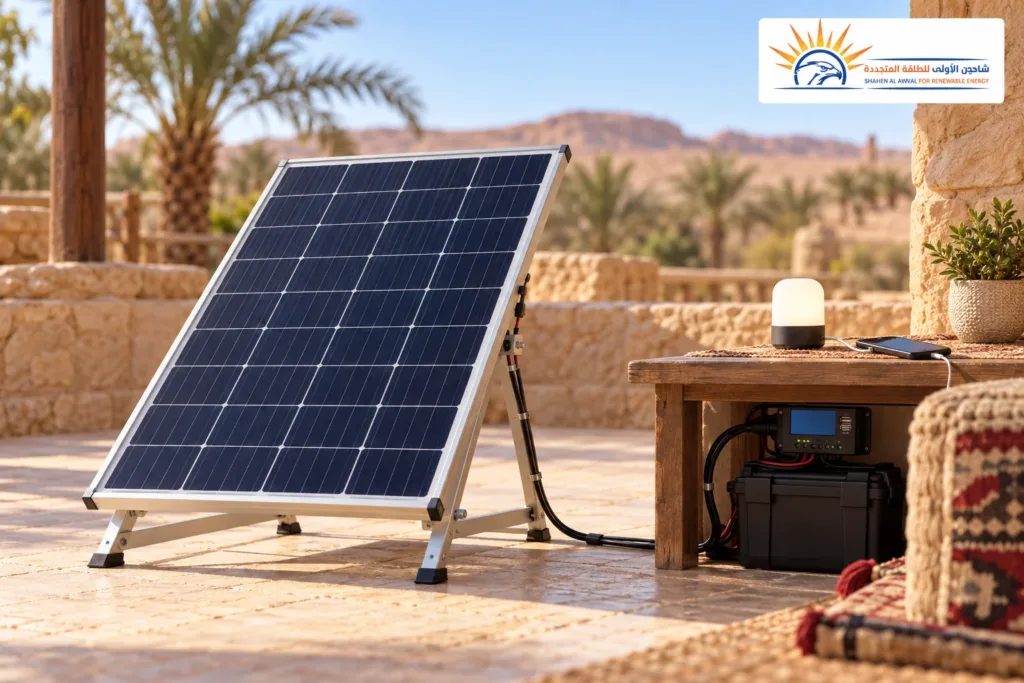
Solar-powered products become more important when a rest house is far from the grid, but the priority is to rank your loads. Identify the essential appliances, then separate them from loads that can be run later or done without.
Calculate night-time consumption, hours of occupancy, and periods when the site is unused, and check protection, ventilation, and whether the system can be monitored. Off-grid systems need a balance between panel production, battery capacity, and loads, with a clear plan for when production drops.
How to Calculate the Power and Energy You Need
To compare solar-powered products, separate power from energy. Power in watts is the instantaneous rate of consumption, while energy in watt-hours shows consumption over a given period.
For example, a light that actually draws 20 watts for five hours needs 100 watt-hours, before system losses are counted. Designing a complete system adds equipment efficiency, battery limits, and seasonal conditions. Shahen’s design and consulting service helps turn this data into suitable components instead of settling for a rough estimate.
The Effect of Heat, Dust, and Shading
The performance of solar-powered products depends on the operating environment, not just the nominal specifications. Shading reduces available energy, dust build-up can lower production, and heat affects panels, batteries, and electronics to different degrees depending on the product.
Choose a suitable location and follow the ventilation, mounting, and cleaning requirements. Check the temperature range, protection rating, and suitability for coastal environments where needed. Our guide to solar panel sizes is also useful for planning space and maintenance access before installation.
How to Compare Prices and Offers
The value of solar-powered products isn’t measured by the lowest price alone. Compare function, actual power, storage, warranty, spare parts, and installation. A cheaper product may suit light use but not deliver the lighting time or performance another site needs.
Ask for a written quotation that states the model, quantities, included components, installation costs, and warranty. For home projects, review the cost of home solar installation. Check current prices, availability, and offers in the Shahen store before confirming your order.
Maintenance and Replacing Components
Solar-powered products need follow-up suited to their type: a standalone product needs its panel cleaned and its battery checked, while a system needs production, protection, connections, and inverter performance reviewed.
Before buying, ask whether the battery can be replaced, whether spare parts are available, and how to request service. A shorter run time may be caused by weak charging, changed settings, or battery degradation, so don’t replace the device before diagnosing the problem. Shahen’s maintenance and technical support can help find the cause.
Common Mistakes to Avoid
A common mistake when buying solar-powered products is assuming every device will run all night regardless of panel position or battery capacity. Other mistakes include:
- Relying on marketing wattage without documented data.
- Mounting the panel in the shade or behind an obstruction.
- Ignoring daily operating hours.
- Confusing a device’s power with the energy it needs.
- Buying incompatible components.
- Neglecting protection and secure mounting.
- Assuming a grid-tied system provides backup during outages.
Avoid these assumptions before comparing offers.
Practical Steps Before Buying
Start choosing solar-powered products by defining the function you need and an acceptable level of performance, then gather your site and usage data:
- What appliance or load do you need to run?
- How many hours will it run each day?
- Do you need it to run at night?
- Is there a grid connection or backup source?
- Where will the panel and equipment be mounted?
- What are the warranty and maintenance terms?
- Will you need to expand in future?
Then ask for a quotation based on these answers. You can review Shahen’s services to see the scope of design, supply, and installation available.
Frequently Asked Questions
Do solar products work at night?
Solar-powered products work at night if they have suitable storage or are connected to an alternative source. Panels don’t produce electricity from sunlight after sunset, and run time depends on stored energy, consumption, settings, and battery condition.
Can an air conditioner run on solar power?
Yes, a system can be designed to power an electrically compatible AC unit, but its actual consumption, starting current, and operating hours must be studied. Night-time operation requires storage or another source, and a fixed number of panels can’t suit every air conditioner.
Are all solar products water- and dust-resistant?
No. Protection ratings and installation conditions differ between devices. Check the product’s rating and the manufacturer’s instructions, and don’t assume that being “solar” means it can be submerged or installed exposed in any environment.
How Shahen Helps You Choose a Solution
When comparing solar-powered products, it helps to work with a provider that reviews your needs and component compatibility before supply. Shahen’s website presents solutions for on-grid and off-grid systems and submersible pumps, as well as categories of panels, floodlights, batteries, and inverters.
Start by defining your loads, goal, and budget, then ask for the equipment specifications, scope of installation, warranty, and follow-up to be clearly explained. You can request a site survey and quotation to discuss the needs of your home, farm, or rest house.
Choose the Product That Fits Your Actual Use
The best solar-powered products are the ones that deliver the function you need under your site’s conditions, with clear costs and service. A standalone light may be enough for a small pathway, while running a farm or rest house needs a well-studied system with compatible components.
Compare real data, plan for storage and maintenance, and don’t buy extra capacity without a reason. With Shahen, make a study of your site and consumption the starting point for a solution that fits your needs in Saudi Arabia.