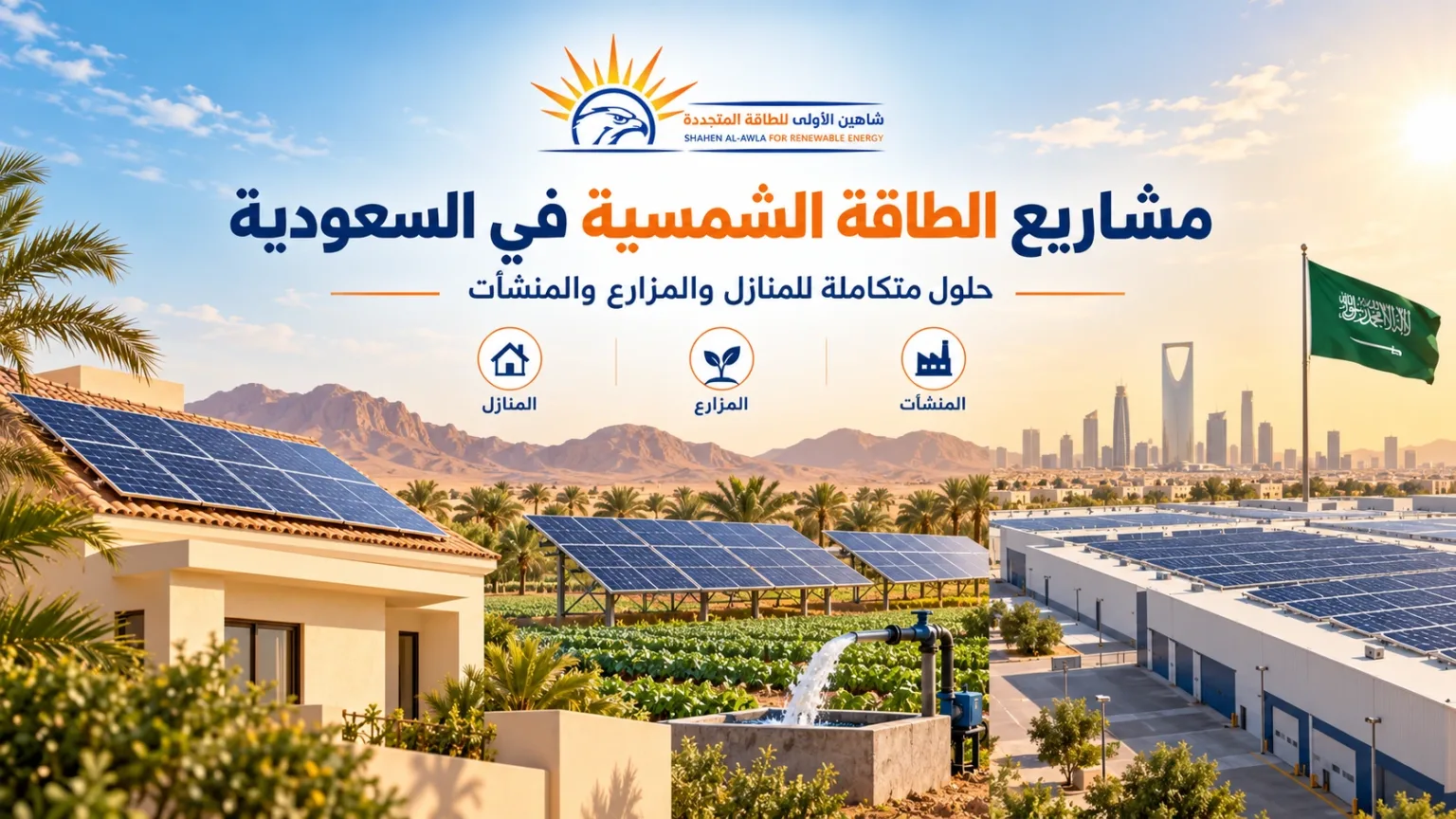
Solar energy projects in Saudi Arabia have grown significantly as homes, farms, and commercial and industrial facilities show more interest in renewable energy, and solar systems have become a practical way to reduce reliance on conventional energy sources and improve operating efficiency. Shahen provides complete solutions that start with studying the site’s needs and designing the system, followed by component supply, installation, commissioning, and follow-up tailored to each project.
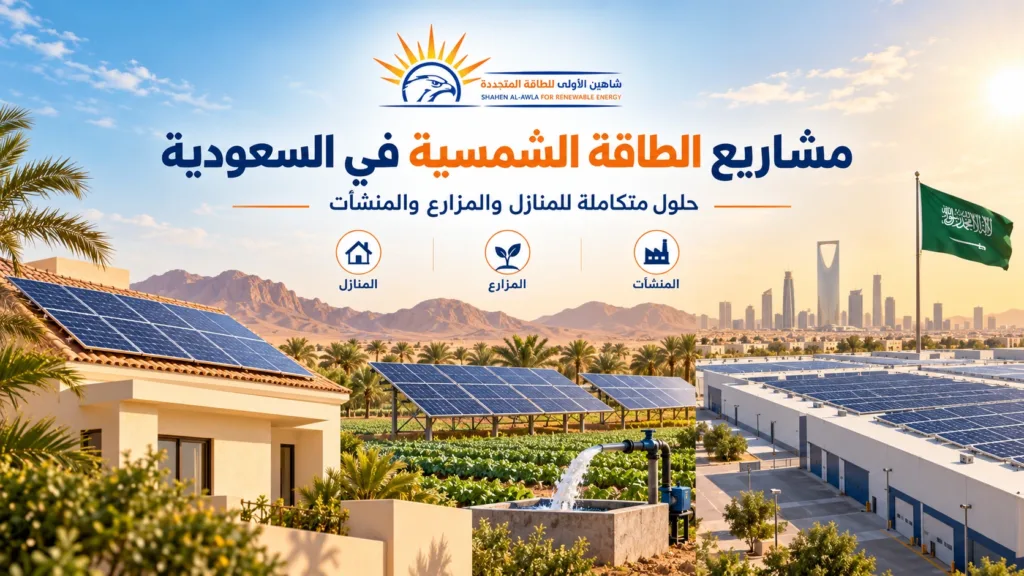
What Are Solar Energy Projects in Saudi Arabia?
Solar energy projects in Saudi Arabia include systems that use solar panels to convert solar radiation into electricity for homes, businesses, factories, farms, pumps, and other loads.
There is no single design that suits every project; the system a home needs differs from the one suited to a farm, factory, or warehouse. That’s why successful projects start by studying actual consumption, site space, and operating hours before deciding the number of panels or the capacity of inverters and batteries.
Shahen’s project journey includes a feasibility study, engineering design, supply, installation, commissioning, and follow-up, with each system designed around the requirements of its site.
For more, read our article on home solar installation in Saudi Arabia.
Why Is Interest in Solar Projects Growing?
Solar energy projects in Saudi Arabia suit a wide range of uses thanks to the climate and the long hours of solar radiation across large parts of the Kingdom.
The main reasons for the growth of these systems include:
- Reducing electricity drawn from the grid in some applications.
- Reducing reliance on fuel generators at remote sites.
- Running farms, wells, and pumps.
- Providing electricity to sites the grid doesn’t reach.
- The option of adding batteries to store energy when needed.
- Designing systems around load size and operating hours.
- Lower long-term operating and maintenance costs compared with some conventional solutions.
According to the data published on its website, Shahen has completed more than 98 projects and covers more than 15 cities in the Kingdom, with over 10 years of experience.
You can also read about Saudi renewable energy companies and clean energy solutions.
Types of Solar Energy Projects in Saudi Arabia
Solar energy projects in Saudi Arabia vary by sector, system type, and consumption pattern.
Solar Projects for Homes
Residential systems are used to cover part of the home’s electricity consumption or to provide an independent power source, depending on the type of system.
The study usually starts with:
- The electricity bill.
- Roof area.
- Roof orientation.
- Shaded areas.
- Number of appliances.
- Operating hours of the loads.
- Whether batteries are needed.
The system may be grid-connected for homes served by the grid, while an off-grid system suits remote sites.
Read also: home solar installation in Saudi Arabia.
Solar Projects for Farms
Agriculture is one of the main applications of solar energy projects in Saudi Arabia, especially at sites that rely on wells, submersible pumps, and irrigation systems.
Solar power can be used for:
- Running water pumps.
- Running submersible pumps.
- Irrigation systems.
- Farm lighting.
- Powering stores and facilities.
- Supplying electricity to remote farms.
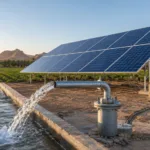
Shahen’s submersible pump systems use solar panels and dedicated inverters that control the power the pump needs, and the system can be designed around the pump’s capacity, the depth of the well, and operating requirements.
For more, read our article on the cost of solar energy for farms, and see the farm solar energy project in Al-Aflaj.
Solar Submersible Pump Projects
Solar energy projects in Saudi Arabia include systems dedicated to running wells and submersible pumps, an important solution for farms and remote areas.
Before designing the system, you need to define:
- Pump capacity.
- Well depth.
- Water flow rate.
- Daily operating hours.
- Required voltage.
- Type of pump inverter.
- Space available for panels.
The number of panels isn’t chosen at random; the design starts from the load that needs to run.
Learn more about Shahen’s solar submersible pump systems.
Solar Projects for Factories
Solar energy projects in Saudi Arabia can help factories and production facilities cover part of their daytime consumption, especially when operating hours coincide with panel production.
An industrial project is designed after studying:
- Average consumption.
- Production line loads.
- Operating hours.
- Roof area.
- Daytime loads.
- Future expansion potential.
- The type of grid connection.
- The right inverter capacity.
Industrial facilities often have large roofs, but they need more precise electrical and engineering design because of the higher capacities involved.
Projects for Warehouses and Commercial Facilities
Solar energy projects in Saudi Arabia aren’t limited to factories and farms; they also include warehouses, shopping centers, offices, and service buildings.
An on-grid system is a common choice for facilities with daytime consumption, because it uses solar electricity during production hours while continuing to rely on the grid when needed, and this type usually doesn’t need batteries.
On-Grid Solar Projects
One of the most common types of solar energy projects in Saudi Arabia is the on-grid system.
It relies on:
- Solar panels.
- A grid-tie inverter.
- Mounting structures.
- Cables.
- Electrical protection.
- Distribution boards.
The system produces electricity during the day to cover part of the consumption, while the grid continues to cover demand when the system’s production isn’t enough.
This type usually suits facilities with steady consumption during the day.
Off-Grid Solar Projects
Off-grid solar energy projects in Saudi Arabia are used at sites the public grid doesn’t reach or that need an independent system.
The system usually consists of:
- Solar panels.
- An inverter.
- Batteries.
- A protection system.
- Cables and mounting structures.
The panels produce energy during the day, and the surplus is stored in batteries for use at night or when production drops. The panel and battery capacity is set according to the loads and operating hours.
You can look at Shahen’s off-grid systems.
Hybrid Projects
Hybrid systems combine solar power with more than one energy source, which may include:
- The electricity grid.
- Batteries.
- A backup generator.
- Solar panels.
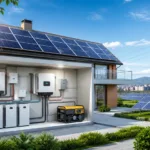
Hybrid systems suit facilities that need more flexibility or continuous operation even when solar production drops.
Choosing the hybrid inverter is a key part of the design, and you can review Shahen’s guide to the best hybrid solar inverter, published among the company’s latest articles.

Core Components of the Project
For solar energy projects in Saudi Arabia to work efficiently, components must be chosen as an integrated system, not each part on its own.
Solar Panels
They convert sunlight into DC electricity.
They differ in:
- Power.
- Efficiency.
- Number of cells.
- Technology.
- Size.
- Warranty.
- Temperature coefficient.
You can read solar panel prices in Saudi Arabia 2026 to learn about the factors that affect panel choice and cost.
The Shahen store also offers a solar panel category and products for solar systems.
Inverters
The inverter manages energy and converts current according to the type of system.
Shahen’s current products include the Shahen Pro 4kW, a hybrid inverter with a rated power of 4,000 watts that supports a panel array of up to 5,000 watts, according to the product page.
Batteries
Batteries are used when the project needs to store energy.
Shahen’s website offers lithium batteries in various capacities, including 5.12, 10.24, 15.36, and 30.72 kWh.
Browse Shahen’s lithium batteries
You can also look at the 5.12 kWh lithium battery or the 30.72 kWh lithium battery for larger projects.
Cables, Mounting Structures, and Protection
A project’s success doesn’t depend only on panels and inverters; it also needs:
- Suitable cables.
- Breakers and protection devices.
- Mounting structures.
- Distribution boards.
- Earthing.
- Monitoring equipment where needed.
Each component should be chosen based on voltage, current, the surrounding environment, and the nature of the project.
Steps to Carry Out a Solar Project
The success of solar energy projects in Saudi Arabia depends on following an orderly series of steps before buying equipment.
1. Load study
The appliances or equipment to be powered are identified, along with their power and working hours.
2. Reviewing electricity consumption
For grid-connected homes and facilities, bills are reviewed to find actual consumption.
3. Site survey
The survey defines:
- Space.
- Shading.
- Mounting orientation.
- Inverter location.
- Battery location, if any.
- Cable routes.
4. System design
After the information is collected, the following are calculated:
- System capacity.
- Number of panels.
- Inverter capacity.
- Battery capacity.
- System type.
- Expected production.
Shahen’s design and consulting service starts by reviewing consumption and surveying the site before presenting a proposal covering the components, cost, and scope of work.
Shahen’s design and consulting service
5. Supply
Compatible components are purchased according to the design.
You can browse Shahen’s solar system products, as well as the Shahen store on Salla: https://salla.sa/shahensolar
6. Installation and commissioning
After the structures, panels, inverters, and connections are installed, the system is inspected and commissioned, and voltage, current, and production are checked before handover.
How Much Do Solar Projects Cost?
There is no standard cost for all solar energy projects in Saudi Arabia, because the price depends on the project itself.
The most important factors include:
- System capacity.
- Number of panels.
- Panel type and efficiency.
- The inverter.
- Battery capacity.
- Type of project.
- Installation location.
- The nature of the roof or ground.
- Mounting structures.
- Cables and protection.
- Operating requirements.
- Design and installation work.
That’s why Shahen recommends starting a project with a study of the site and consumption instead of choosing a ready-made capacity before the survey.
For comparison, you can review:
Solar panel prices in Saudi Arabia
The cost of solar energy for farms
How to Choose the Right Project for You
Before starting any of the solar energy projects in Saudi Arabia, define your goal first.
If you have a grid-connected home and want to reduce daytime consumption, an on-grid system may be suitable.
If you own a farm far from the grid, you may need a standalone system or a submersible pump system.
Facilities that need a backup source may benefit from hybrid systems and batteries.
Ask yourself:
- What is my consumption?
- When do the loads run?
- Is the site connected to the grid?
- Do I need electricity at night?
- Do I need batteries?
- How much space is available?
- Is there any shading?
- Am I planning to expand in future?
Factors for a Successful Project
Solar energy projects in Saudi Arabia need more than just good panels.
The most important success factors are:
- Designing the system around real consumption.
- Choosing compatible components.
- Setting a suitable capacity without overdoing it.
- Calculating panel space.
- Studying shading.
- Using suitable cables and protection.
- Sound engineering installation.
- Choosing a suitable inverter.
- Providing maintenance.
- Monitoring system production after commissioning.
Before choosing a company, it’s useful to read our guide to solar panel installation companies in Saudi Arabia.
An Example of an Agricultural Solar Project
One of Shahen’s published examples is a complete solar energy project for a farm in Al-Aflaj Governorate, carried out to support the farm’s operations and reduce operating costs.
Real installation examples are useful when evaluating an installer, because they show which sectors it has worked with and its experience with different sites.
See the farm solar energy project in Al-Aflaj
Maintenance After Commissioning
Solar energy projects in Saudi Arabia don’t end once the panels are installed.
You need to pay attention to:
- Cleaning panels according to site conditions.
- Monitoring production.
- Inspecting cables.
- Making sure panel mounts are secure.
- Reviewing inverter performance.
- Monitoring batteries.
- Inspecting breakers and protection.
- Addressing any unusual drop in production.
Shahen’s services include maintenance, technical support, and monitoring of system production data to identify the causes of poor performance or faults.
Mistakes to Avoid
Before carrying out solar energy projects in Saudi Arabia, avoid the following mistakes:
- Buying panels before calculating loads.
- Choosing a system on price alone.
- Using an unsuitable inverter.
- Ignoring shading.
- Buying batteries that are larger or smaller than needed.
- Relying on roof area alone without considering consumption.
- Ignoring electrical protection.
- Installing panels that aren’t compatible with the inverter.
- Not planning for maintenance.
- Carrying out the project without a clear design.
Comparing the price of panels alone also doesn’t reflect the real cost; the system includes the inverter, mounting structures, cables, protection, and possibly batteries.
If you’re planning one of the solar energy projects in Saudi Arabia, here are some useful articles and pages on the Shahen website:
- Home solar installation in Saudi Arabia
- Solar panel prices in Saudi Arabia
- The cost of solar energy for farms
- Solar panel installation companies in Saudi Arabia
- Saudi renewable energy companies and sustainability solutions
- Farm solar energy project in Al-Aflaj
- Solar submersible pump systems
- Off-grid systems
- Design and consulting for solar projects
- Shahen’s solar energy services
- Lithium batteries for solar systems
- Shahen Pro 4kW for hybrid projects
These links let readers move from understanding the type of project to studying costs, components, and installation.
Why Shahen?
When carrying out solar energy projects in Saudi Arabia, choosing a provider that combines design, supply, installation, and follow-up helps reduce the risk of incompatible components or an unsuitable capacity.
Shahen describes itself as a Saudi company specializing in the design and installation of solar systems for homes, businesses, and agricultural projects, relying on a study of the site and consumption, followed by design, component supply, installation, and post-commissioning support.
The product categories currently offered on its website include:
- Solar panels.
- Lithium batteries.
- Inverters.
- Submersible pump inverters.
- Solar floodlights.
You can visit the Shahen store at https://salla.sa/shahensolar to see the products available.
How to Start Your Project
If you’re considering solar energy projects in Saudi Arabia, don’t start by buying a set number of panels. It’s better to begin with these steps:
- Gather your electricity bills.
- Record your loads and operating hours.
- Define the system’s goal.
- Calculate the available space.
- Take photos of the site.
- Decide whether you need batteries.
- Request a site survey.
- Ask for a written design.
- Review the components and warranties.
- Compare the cost with the expected production.
This way, your investment decision is based on real data rather than general estimates.
Solar energy projects in Saudi Arabia offer a range of solutions for homes, farms, factories, warehouses, and remote sites, and can be built as on-grid, off-grid, or hybrid systems depending on the site and consumption.
A project’s success starts with studying loads and space, then choosing a suitable capacity and compatible panels, inverters, batteries, and protection, followed by installation, inspection, and follow-up.
Shahen offers services that start with a needs study and system design and extend to supply, installation, commissioning, and maintenance, with products dedicated to solar systems, agricultural projects, and commercial facilities.
If you’re planning solar energy projects in Saudi Arabia, start with a site survey and consumption analysis before deciding the number of panels or buying components, then choose the system that meets your actual needs with the best balance of capacity, cost, and efficiency.
Frequently Asked Questions
Can a solar system be installed for factories?
Yes. Systems can be designed for industrial and commercial facilities after analyzing consumption, loads, operating hours, and available space.
What is the most important step before starting a project?
The most important step is studying consumption and surveying the site, because system capacity, components, and final cost differ from one project to another.