Solar installation in Saudi Arabia has become a practical option for homes, businesses, and farms that want to reduce electricity consumption and make use of renewable energy. With Shahen‘s experience in load studies, design, supply, and installation, a system can be built to suit each site instead of relying on ready-made solutions that ignore actual consumption.
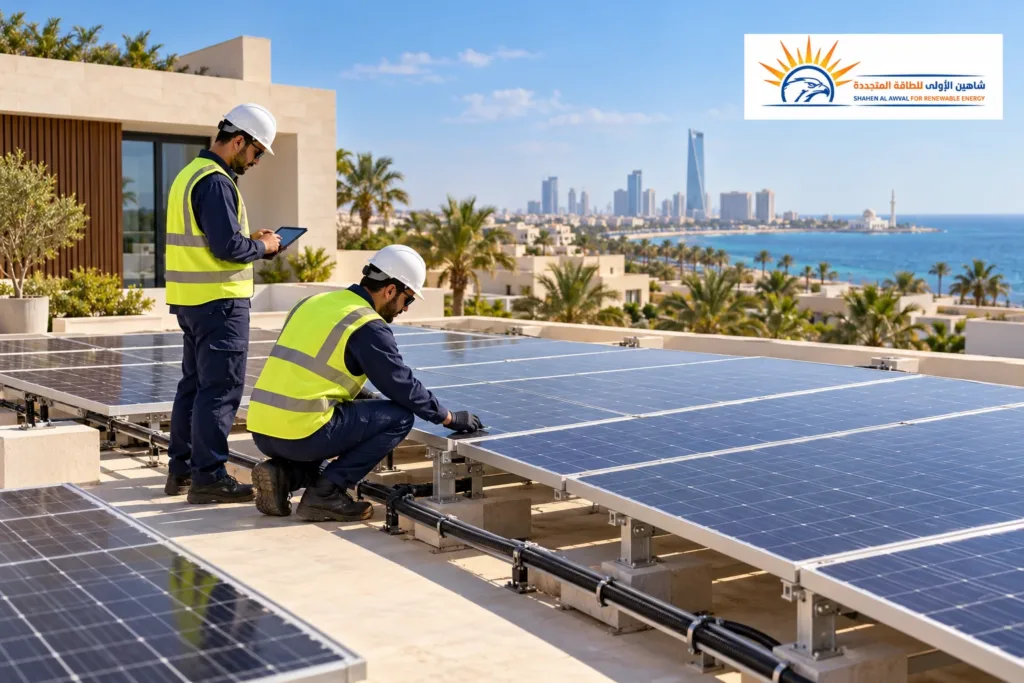
Installing Solar Systems in Saudi Arabia
Solar installation in Saudi Arabia means designing and building a system that converts sunlight into electricity that can be used directly, stored in batteries, or combined with the grid, depending on the project. It isn’t just about placing panels on a roof; it starts with studying consumption and available space, then choosing the right panel capacity, inverters, batteries, mounting structures, protection, and cables.
Shahen First Renewable Energy provides solutions that include needs assessment, design, supply, installation, commissioning, and follow-up, and you can also look at its solar energy services to see the types of systems available.
Why Is Demand for Solar Power Growing in the Kingdom?
The Kingdom has strong potential for using solar radiation, which is why solar installation in Saudi Arabia suits many sectors, from homes and rest houses to farms, factories, warehouses, and off-grid projects.
The main reasons that encourage investment in solar systems include:
- Reducing reliance on conventional electricity or fuel generators, depending on the type of system.
- Providing a power source for remote sites that are hard to connect to the grid.
- Designing the system around actual loads and operating hours.
- A range of solutions, from on-grid to off-grid and hybrid systems.
- Using batteries to store energy when needed.
- Supporting sustainability plans and improving energy efficiency.
Before deciding, it’s useful to read our article on home solar installation in Saudi Arabia to learn about the considerations specific to homes.
Suitable Types of Solar Systems
Choosing the type of system is one of the most important stages of solar installation in Saudi Arabia, because each system serves a different need.
On-Grid Systems
These systems use solar panels and grid-tie inverters, and are used to cover part of the consumption during daylight hours. You can learn more about on-grid systems before deciding whether they suit your project.
This type is best suited to facilities where a significant share of consumption happens during the day, because the energy produced by the panels can be used directly during operation.
Off-Grid Systems
If the site is far from the grid, a standalone system may be more suitable. It usually consists of panels, inverters, and storage batteries, with capacity set according to loads and operating hours. You can look at the off-grid systems service.
This type needs night-time consumption calculated carefully, because battery capacity and the number of panels must match the required operating hours.
Hybrid Systems
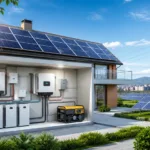
Hybrid systems combine solar power and batteries, and can work with the grid or a backup source depending on the design. They suit users who need more flexibility in managing energy. It’s useful to read our guide to the best hybrid solar inverter when comparing inverter options.
Steps to a Successful Solar Installation
The success of solar installation in Saudi Arabia depends on carrying out the project in clear stages, not just buying separate components.
1. Study Electricity Consumption
Start by reviewing your electricity bills or identifying the loads to be powered, recording each appliance’s power and daily operating hours. This step sets the size of the system needed and prevents oversizing or choosing a system smaller than you need.
It’s best to divide loads into essential and secondary; for example, pumps or continuously running equipment can be considered essential loads, while other appliances don’t need to run all the time.
2. Survey the Site
The roof or land area, shading, mounting orientation, spacing between panels, and the location of inverters and batteries are checked. You can request design and consulting to get a proposal that sets out the capacity, components, and cost for your site.
3. Design the System
Once the loads and space are known, the number and power of panels, the type of inverter, and battery capacity (if needed) are chosen, along with cables, protection, and mounting structures.
The components should be treated as a single system; choosing an excellent panel with an unsuitable inverter or an incompatible battery can reduce the efficiency of the whole system.
4. Supply the Components
You can browse Shahen’s solar products, which include solar panels, lithium batteries, inverters, floodlights, and submersible pump inverters, or visit the Shahen store to see the products available.
5. Installation and Wiring
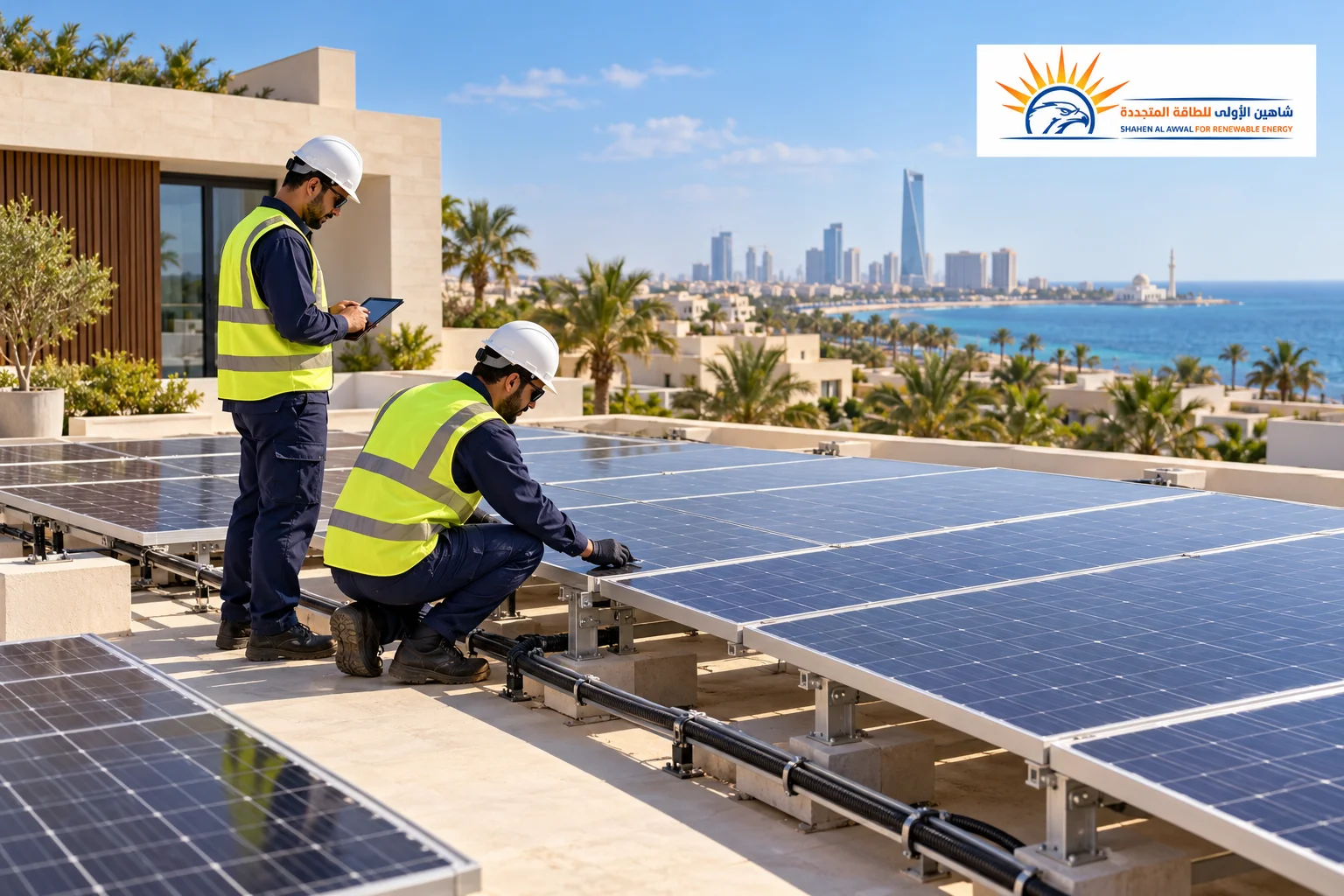
At the solar installation in Saudi Arabia stage, the structures and panels are mounted, then the electrical connections are made and the inverters, protection, and any batteries installed. All components must be compatible with the system’s capacity and operating requirements.
6. Inspection and Commissioning
Before relying on the system, connections are tested, protection is reviewed, voltage and current are measured, loads are switched on gradually, and production is monitored to make sure the system works as designed.
The Main Components of a Solar System
Any solar installation in Saudi Arabia project needs a set of components that must be chosen as an integrated system.
Solar Panels
These convert sunlight into electricity. Panels differ in power, efficiency, dimensions, and warranty, so they shouldn’t be judged on price alone. You can look at solar panel prices in Saudi Arabia to learn about the factors that affect cost.
You can also browse solar products or visit the Shahen solar store to compare the components available.
Inverters
The inverter converts the direct current from the panels into a form suitable for use. Choosing an inverter isn’t based on power alone; you also need to consider the type of system, the panel voltage range, the loads to be powered, and whether batteries can be connected when needed.
You can browse the inverters and solar products section or visit the Shahen store to compare options.
Lithium Batteries
Batteries store energy in systems that need to run at night or when there is no sun. Their capacity should be set according to the consumption to be covered and the number of operating hours.
You can review lithium battery products or visit the Shahen store to see the storage options available.
Panel Mounting Structures
Good mounting structures keep the panels stable and allow them to be set at the right angle, taking into account the type of roof and mechanical loads.
The design should also leave suitable space for inspection, cleaning, and maintenance, instead of installing panels in a way that makes them hard to reach later.
Cables and Protection
Cables, breakers, and overcurrent protection are essential for safety, and should be chosen according to voltage, current, run length, and site conditions.
What Should You Define Before Requesting a Quote?
Before contacting a specialist company, preparing some basic information helps you get a more accurate picture of the project.
Try to prepare:
- Average monthly electricity consumption.
- Copies of electricity bills, if the site is grid-connected.
- A list of the appliances or loads to be powered.
- Daily operating hours for each load.
- Whether operation is daytime only or extends into the night.
- The roof or land area available.
- Any shading from nearby buildings or trees.
- Whether the site is a home, farm, factory, or warehouse.
- Whether there is a grid connection at the site.
- Whether you need batteries for backup power.
This data helps the designer compare several scenarios, such as a smaller system to cover daytime consumption or a larger system with energy storage.
Solar Installation for Homes
When planning solar installation in Saudi Arabia for homes, first define the goal: is it to lower the electricity bill during the day, provide backup power, or run a home at a site far from the grid?
Then consumption is analyzed and the main appliances identified, such as air conditioners, lighting, refrigerators, and pumps. The more accurate the consumption data, the closer the design will be to actual needs.
For more details, see our article on home solar installation in Saudi Arabia.
Solar Power for Farms and Submersible Pumps
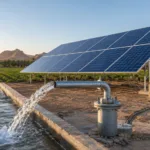
Agriculture is one of the most practical uses of solar installation in Saudi Arabia, especially for running well pumps, irrigation systems, and farms far from the grid.
Shahen provides solar submersible pump solutions by designing the system around the pump’s capacity, the well depth, and operating hours. You can also read our article on the cost of solar energy for farms to understand the elements of cost and return.
A practical example is the farm solar energy project in Al-Aflaj, which shows an off-grid system serving the needs of an agricultural project.
Farm owners can also compare submersible pump inverters and system components or visit the Shahen store when planning their project.
Solar Power for Commercial and Industrial Facilities
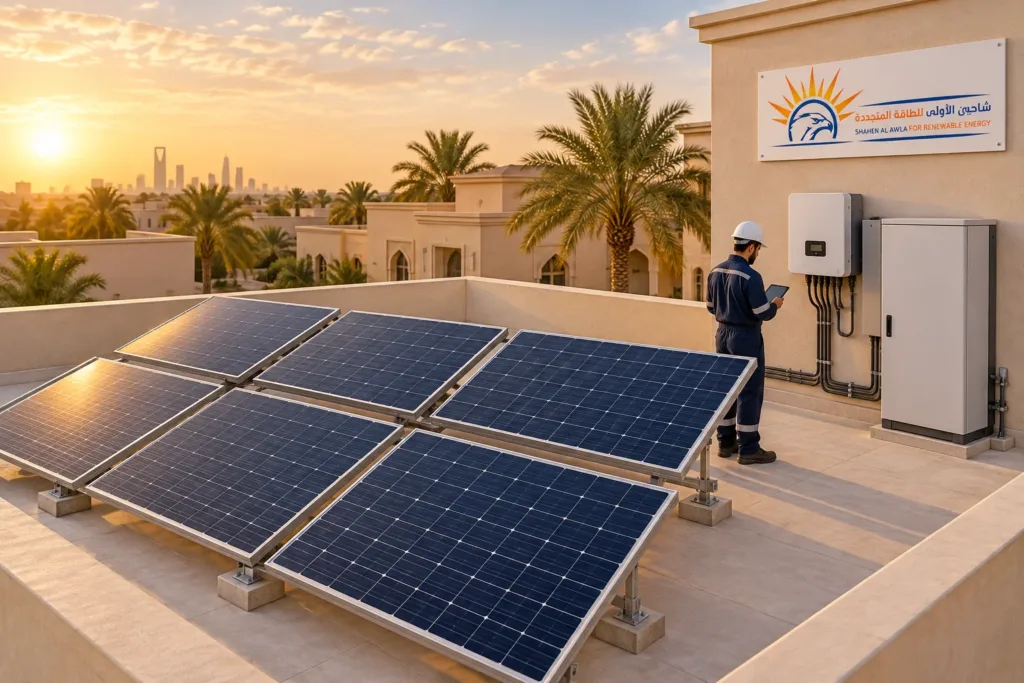
Solar systems aren’t limited to homes and farms; they can also be designed for warehouses, factories, and commercial buildings with high daytime loads.
In these cases, the design starts by analyzing the daily consumption curve and identifying the loads that run during panel production hours. The available roof area, inverter capacity, and possible future expansion are also studied.
It’s also best not to design the system based on space alone; a facility may have a large roof but a smaller electrical need, or the opposite, so consumption analysis remains the essential starting point.
How Much Does Solar Installation Cost?
There is no fixed cost for solar installation in Saudi Arabia, because the price changes with a number of factors, the most important being:
- System capacity in kilowatts.
- Number of panels and the power of each.
- Type and efficiency of the inverter.
- Whether there are batteries, and their capacity.
- System type: on-grid, off-grid, or hybrid.
- Type of roof and mounting structures.
- Cable lengths and wiring work.
- Protection panels and breakers.
- The nature of the loads and operating hours.
- Installation and site survey requirements.
So the most accurate way to get a real cost is to carry out a site survey and consumption study before buying any components.
You can also review our articles on solar panel prices in Saudi Arabia and the cost of solar energy for farms to better understand the cost elements.
How to Choose a Solar Installation Company
Choosing the installer directly affects the quality of solar installation in Saudi Arabia, as well as the system’s lifespan and stability. So look for a company that offers a clear process that starts with a study and doesn’t end at mounting.
Key points include:
- A site survey before the final quotation.
- A design based on actual loads.
- A clear statement of the type and capacity of each component.
- Using components that are compatible with each other.
- Neat, organized wiring and protection.
- Testing the system before handover.
- Follow-up and maintenance after commissioning.
Shahen’s About Us page explains the company’s approach to studying the site and consumption, supplying compatible components, and installation and follow-up after commissioning.
Mistakes to Avoid Before Installation
To get the best result from solar installation in Saudi Arabia, avoid decisions based on price alone or on inaccurate estimates.
The most common mistakes include:
- Buying panels before calculating loads.
- Choosing an inverter with an unsuitable capacity.
- Using a battery smaller than needed.
- Ignoring shading on the panels.
- Not calculating night-time consumption in standalone systems.
- Choosing cables or protection without calculating voltage and current.
- Neglecting ease of maintenance and cleaning in the future.
- Installing incompatible components in the same system.
- Relying on rated power alone without studying operating hours.
- Choosing a system on the lowest price without comparing component quality and service.
How to Keep the System Efficient After Installation
Solar installation in Saudi Arabia doesn’t end when the system is switched on; regular monitoring helps detect drops in production or faults early.
Make sure to:
- Check production data regularly.
- Clean the panels when dust builds up, according to site conditions.
- Inspect connections and protection.
- Ensure proper ventilation for inverters and batteries.
- Monitor battery performance and state of charge.
- Request maintenance when there’s an unexplained drop in production.
You can learn about Shahen’s services, which cover the design, installation, commissioning, and follow-up stages of projects.
Why Shahen?
When looking for a specialist in solar installation in Saudi Arabia, Shahen offers a complete process that starts with understanding the need and surveying the site, followed by design, supply, and installation, through to inspection, commissioning, and follow-up.
The company also offers a range of solar products, including panels, inverters, lithium batteries, submersible pump inverters, and floodlights, and you can visit the Shahen solar store to see the products available to buy.
Working with a provider that handles design, components, and installation helps reduce the problem of incompatible system parts, because panels, inverters, and batteries should be chosen according to one clear design.
Is Solar Power Right for Your Project?
The decision to go ahead with solar installation in Saudi Arabia should start with a simple question: what loads do you want to run, for how many hours, and is the site connected to the grid or far from it?
If the goal is to reduce consumption at a grid-connected facility, an on-grid system may suit you. If the site is far from the grid, you may need an off-grid system with batteries. If you want to combine more than one energy source, a hybrid system may be more flexible.
That’s why a design tailored to the site matters more than buying as many panels as possible.
Solar installation in Saudi Arabia is a project that needs a careful study, starting with the loads and ending with monitoring performance after commissioning. The type of system, panel capacity, inverters, batteries, mounting structures, and protection should all be chosen as one compatible system.
With Shahen, you can move from the idea stage to design, supply, and installation along a clear path, and you can browse Shahen’s services and solar products or visit the Shahen store to choose suitable components.
If you’re planning solar installation in Saudi Arabia, start by studying consumption and surveying the site, then ask for a design that sets out the system capacity, components, cost, and scope of work before making a purchase decision.
Frequently Asked Questions
What is the most important step before installing solar in Saudi Arabia?
The most important step is calculating the consumption or loads to be powered, then surveying the site to determine the space, shading, and type of installation. This data is the basis for sizing the system and choosing the right panels, inverters, and batteries.
Do all solar installations in Saudi Arabia need batteries?
No. Grid-connected systems can work without batteries, while standalone systems usually need energy storage if loads must run when there’s no sun. The final decision depends on the type of system and how it will be used.