As solar energy adoption expands rapidly across homes, factories, and commercial projects, solar batteries have become an essential component for keeping systems running and getting the most out of every kilowatt generated. Shahen First for Renewable Energy delivers advanced solutions built on the latest solar battery technologies, helping customers store electricity and draw on it whenever sunlight isn’t available, all while achieving peak efficiency and cutting long-term energy costs.
What Are Solar Batteries?
Solar batteries are dedicated units that store the electricity your solar panels generate during daylight hours, so you can use it later at night, on cloudy days, or whenever the grid goes down.
An energy storage system works by converting the electricity produced by the panels into energy held inside the battery, then releasing it again when needed, which makes the whole system far more independent and efficient.
How Do Batteries Work in Solar Power Systems?
The process unfolds across a few sequential stages:
- The solar panels generate electricity.
- The charge controller directs that power to the batteries.
- The electricity is stored inside the battery.
- When needed, the stored energy is drawn out to run your electrical appliances.
- The inverter converts direct current into alternating current suitable for everyday use.
Thanks to this cycle, solar batteries provide a steady source of power around the clock.
Why Solar Batteries Matter in Energy Systems
Batteries play a pivotal role in the success of any solar energy project. Among their most important benefits:
- Storing surplus electricity.
- Reducing reliance on the utility grid.
- Supplying power during outages.
- Boosting the efficiency of the entire system.
- Lowering electricity bills.
- Making full use of the energy you produce.
- Supporting systems in remote areas.
That’s why solar batteries have become one of the most important parts of any modern renewable energy system.
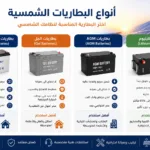
Types of Solar Batteries
Several types are available, differing by the technology they use and the nature of the application.
1. Lead-Acid Batteries
These are among the oldest and most widely used types.
Advantages
- Budget-friendly price.
- Easy to maintain.
- Well suited to smaller projects.
Drawbacks
- Shorter lifespan.
- Require regular maintenance.
- Lower efficiency compared with newer technologies.
2. Gel Batteries
These stand out for using a gel-based substance inside the battery instead of a liquid.
Advantages
- Resistant to vibration.
- Maintenance-free.
- Perform well in high temperatures.
Drawbacks
- More expensive than lead-acid batteries.
- Slower charging speed.
3. AGM Batteries
AGM batteries are an evolution of the traditional lead-acid design.
Advantages
- Longer lifespan.
- Good charging speed.
- Maintenance-free.
Drawbacks
- Higher cost than standard batteries.
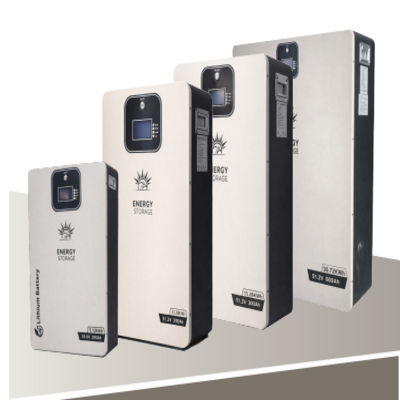
4. Lithium Batteries
Lithium (lithium-ion) batteries are currently the best choice for most solar power systems.
Advantages
- Long lifespan.
- Efficiency exceeding 95%.
- Lightweight.
- Fast charging.
- Support for deep discharge.
That’s why lithium-based solar batteries have become the most widely used option in modern systems.
Comparing the Types of Batteries
| Type | Lifespan | Maintenance | Efficiency |
| Lead-Acid | 3-5 years | Required | Moderate |
| Gel | 5-8 years | None | Good |
| AGM | 5-8 years | None | Very good |
| Lithium | 10-15 years | None | Excellent |
How to Choose the Right Battery
Choosing the right solar batteries comes down to several key factors:
1. Electricity Consumption
The more power a home uses, the larger the battery capacity it needs.
2. Hours of Operation
This determines how long your appliances can keep running when the sun isn’t shining.
3. Type of Loads
Heavy-duty appliances require batteries with higher capacity.
4. Budget
Investing in lithium batteries may cost more upfront, but it pays off over the long run.
5. Lifespan
It’s best to choose a battery that delivers the greatest number of charge and discharge cycles.
Key Uses of Solar Batteries
Batteries feature in a wide range of applications, such as:
- Homes.
- Villas.
- Farms.
- Factories.
- Hospitals.
- Schools.
- Hotels.
- Telecommunications stations.
- Water pumping stations.
- Agricultural projects.
That’s why solar batteries have become an essential part of modern energy projects.
The Lifespan of Batteries
A battery’s lifespan depends on several factors, including:
- The type of battery.
- Temperature.
- Depth of discharge (DoD).
- Charging quality.
- Regular maintenance.
With proper use, lithium batteries can last more than 15 years.
Signs It’s Time to Replace Your Battery
The clearest indicators include:
- Shorter runtime.
- Slow charging.
- Overheating.
- Swelling of the battery.
- A drop in voltage.
- Frequent faults.
When these signs appear, have your solar batteries inspected by a specialist.
How to Care for Your Batteries
To get the best performance, we recommend the following:
- Avoid fully discharging the battery.
- Use a high-quality charge controller.
- Keep the battery at a suitable temperature.
- Clean the battery terminals.
- Check the voltage periodically.
- Use a compatible inverter.
Common Mistakes That Shorten Battery Life
Among the most widespread mistakes:
- Choosing the wrong capacity.
- Using an incompatible charger.
- Loading the battery beyond its capacity.
- Leaving the battery uncharged for long periods.
- Installing it in high-temperature locations.
Avoiding these mistakes helps extend the life of your solar batteries.
Why Have Lithium Batteries Become the Best Choice?
There are plenty of reasons they’ve come to lead the market:
- Long operating life.
- Rapid charging.
- High efficiency.
- Compact size.
- Lightweight.
- Maintenance-free.
- Safe and environmentally friendly.
That’s why many experts prefer lithium-type solar batteries for new projects.
The Role of Shahen First for Renewable Energy
Shahen First for Renewable Energy provides complete solar energy solutions, including:
- System design.
- Battery supply.
- Professional installation.
- Programming of storage systems.
- Maintenance services.
- Technical support.
- Energy consumption studies.
- Solutions for homes, businesses, and factories.
The company also helps customers choose the best solar batteries to match the nature of their project and their available budget.
Tips Before Buying Solar Batteries
Before you make a purchase decision, be sure to:
- Define your needs precisely.
- Choose a trusted brand.
- Review the warranty period.
- Confirm the battery is compatible with your inverter.
- Compare lifespans.
- Factor in long-term operating costs.
- Work with a company that specializes in design and installation.
Choosing the right solar batteries is what guarantees the highest efficiency from your system.
The Future of Solar Batteries
The energy storage sector is advancing rapidly, with new technologies emerging that raise battery efficiency and drive down costs. Experts expect storage systems to become a core element of every renewable energy project in the years ahead, especially as smart cities and sustainable buildings continue to expand.
Global companies are also investing in developing batteries with longer lifespans, greater capacity, and faster charging, making solar batteries even more efficient and reliable in the future.
Solar batteries are the beating heart of any system that runs on solar energy; they are responsible for storing electricity and keeping appliances running efficiently under all kinds of conditions. Choosing the right battery improves system performance, lowers operating costs, and increases the return on your investment.
That’s why partnering with Shahen First for Renewable Energy gives you access to professional solutions designed to the highest standards, from studying your project’s needs all the way through to selecting and installing the best solar batteries for maximum efficiency and sustainability.
Frequently Asked Questions
What are the best types of solar batteries?
Lithium batteries are considered among the best types of solar batteries, thanks to their long lifespan, high efficiency, fast charging, and freedom from routine maintenance, which makes them the ideal choice for most modern solar power systems.