Running submersible pumps on solar power has become a practical way to save electricity and reduce water pumping costs, especially on farms, at wells, and in areas that need continuous operation or lack a stable grid supply. Shahen Al-Awla provides solar energy systems that can be designed around the pump’s power, the depth of the well, and water pumping needs, using suitable components to achieve the best possible operating efficiency.
What Does Running Submersible Pumps on Solar Power Mean?
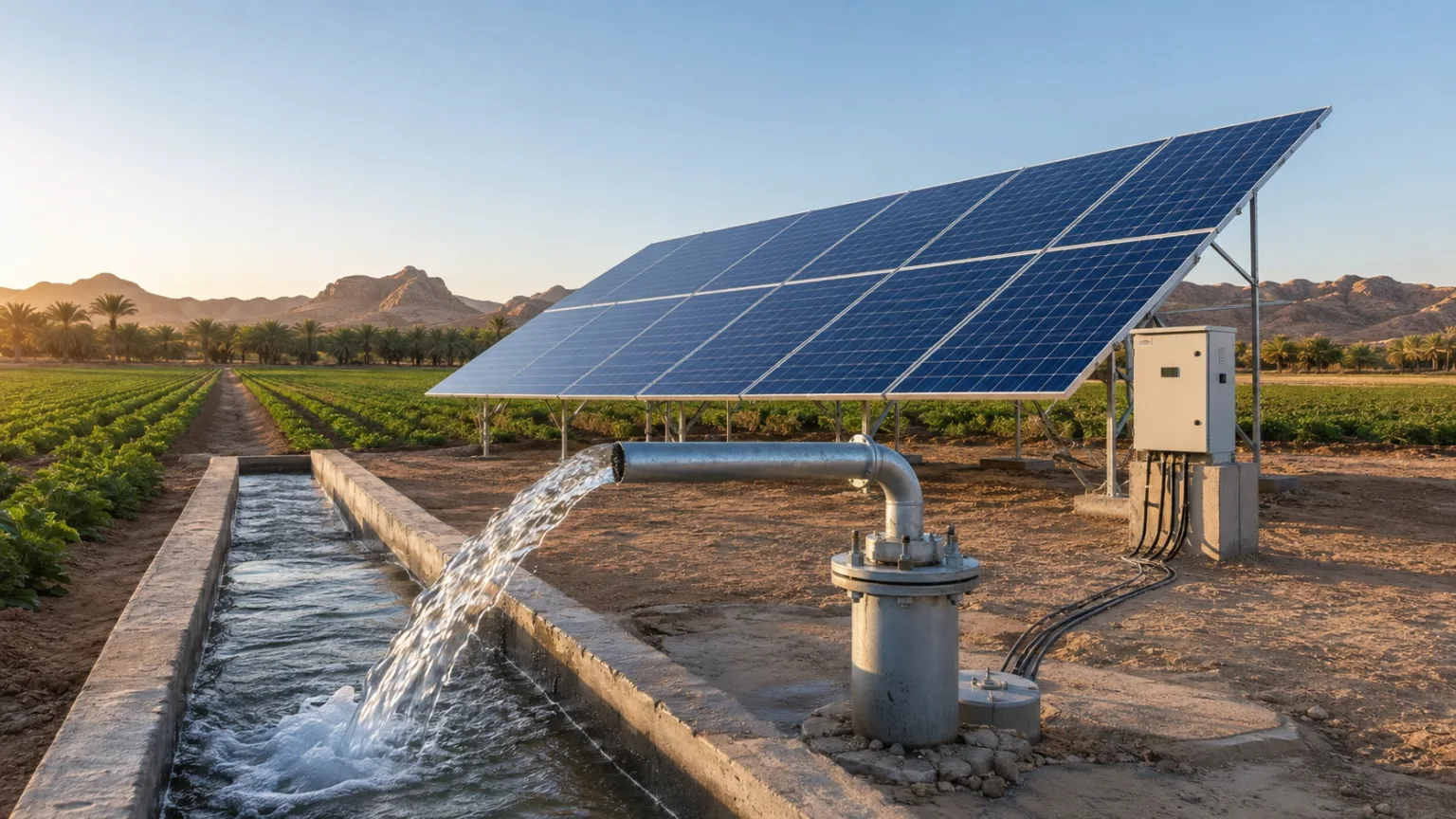
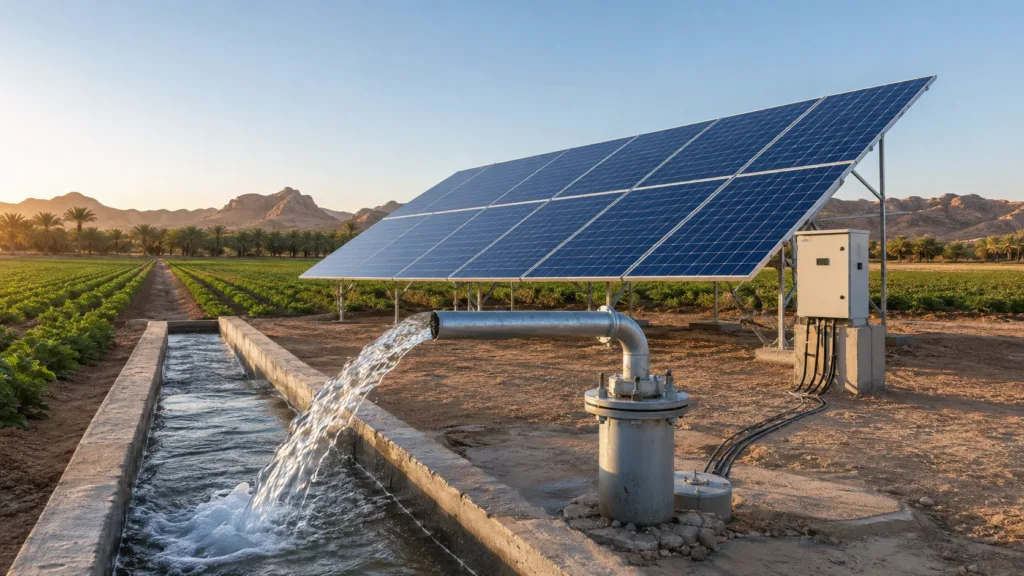
Running submersible pumps on solar power means using solar panels to produce the electricity needed to run a submersible pump motor, instead of relying entirely on conventional electricity or fuel generators.
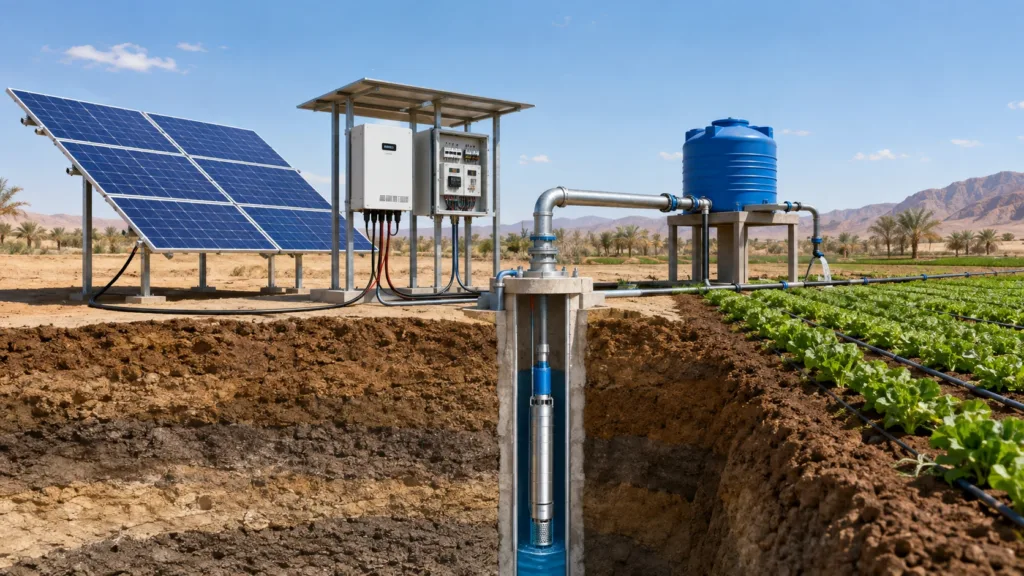
The process starts with the solar panels converting sunlight into electrical energy. The power then passes through a controller or an inverter designed for pumps, and finally reaches the pump motor, which starts pumping water from the well or tank to where it’s needed.
System design varies from project to project according to several factors, the most important being:
- The power of the pump motor.
- The depth of the well.
- The amount of water needed each day.
- The water flow rate.
- The number of operating hours required.
- Hours of sunshine.
- The type of solar panels.
- The type and capacity of the inverter.
- Whether batteries are needed.
Why Are Projects Turning to Solar Submersible Pumps?
Running submersible pumps on solar power is becoming more important as the need grows for sustainable ways to supply water and cut operating costs, especially in farming, which relies on frequent water pumping.
The main reasons for using this system include:
Lower electricity consumption
Solar energy can produce a large share of the electricity needed to run the pump during the day, reducing reliance on the conventional grid.
Lower operating costs
Once the solar system is installed, the panels need no fuel to generate electricity, which helps cut operating expenses compared with constantly relying on diesel or petrol generators.
Making use of renewable energy
The sun is a renewable energy source, so it can be used to run pumps in a way that suits agricultural projects and remote areas.
Easy operation in remote areas
A solar pumping system can be designed for areas the grid doesn’t easily reach, making this technology suitable for wells, farms, and projects in remote locations.
Components of a Solar Submersible Pump System
The success of running submersible pumps on solar power depends on choosing every system component so they work together, not just buying some solar panels and installing them next to the pump.
The main components include:
Solar panels
The panels are the system’s main energy source, converting sunlight into electricity that can run the pump.
The number and wattage of the panels are determined by the pump motor’s power and operating requirements, taking into account site conditions, panel orientation, and tilt angle.
Solar inverter
The inverter is one of the most important parts of the system, especially when using pumps with motors that need alternating current.
Its job is to convert and regulate the power coming from the panels to suit the pump motor’s needs, and there are types made specifically for solar water pumping.
The submersible pump
The pump should be chosen based on well depth, flow rate, required pressure, and the height of the delivery point.
Choosing a more powerful motor doesn’t necessarily give you a better system; excess power can raise the system’s cost without any real benefit if it isn’t needed.
Cables and electrical protection
The system needs cables suited to the current and voltage used, as well as the protection devices needed to reduce the risk of electrical faults.
Tank or water distribution network
In some applications, water is pumped to an elevated tank and distributed later, while in others it is fed directly into the irrigation network. The choice depends on the nature of the project.
How Is the Solar Capacity for a Pump Calculated?
One of the most important steps in running submersible pumps on solar power is carrying out the technical calculations before buying components.
Start by determining the pump power required, then calculate the energy the system needs over the daily operating period.
For example, if a project uses a pump of a certain power and needs to run it for several hours a day, determine the total energy required, then choose a set of panels that can supply this energy, keeping in mind that panel output changes throughout the day.
A suitable margin should also be included in the design because of:
- Changes in solar irradiance.
- High temperatures.
- Dust on the panel surface.
- Cable losses.
- Inverter efficiency.
- Differences in sun hours by location and season.
That’s why it’s best to have the design done by a specialist rather than relying on rough calculations alone.
How Many Panels Are Needed to Run a Pump?
There is no fixed number of panels that suits every pump, because the number depends on each panel’s wattage, the pump’s power, and operating requirements.
If the pump needs high power, the system will need a larger array of panels. The panel voltage must also match the inverter’s operating range.
Determining the number of panels usually involves:
- Knowing the pump motor’s power.
- Determining daily operating hours.
- Calculating the energy required.
- Knowing the average effective sun hours at the site.
- Determining the wattage of each panel.
- Adding a suitable margin for losses.
- Making sure the voltage and current match the inverter.
Read more:
Solar panel prices in Saudi Arabia
Solar batteries in Saudi Arabia
Home solar installation in Saudi Arabia
Do Solar Submersible Pumps Need Batteries?
One of the most common questions when designing a system for running submersible pumps on solar power is whether batteries are necessary.
The answer depends on how the water is used.
If the goal is to pump water during daylight hours, the system can be designed so that the pump runs directly on the power the panels produce, with a water tank used to store water instead of storing electricity.
If the project needs to run the pump at night or at times when there is no sun, batteries or a different storage design may be needed.
In some agricultural applications, storing water in a tank can be more economical than using large batteries, but the final decision depends on the nature of the project.
Running Submersible Pumps on Solar Power in Agriculture
Agriculture is one of the main fields that benefits from running submersible pumps on solar power, because irrigation systems need frequent water pumping and some farms are located far from electricity sources.
The system can be used for:
- Irrigating farmland.
- Pumping water from wells.
- Filling irrigation tanks.
- Supplying drip irrigation networks.
- Running sprinkler irrigation systems.
- Providing water for remote agricultural projects.
The pump’s power should be chosen according to crop needs and the irrigation system, not just the size of the land.
Two farms of the same size may need different systems because of differences in well depth, water flow rate, and required pressure.
Running Submersible Pumps on Solar Power for Wells
Wells need a careful technical study before installing the system, because the depth of the water source directly affects the pump power required.
When designing a system for a well, you need to know:
- The depth of the well.
- The water level during pumping.
- The well diameter.
- The amount of water required.
- The water flow rate.
- The distance between the well and the point of use.
- The height the water needs to be pumped to.
- The number of daily operating hours.
The higher the water has to be lifted, the greater the pump requirements and the energy needed to run it.
Key Advantages of Running Submersible Pumps on Solar Power
Running submersible pumps on solar power offers several advantages that make it a good option for many projects.
Lower energy costs
Reliance on conventional electricity and fuel can be reduced, especially in applications that need to pump water every day.
Less reliance on fuel
In areas that use diesel generators to run pumps, solar energy can provide an alternative that reduces the need to buy and transport fuel.
Operation in remote areas
The system can be installed at sites without a suitable grid connection, provided it is designed and installed correctly.
Lower maintenance needs
Solar panels have no moving mechanical parts, so their maintenance needs are relatively limited compared with conventional generators.
Long component life
Solar panels have a long service life when installed and maintained properly, while the other system components, such as the inverter and pump, still need to be monitored.
Drawbacks and Challenges of Solar Pump Systems
Despite the advantages, there are some challenges to consider before running submersible pumps on solar power.
First, the upfront cost can be high compared with buying a conventional pump alone, because the system needs panels, an inverter, cables, protection components, and installation.
Electricity production is also affected by weather conditions, so the system should be designed using the expected solar irradiance data for the site.
The panels also need regular cleaning, because dust build-up can reduce their ability to produce energy.
Maintaining a Solar Submersible Pump System
Regular maintenance helps keep running submersible pumps on solar power efficient and reduces the chance of sudden faults.
The most important maintenance tasks include:
- Cleaning dust off the panels.
- Inspecting cables and connections.
- Monitoring inverter performance.
- Checking the pump regularly.
- Making sure there are no leaks in the water network.
- Tracking the water flow rate.
- Inspecting electrical protection devices.
- Making sure there is no shading on the panels.
Any abnormal drop in the pumping rate should be treated as a sign that needs checking, as the cause may be the pump, the panels, the inverter, or the water source.
Common Causes of Weak Water Pumping
Poor performance when running submersible pumps on solar power can have several causes, and the fault is not necessarily in the pump itself.
Possible causes include:
- Lower panel output.
- Dust build-up on the panels.
- Shading on part of the panels.
- A problem with the cables or connections.
- Low operating voltage.
- A fault in the inverter.
- A blockage in the water pipes.
- A drop in the water level in the well.
- A mechanical problem in the pump.
That’s why the whole system should be checked before replacing any component.
How Do You Choose the Right System?
Before buying components for running submersible pumps on solar power, determine the project’s actual needs.
Start by determining the amount of water needed each day, then identify the water source, the well depth, and the required flow rate.
Next, choose the right pump, then specify the inverter, panels, cables, and other components.
It’s best to compare systems on performance, efficiency, component quality, and after-sales service, not on price alone.
Is Running Submersible Pumps on Solar Power Right for Your Project?
The system can suit farms, wells, and projects that need to pump water continuously, especially when electricity or fuel costs are high or the site is far from the grid.
But the decision should be based on a technical and economic study covering the setup cost, consumption, the amount of water required, component lifespan, and maintenance costs.
A study done in advance helps avoid installing a system that is larger than needed or smaller than the required capacity.
Steps to Build a Solar Water Pumping System
The project can be carried out through a series of basic steps:
Site study
Determine the location of the panels, the water source, the pump, the tank, and the distribution network.
Determine water needs
Calculate the amount of water needed daily, the pumping rate, pressure, and required head.
Choose the pump
Select the pump based on the well data, flow rate, and required head.
Specify the panels and inverter
Calculate the solar capacity required and make sure the panels are compatible with the inverter and the pump.
Installation
Install the panels and connect the system to the pump, taking electrical protection into account.
Testing and commissioning
After installation, test the system and monitor the pumping rate and pump performance under different operating conditions.
Why Is a Technical Study Important Before Installation?
The main goal of running submersible pumps on solar power is not just to run the pump, but to achieve a balanced system that can supply the required amount of water with the best use of energy.
If a pump larger than needed is chosen, the cost of the panels and inverter may rise unnecessarily. If the pump is smaller than required, it may not supply the water the project needs.
Choosing panels or an inverter that aren’t compatible with the pump can also cause operating problems and lower efficiency.
That’s why a technical study is an essential step before buying equipment.
Running submersible pumps on solar power is a practical way to provide the energy needed to pump water on farms, at wells, and in areas that need an independent power source. The system’s success depends on choosing the pump, panels, inverter, and other components based on an accurate study of the project’s needs.
Using a tank to store water can also be a practical option in some projects instead of relying on batteries, especially when the main goal is to pump water during daylight hours.
For the best result, don’t choose components based on price alone; compare power, efficiency, quality, and technical suitability with the nature of the well and your pumping needs. Shahen Al-Awla helps provide the right solar solutions for projects looking for efficient pumping systems that work for their site.