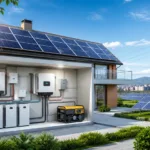
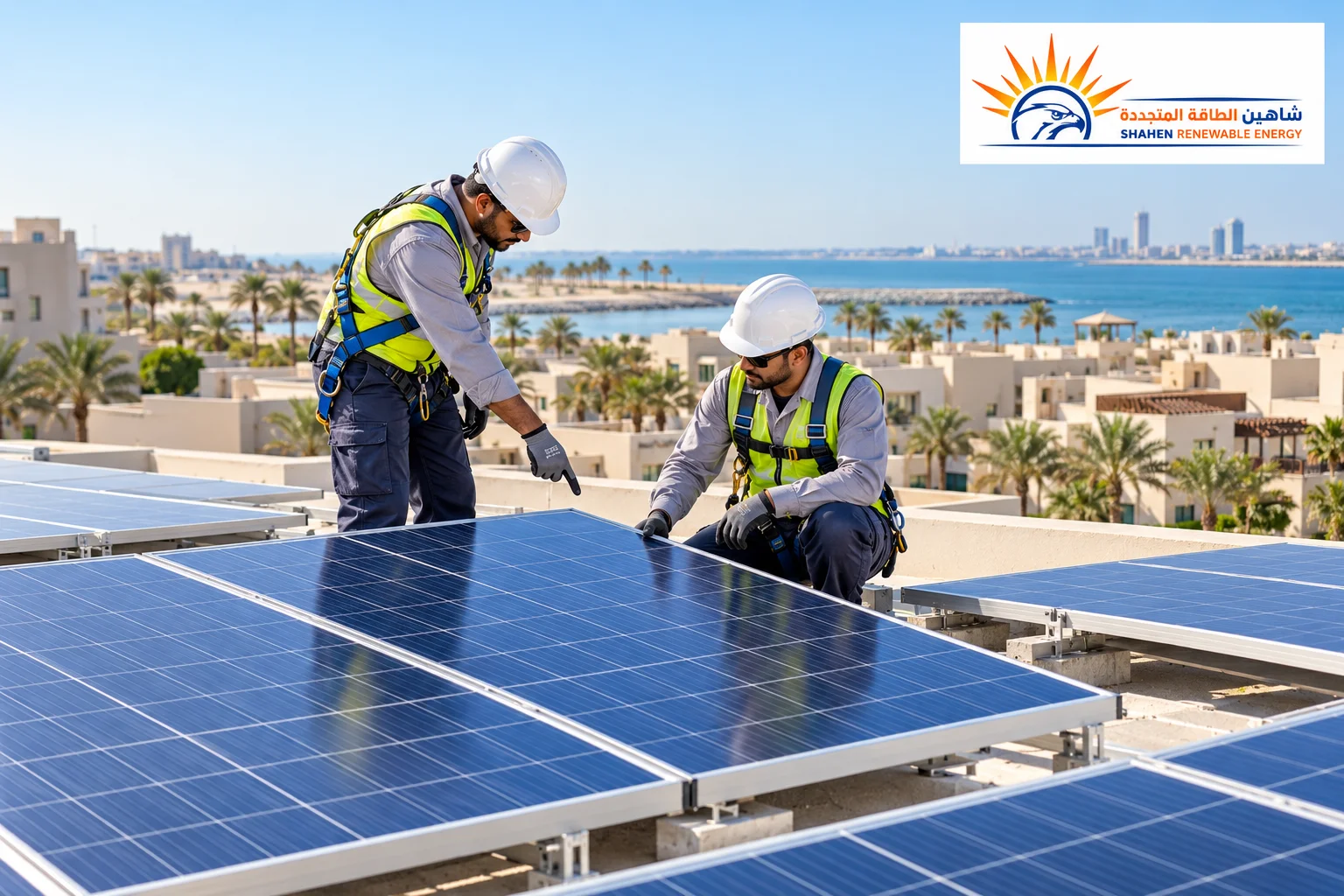
An on-grid solar system for homes and villas is a practical solution for anyone who wants to use solar power and rely less on grid electricity during the day. Shahen provides complete solutions that start with studying the electricity bill and consumption pattern and surveying the site, then designing the system, choosing its components, and carrying out installation, connection, inspection, and performance monitoring after commissioning.
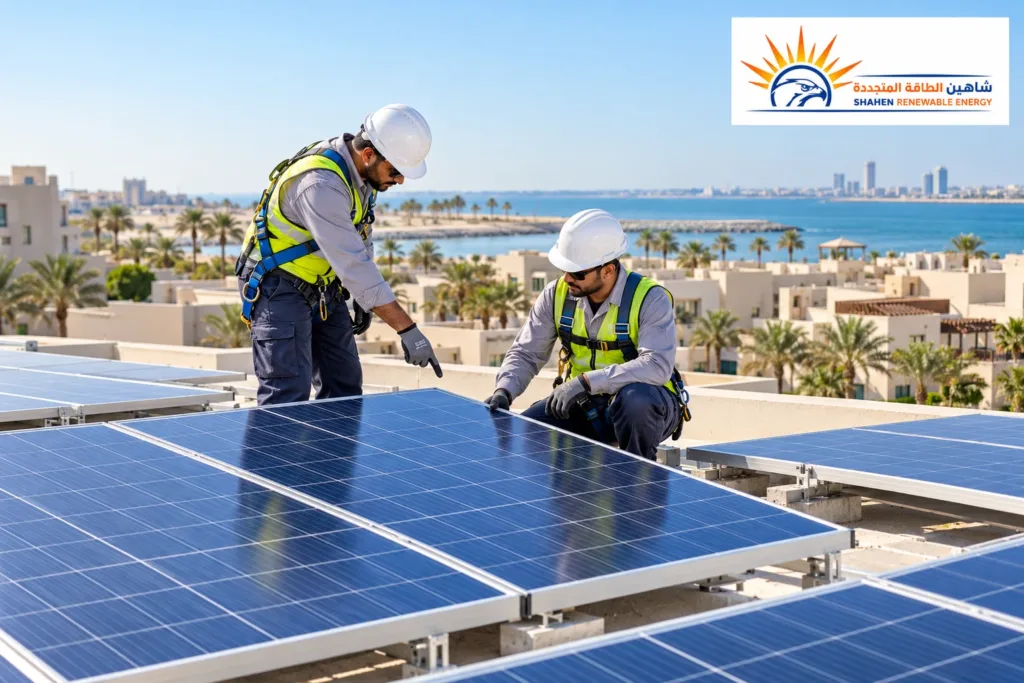
An on-grid system differs from off-grid systems in that it works together with the public grid rather than relying on batteries as the main way to store energy. If the panels produce enough energy to cover part of the home’s daytime consumption, it is used directly, while the grid continues to supply electricity when panel production drops or loads increase.
What Is an On-Grid Solar System for Homes and Villas?
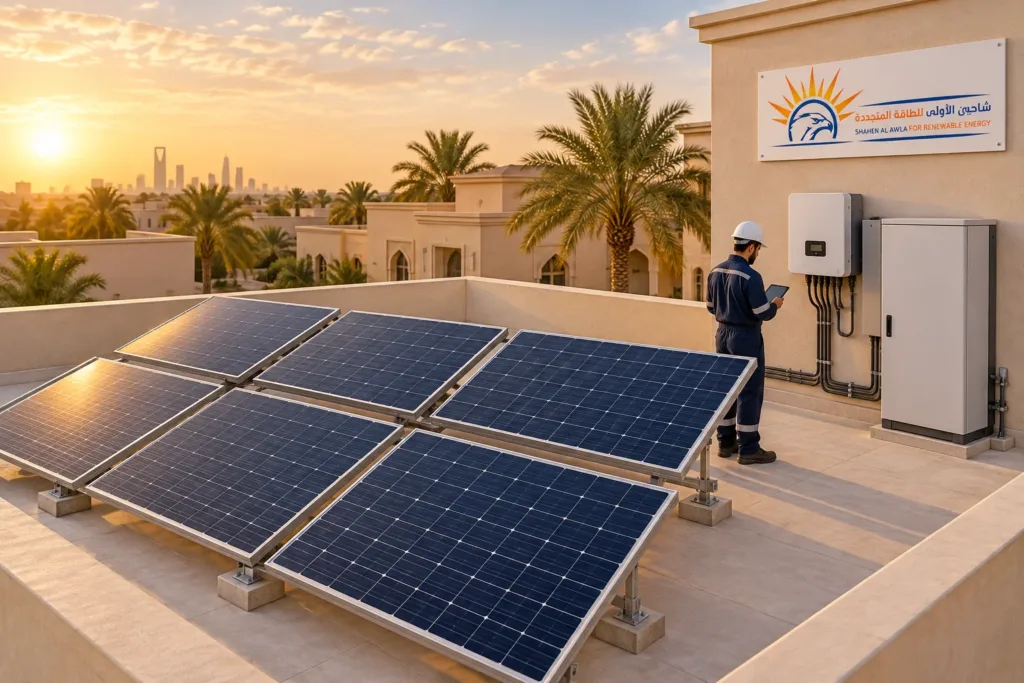
An on-grid solar system for homes and villas is a system in which solar panels are installed on the roof of a home or villa and connected through a suitable solar inverter to the building’s electrical system and the public grid, according to the design and the necessary technical requirements.
During sunshine hours, the panels produce electricity, and the energy produced powers the loads in the home. When solar power isn’t enough, the home continues to get electricity from the grid.
This type of system usually doesn’t need storage batteries, which can help reduce the number of components and the cost of the system compared with some off-grid or hybrid systems.
You can learn more about Shahen’s on-grid systems service.
How Does an On-Grid System Work in a Home?
The idea behind an on-grid solar system for homes and villas is to use the solar energy available during the day alongside the electricity grid.
In simple terms, the process works like this:
- The solar panels receive sunlight.
- The panels produce direct current (DC).
- The current goes to the solar inverter.
- The inverter converts the electricity into alternating current (AC) suitable for household use.
- The home uses the energy produced to run its loads.
- When solar power isn’t enough, the shortfall is made up from the public grid.
- At night, the home relies on the grid, as there’s no direct solar production.
In this way, an on-grid solar system for homes and villas works alongside the main electricity supply without usually needing to store large amounts of energy in batteries.
What Are the Components of an On-Grid System?
A project’s success doesn’t depend on the panels alone, but on a complete set of components being compatible with each other and with the home’s consumption.
Solar Panels
The panels convert solar radiation into electricity. Panels differ in:
- Power in watts.
- Efficiency.
- Area and dimensions.
- Technology used.
- Product and performance warranty.
- Suitability for the roof area.
The number of panels and total capacity should be chosen based on the home’s consumption and available space, not on a fixed number applied to every villa.
To learn about the factors that affect panel costs, see our guide to solar panel prices in Saudi Arabia.
The Inverter
The inverter is an essential element in an on-grid solar system for homes and villas, converting the electricity from the panels into a form that can be used in the home.
The inverter should be chosen according to factors such as panel capacity, voltage, electrical design, and system requirements.
Panel Mounting Structures
Panels must be mounted in a way that suits the type of roof, taking into account orientation, angle, spacing, and the structure’s resistance to outdoor conditions.
Cables and Electrical Protection
The project also includes a set of components that may seem simple but are essential for the system’s safety and efficiency, such as:
- Solar cables.
- Breakers.
- Surge protection.
- Earthing.
- Distribution boards.
- Connectors.
- Combiner boxes where needed.
Shahen’s solar component supply service highlights the importance of choosing components compatible with the system’s type and capacity instead of buying each part separately.
Advantages of an On-Grid Solar System for Homes and Villas
There are several reasons this type of system suits many homes and villas that already have a grid connection.
Using Less Grid Electricity During the Day
The more of the loads used during the panels’ production period the system can cover, the less electricity the home needs to draw from the grid during those hours.
Usually No Need for Batteries
In a conventional grid-tied system, batteries aren’t an essential element, because the grid itself continues to supply electricity when solar production drops.
This makes designing an on-grid solar system for homes and villas simpler compared with a standalone system that needs to store enough energy to cover consumption after sunset.
Making Use of Roof Space
The roofs of homes and villas can provide suitable space for a set of panels without needing separate land for the project.
Designing the System Around Consumption
The project doesn’t have to cover the home’s entire consumption. The system capacity can be set based on the consumption pattern, budget, available space, and the project’s goal.
Who Is an On-Grid System Suitable For?
An on-grid solar system for homes and villas is particularly suitable for homes with a stable grid supply whose owners want to use solar power to cover part of their consumption.
It may be more worthwhile where there is significant consumption during the day, such as running:
- Air conditioners.
- Refrigerators and freezers.
- Water pumps.
- Household appliances.
- Lighting.
- Home offices.
- Some continuous daytime loads.
A home in an area completely cut off from the grid may need a different solution; in that case, you can read about off-grid systems.
How Is the Right System Capacity for a Villa Determined?
There’s no single capacity of on-grid solar system for homes and villas that suits every home, because the choice depends on each site’s actual consumption.
The study usually starts by reviewing the electricity bill to find monthly and annual consumption, then identifying when the main loads run.
The main factors considered include:
- Average consumption in kWh.
- How consumption changes between summer and winter.
- The share of consumption during the day.
- The roof area available for installation.
- Roof orientation and shading.
- The power of each panel.
- The goal of the project.
- The available budget.
- Possible future increases in consumption.
For some villas, the goal is to cover a specific share of consumption, while other homeowners want to use as much roof space as possible according to the technical study.
Why Study the Electricity Bill Before Design?
The electricity bill is one of the most important pieces of initial data when designing an on-grid solar system for homes and villas.
Relying on the size of the home or the number of rooms alone doesn’t give an accurate picture of consumption.
Two villas may be the same size, but the first may use its air conditioners for long periods and have many appliances, while the second’s consumption is much lower.
So consumption should be reviewed over a suitable period to understand its pattern, rather than relying on a single month if consumption varies greatly by season.
Why Is Surveying the Villa’s Roof Important?
After analyzing consumption comes the site survey.
The survey helps determine whether the roof is suitable for an on-grid solar system for homes and villas and how many panels can be installed.
The survey usually includes:
- Measuring the available area.
- Identifying roof orientations.
- Noting sources of shading.
- Locating tanks, AC units, and obstacles.
- Choosing the inverter location.
- Studying the cable route.
- Identifying the type of roof.
- Deciding the right mounting method.
Having a large area doesn’t automatically mean it can all be used, because some parts may be shaded or reserved for other equipment.
Does an On-Grid System Need Batteries?
In most conventional designs, an on-grid solar system for homes and villas doesn’t need batteries; the energy produced is used during the day while the grid is present.
This is one of the most important differences between on-grid and off-grid systems.
An off-grid system needs to store energy because it can’t rely on the grid after sunset, while an on-grid system uses the grid when solar production isn’t enough.
If the customer’s goal also includes storing energy, it may be necessary to study a different hybrid design rather than assuming that adding batteries to any system is the best choice.
What’s the Difference Between On-Grid, Off-Grid, and Hybrid?
Choosing the type of system is an essential step before buying equipment.
On-Grid
This is the on-grid solar system for homes and villas that works in parallel with public electricity and usually doesn’t need batteries.
Off-Grid
A system completely independent of the grid that relies on panels, batteries, and an inverter to supply the site with electricity.
Hybrid
A hybrid system that can combine solar power, batteries, and the grid or other sources depending on the design.
It’s best to define the site’s needs first, then choose the system that serves those needs, instead of picking a type based on the technology name alone.
How Much Does an On-Grid Solar System Cost?
The cost of an on-grid solar system for homes and villas varies from one villa to another, so it isn’t accurate to give one price for every home without a study.
Cost is affected by factors such as:
- System capacity in kilowatts.
- Number of panels.
- Panel power and efficiency.
- Type of inverter.
- Mounting structures.
- Cable lengths and routes.
- Electrical protection.
- Installation difficulty.
- Roof area and type.
- Required connection and preparation work.
- Inspection, commissioning, and maintenance services.
So comparing the cost of the panels alone doesn’t give a true picture of the cost of the complete project.
How to Compare Solar Installation Offers
When requesting offers for an on-grid solar system for homes and villas, don’t just compare the final figure.
Ask for an offer that clearly states:
- The system’s total capacity.
- Number and models of panels.
- Power of each panel.
- Inverter type and model.
- Mounting structures.
- Cables and protection.
- Installation work included.
- Testing and commissioning.
- Warranties.
- Maintenance and follow-up.
- Expected production based on the study.
You may find a cheaper offer because it doesn’t include some work or uses different components, so comparisons should be made between offers with similar specifications.
Installing the System With Shahen
Shahen provides study, design, and installation services for an on-grid solar system for homes and villas based on each site’s needs, and its service starts by studying the electricity bill and identifying the consumption pattern throughout the year.
The roof is then surveyed to determine the available area and mounting orientation, followed by designing the system and preparing a quotation that sets out the capacity, components, cost, and expected savings, through to installation, connection, inspection, commissioning, and performance monitoring.
You can look at Shahen’s solar energy services to see the other solutions the company offers for homes, businesses, and agricultural projects.
You can also visit the Shahen solar store to see the products and system components available.
Why Does Installation Quality Matter?
Even if good components are chosen, the performance of an on-grid solar system for homes and villas can drop if the installation isn’t carried out properly.
Installation quality includes:
- Mounting panels correctly.
- Organizing and protecting cables.
- Making connections according to the design.
- Using suitable protection devices.
- Proper earthing.
- Choosing a suitable location for the inverter.
- Testing before commissioning.
- Monitoring the system after it’s switched on.
So installation should be seen as an essential part of the system’s quality, not just an extra service after buying panels.
Maintenance and Follow-Up After Commissioning
A solar system doesn’t need daily intervention, but it does need regular monitoring to maintain its performance.
Maintenance of an on-grid solar system for homes and villas includes inspecting the panels, connections, inverter, and protection, and monitoring production data.
Panels should also be cleaned when needed, according to site conditions, because dust build-up can affect how much radiation reaches the panel surface.
Shahen offers maintenance and technical support as part of its solar system solutions.
Common Mistakes When Designing a Solar System for Villas
Avoid these mistakes before starting the project:
- Deciding the number of panels without analyzing consumption.
- Focusing only on the lowest panel price.
- Ignoring inverter quality.
- Installing panels in heavily shaded areas.
- Not studying the home’s daytime consumption.
- Buying separate components without checking compatibility.
- Ignoring the quality of cables and protection.
- Not planning for future expansion.
- Not knowing what the installation offer includes.
- Not monitoring system production after commissioning.
Avoiding these mistakes helps design an on-grid solar system for homes and villas that better matches the site’s real needs.
Does the System Provide Electricity During a Grid Outage?
This point should be clarified during the design stage, because the operating method and protection depend on the type of system and the equipment used.
So it shouldn’t be assumed that simply having solar panels means the home will keep running on solar power during any grid outage.
If keeping certain loads running during outages is a key goal, tell the company from the start so the right system for that need can be studied; this may require a different design from a conventional on-grid system.
An on-grid solar system for homes and villas is a suitable solution for anyone who wants to use solar power to cover part of their home’s consumption during the day, while the grid remains available as a source of electricity when needed. The project’s success depends on studying consumption, surveying the roof, engineering design, choosing compatible components, installation quality, and follow-up after commissioning.
Shahen helps customers from studying the bill and consumption pattern through to the survey, design, supply, installation, inspection, and commissioning, so the first step before buying panels is to define the home’s needs precisely and get a clear technical design.
If you’re thinking of installing an on-grid solar system for homes and villas, start by gathering your electricity bills and identifying your actual consumption and available roof space, then ask Shahen to study the site to determine the right capacity and components for the project before installation.
Frequently Asked Questions
What should I prepare before requesting a quotation?
It’s best to prepare your electricity bills and know the main loads in the home, then request a roof survey so the system is designed based on actual data.
Does an on-grid system suit all villas?
It can suit many grid-connected villas, but capacity and design differ with consumption, roof area, and usage pattern.
How many panels does a villa need?
The number depends on panel power, target consumption, and available space, so there’s no single answer for every home.
Are batteries necessary?
An on-grid solar system for homes and villas usually doesn’t need batteries in its conventional design, because the grid covers demand when panel production isn’t enough.