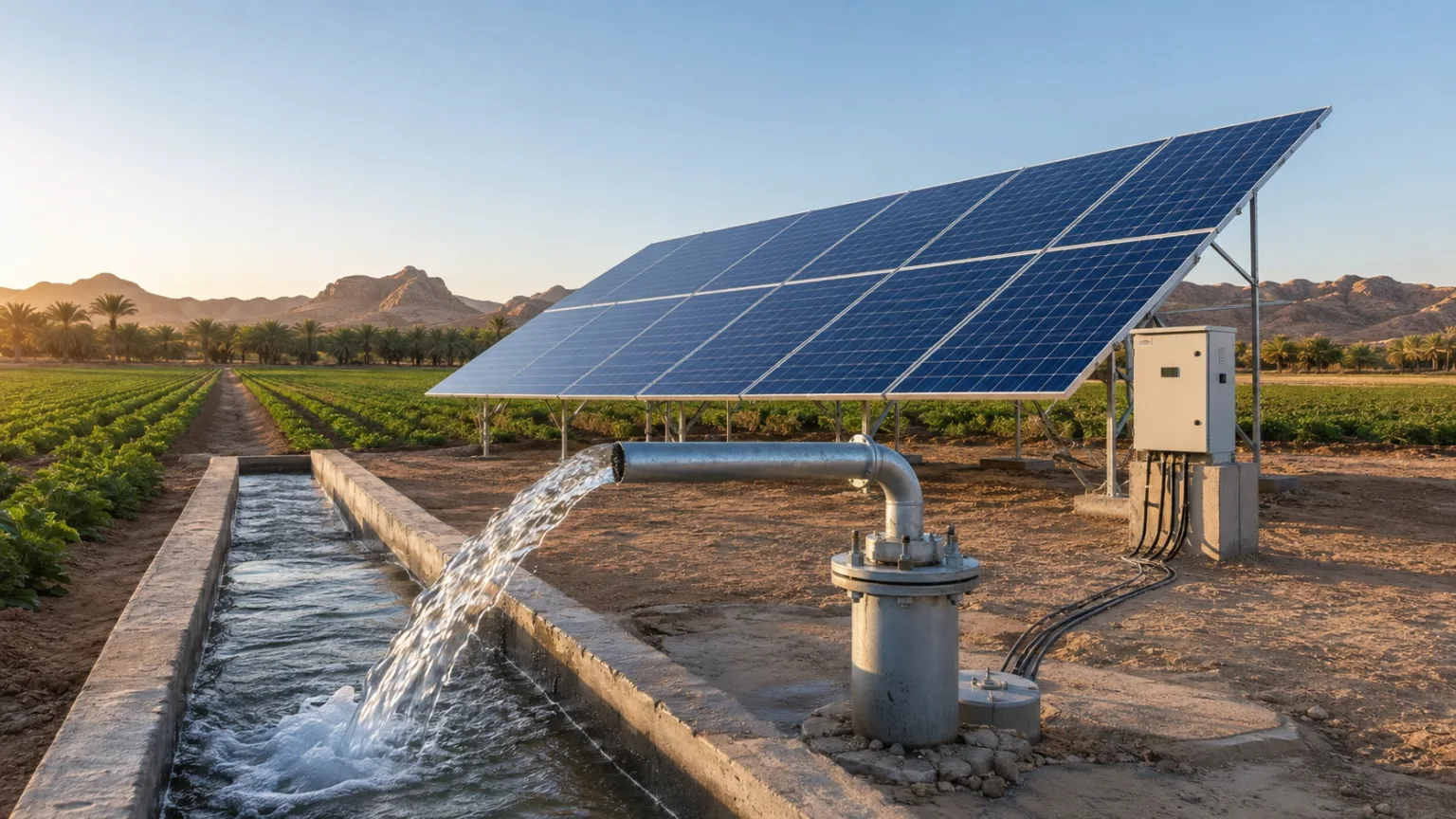
The cost of solar energy for farms is one of the most important things farm owners look into before deciding to switch to renewable energy, especially as more wells, submersible pumps, and irrigation systems in Saudi Arabia are being run on solar power. With specialist companies such as Shahen Al-Awla, it’s now possible to study each farm’s needs accurately and design a suitable solar system that delivers the savings you want without oversizing the capacity or adding unnecessary costs.
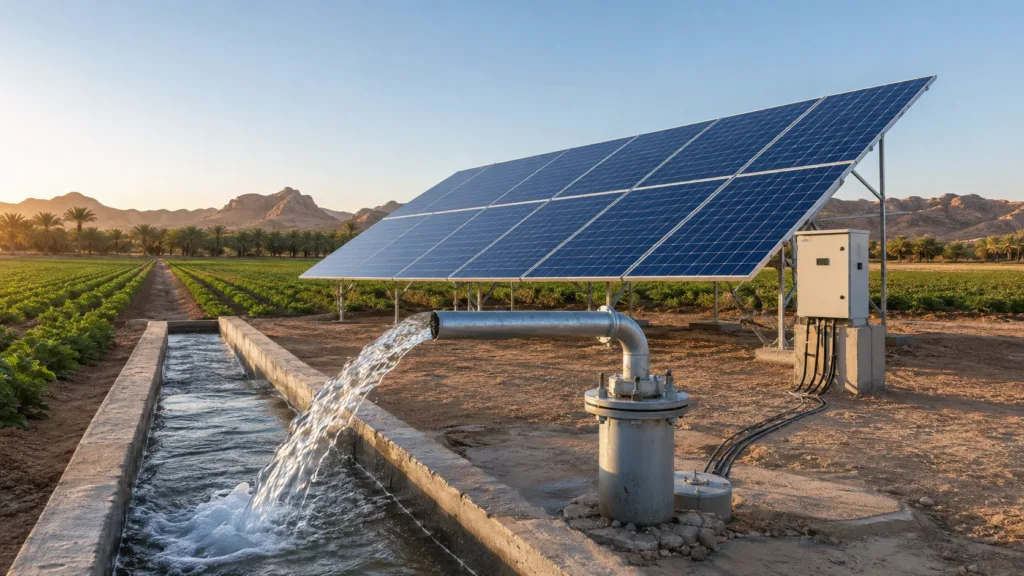
Why Are Farm Owners Interested in Solar Energy?
Farms rely heavily on energy to run water pumps, irrigation systems, lighting, greenhouses, cold rooms, security systems, and some everyday equipment. In many cases, the cost of electricity or diesel is one of the biggest operating expenses affecting a farm’s profitability.
That’s why looking into the cost of solar energy for farms has become an essential step for any farm owner who wants to cut expenses and achieve more stable operation. Solar energy doesn’t just provide a clean source of power; it also helps reduce reliance on fuel, generators, and frequent maintenance.
Is the Cost of Solar Energy for Farms Fixed?
No, there is no single fixed cost that applies to every farm. The cost of solar energy for farms varies with the nature of the project, the level of consumption, the type of system required, pump power, and daily operating hours.
A small farm that needs to run one submersible pump is completely different from a large farm with several wells, greenhouses, and multiple irrigation systems. That’s why you can’t rely on a general figure without an accurate technical study of the site and the loads.
The Main Factors That Determine the Cost of Solar Energy for Farms
Several key factors directly affect the price of an agricultural solar system. Understanding them helps you make a better decision before installation.
1. Pump power
The pump’s power is one of the most important factors in determining the size of the solar system. The more powerful the pump, the more panels you need, and the higher the capacity of the inverter, cables, and protection.
For example, running a small submersible pump doesn’t need the same number of panels as running a deep-well pump or a high-power pump. That’s why power must be calculated accurately before determining the cost of solar energy for farms.
2. Well depth and water flow rate
The depth of the well affects the effort needed to lift the water, and the amount of water needed each day affects operating hours. If the farm needs to pump large volumes of water, it may need a larger system or longer daily operation.
3. Daily operating hours
Farms that need to run irrigation or pumps for several hours a day need more solar capacity than farms that operate for short periods. The system is therefore designed around the actual operating pattern, not just the pump’s power.
4. Type of solar system
The type of system clearly affects the cost of solar energy for farms, and there are several options:
- A direct system without batteries.
- An off-grid system.
- A hybrid system combining solar with batteries, the grid, or a generator.
- A grid-tied system in some cases.
Each type has a different cost and advantages that suit particular uses.
5. Storage batteries
Batteries are one of the components with the biggest effect on price. If the farm needs to operate at night or run loads after sunset, it may need batteries, which raises the upfront cost.
If operation only takes place during the day, a direct system without batteries may be the most economical solution.
6. Solar panel quality
High-quality panels mean better production, a longer life, and stronger warranties. Premium panels may cost more, but they reduce the chance of faults and help improve the long-term return.
When comparing the cost of solar energy for farms, don’t look only at the price per panel, but also at efficiency, warranty, heat tolerance, and performance in desert conditions.
7. Type of inverter or pump drive
The inverter runs the pump or converts power for use by different loads. Choosing the right inverter protects the equipment and improves operating efficiency. In submersible pump systems, inverters designed specifically for solar pumping should be used.
8. Structures and mounting bases
Panels need strong mounting bases that can withstand wind, heat, and dust. The cost of structures varies with the type of installation, whether on the ground, on a building, or at a special angle.
9. Cables and electrical protection
Cables, breakers, combiner boxes, lightning arresters, and fuses are essential to the system’s safety. Neglecting them may lower the cost at first but increases the risk of faults later.
10. Farm location and type of installation
Remote farms may need extra transport and installation costs. The nature of the land, the distance between the panels and the pump, and cable routes all affect the final price.
Types of Farm Solar Systems and How They Affect Cost
Choosing the type of system is an important decision when calculating the cost of solar energy for farms, because each type suits a different use.
Direct solar system without batteries
This type uses the energy produced by the panels directly to run the pump or irrigation system during the day. It’s one of the most economical solutions for farms that can irrigate during sunshine hours.
Its advantages:
- Lower cost.
- Simple maintenance.
- No batteries needed.
- Suitable for running submersible pumps and daytime irrigation.
- Water tanks can be used instead of storing electricity.
This system is often the best choice if the main goal is to pump water during the day.
Off-grid system
This system suits farms far from the electricity grid. It relies on panels, batteries, and an inverter to provide electricity independently.
It costs more because of the batteries, but it offers greater independence, especially in areas the grid doesn’t reach.
Hybrid system
A hybrid system combines solar energy with another source such as batteries, the grid, or a diesel generator. It’s used on farms that need continuous operation or a backup source when sunlight is weak.
Although this type can raise the cost of solar energy for farms, it offers more flexibility and stability in operation.
How Is the Cost of a Farm Solar System Calculated?
To calculate an accurate cost, a specialist company goes through several important technical steps.
Load analysis
All the devices and equipment that need to run are identified, such as:
- Submersible pumps.
- Irrigation pumps.
- Farm lighting.
- Ventilation systems.
- Greenhouses.
- Cameras and monitoring devices.
- Fridges or cooling units, if any.
Then the power of each load and its daily operating hours are calculated.
Studying the well and irrigation system
If the project is to run a well, the following are studied:
- Well depth.
- Pump power.
- The amount of water needed each day.
- The distance between the well and the panel area.
- The irrigation method used.
This data directly affects the cost of solar energy for farms because it determines the size of the system required.
Site survey
The farm is inspected to find the best place to install the panels, determine the sun’s direction, and check for shading from trees, buildings, or tanks.
System design
Once the data is collected, the right system is designed, specifying the number of panels, inverter capacity, battery size if any, and the type of protection and cables.
Preparing the quotation
After the design is complete, a clear quotation is provided setting out the components, warranty, installation time, and after-sales services.
Is the Cheapest System the Best?
Not always. When comparing the cost of solar energy for farms, be careful about choosing the lowest price without considering equipment quality and installation experience. A cheap system may seem suitable at first but can cause problems such as low production, repeated faults, pump damage, or the need for constant maintenance.
It’s best to choose a balanced system that combines a fair price with technical quality, warranty, and after-sales service.
The Return on Installing Solar Energy on Farms
Although investing in a solar system requires an upfront cost, it can deliver a good long-term return, especially on farms that rely on diesel or electricity every day.
Lower fuel consumption
If the farm runs on a diesel generator, solar energy reduces the generator’s running hours, lowering spending on fuel, oil, and maintenance.
Fewer faults
Generators need constant maintenance, while solar systems have few faults when installed correctly.
Stable expenses
Solar energy helps reduce fluctuations in operating costs, because the sun is a free, renewable source.
Better project profitability
The lower the operating costs, the higher the farm’s profitability over the long term.
That’s why the cost of solar energy for farms shouldn’t be seen just as money spent, but as an investment that helps reduce future costs.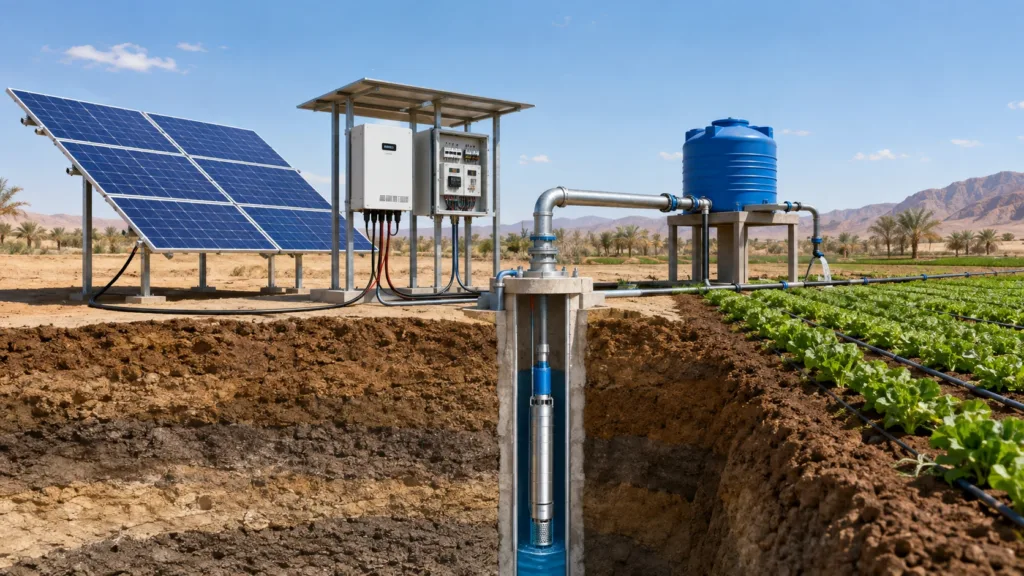
When Is Solar Energy Right for Your Farm?
Solar energy is a good option if your farm:
- Needs to run pumps during the day.
- Relies on expensive diesel.
- Is located in a sunny area.
- Has enough space for the panels.
- Needs to reduce monthly expenses.
- Wants a stable, long-term solution.
- Operates far from the electricity grid.
In these cases, the cost of solar energy for farms can be well justified by the benefits the owner receives.
Tips to Reduce System Cost Without Sacrificing Quality
You can reduce costs smartly without affecting system efficiency by:
Choosing only the system you need
Not every farm needs a large system or batteries. In many cases, a direct system is better and cheaper.
Using water tanks instead of batteries
Instead of storing electricity in batteries, the pump can run during the day and the water can be stored in tanks for use when needed.
Studying the loads accurately
The more accurate the calculations, the more you avoid installing a system larger than needed, which lowers the price.
Choosing reliable components
Good components may cost more, but they reduce faults and save money in the long run.
Relying on a specialist company
A specialist company helps you choose the right system instead of buying incompatible equipment.
Mistakes That Raise the Cost of Solar Energy for Farms
Some common mistakes can make a project more expensive than it should be:
- Buying panels without a technical study.
- Installing batteries when they aren’t needed.
- Choosing an inverter that doesn’t suit the pump’s power.
- Neglecting electrical protection.
- Installing panels in a shaded location.
- Using cables unsuitable for long distances.
- Not calculating actual operating hours.
- Relying on non-specialist labor.
Avoiding these mistakes helps keep the cost of solar energy for farms under control and get the best performance from the system.
The Role of Maintenance in Protecting Your Investment
After the project is installed, regular maintenance is an important factor in keeping the system performing well. Dust and sand can reduce panel output, especially in agricultural and desert areas.
Maintenance includes:
- Cleaning the panels regularly.
- Inspecting the mounting bases.
- Reviewing cables and connections.
- Making sure breakers and protection devices are sound.
- Monitoring inverter performance.
- Comparing actual production with expected production.
Regular maintenance keeps the system efficient and prevents sudden faults, making the cost of solar energy for farms more worthwhile over the long term.
Why Shahen Al-Awla?
Shahen Al-Awla provides complete solar solutions for farms, from site studies and load analysis to system design, component supply, installation, commissioning, and follow-up. The company helps farm owners choose the most suitable system for their project, whether the goal is to run a well, an irrigation system, a greenhouse, or an entire farm.
What sets a specialist company apart is that the quotation isn’t just a list of equipment, but the result of a technical study that helps match the cost of solar energy for farms to the site’s real needs.
The company also focuses on component quality, safe connections, and choosing the solution that strikes the best balance between cost, performance, and sustainability.
How Do You Request an Accurate Quote?
To get a suitable quote, it’s best to prepare some information before contacting the company:
- The farm’s location.
- The power of the pump.
- The depth of the well, if any.
- Daily operating hours.
- The amount of water required.
- Any additional loads such as lighting or cooling.
- Whether there is a grid connection.
- Whether you need night-time operation.
- Whether there is suitable space for the panels.
The clearer the information, the more accurate the calculation of the cost of solar energy for farms, and the better the system can be designed without too much or too little capacity.
Does Solar Energy Reduce Irrigation Costs?
Yes, in many cases solar energy can noticeably reduce irrigation costs, especially when pumps run during the day. Solar irrigation reduces reliance on fuel or electricity and gives farmers more flexibility in running their irrigation systems.
But the amount saved depends on system size, operating hours, current energy costs, and the quality of design and installation.
The Future of Solar Energy on Saudi Farms
Saudi Arabia has strong solar resources that make investing in solar energy a good fit for the agricultural sector. With advances in panel, inverter, and battery technologies, solar systems have become more efficient, longer-lasting, and easier to maintain.
Reliance on solar energy on farms is expected to grow in the coming years, especially as agricultural projects seek to cut costs and use energy and water more efficiently.
That’s why studying the cost of solar energy for farms today can be an important step toward building a more sustainable and profitable agricultural project in the future.
The cost of solar energy for farms is an important factor in deciding to switch to renewable energy, but it isn’t a fixed number. It’s the result of a study covering pump power, well depth, operating hours, system type, equipment quality, and the nature of the site.
Choosing the right system helps reduce operating expenses, cut reliance on diesel, and make farm operations more stable. With a specialist company such as Shahen Al-Awla, you can install a solar system designed around your farm’s actual needs, striking the best balance between price, efficiency, and return.
If you want to reduce irrigation and operating expenses, studying the cost of solar energy for farms with a specialist technical team is the first step toward a smart, sustainable investment that will serve your farm for many years.