A hybrid solar energy project is one of the best modern solutions for providing stable, reliable electricity to homes, farms, and commercial facilities, especially when it’s delivered by a specialist such as Shahen Al-Awla. A hybrid system combines solar panels, batteries, and the grid or a backup generator, giving users great operating flexibility and reducing reliance on a single energy source. With a growing need to lower electricity costs and use energy more efficiently, this type of project has become a practical choice for anyone looking for a long-term investment in renewable energy.
What Is a Hybrid Solar Energy Project?
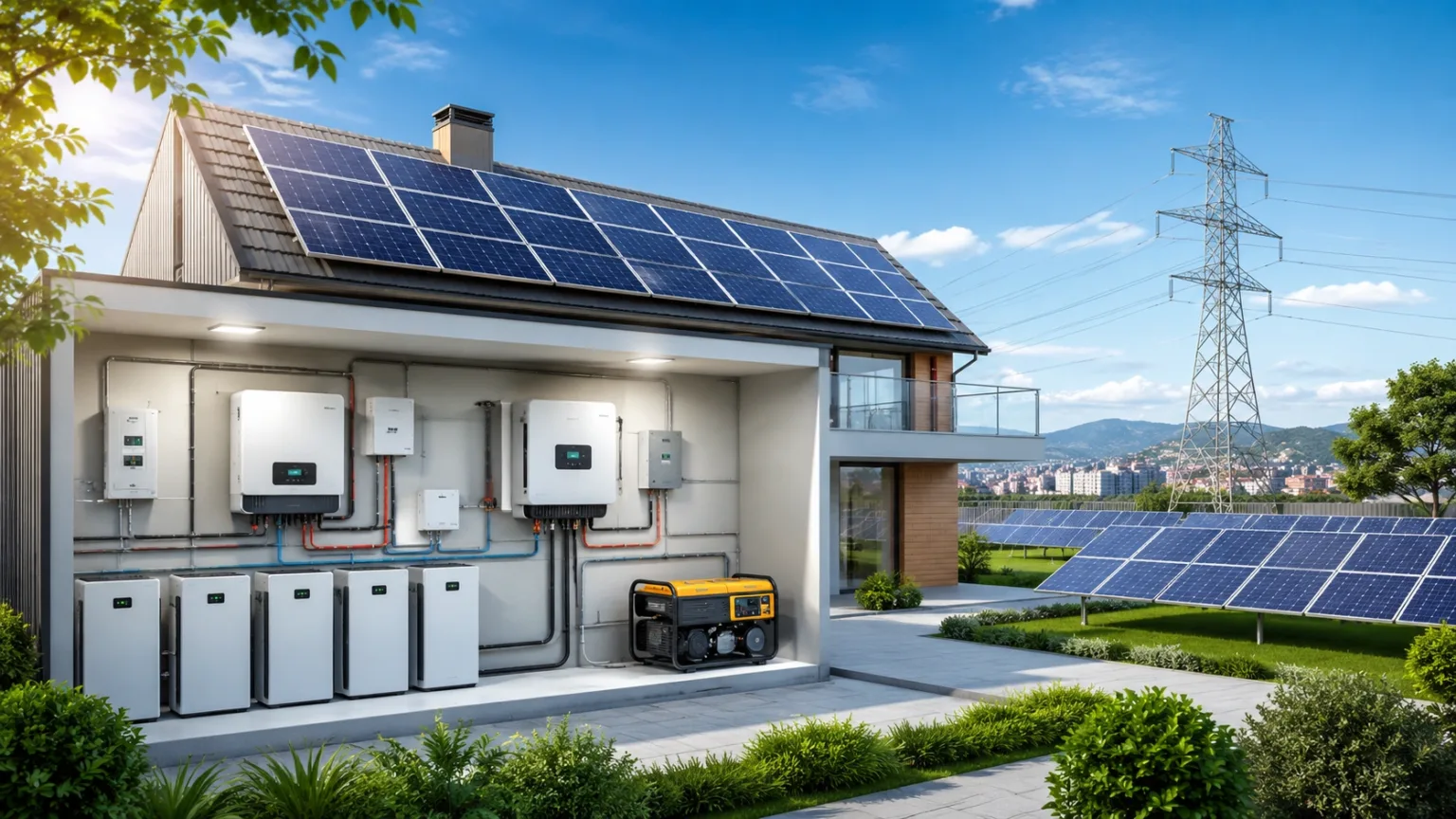
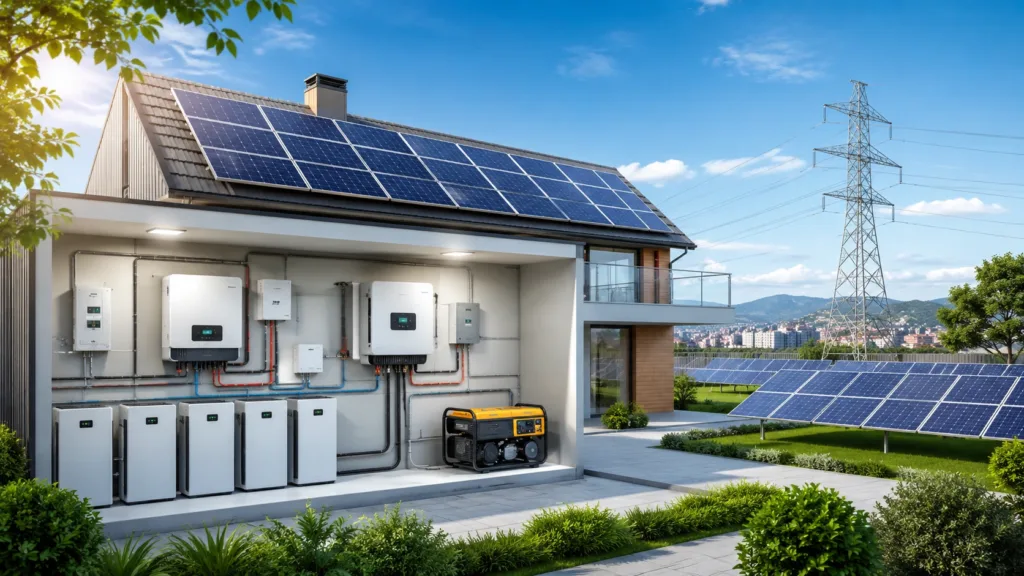
A hybrid solar energy project combines more than one energy source in a single smart system. During the day, the solar panels produce electricity from sunlight, which is used to run loads directly, with any surplus stored in batteries where available. When solar production drops or consumption rises, the system can draw on the batteries, the grid, or a backup generator, depending on the project design.
This combination makes the system more stable than one that is completely off-grid, and more flexible than one that is only grid-tied, because it can use the sun, batteries, and an additional power source at the same time.
Why Is Demand for Hybrid Systems Growing?
Interest in hybrid solar energy projects has grown because of the need for more efficient and stable energy solutions. Relying entirely on the grid can be expensive or unsuitable in some areas, while relying only on an off-grid system needs large batteries and a higher cost.
A hybrid system strikes an important balance between:
- Lowering the electricity bill.
- Providing backup power during outages.
- Reducing fuel consumption where there is a generator.
- Making the most of solar panel production.
- Improving operating stability at critical sites.
That’s why a hybrid solar energy project suits many different users, from homeowners to farms and industrial and commercial projects.
Components of a Hybrid Solar Energy Project
For a hybrid solar energy project to succeed, the components must suit the nature of the loads, operating hours, and the available budget. The system usually consists of:
1. Solar panels
The panels are the main source of electricity during the day. Their number and wattage are determined by daily consumption, installation space, sun hours, and the type of loads.
2. Hybrid inverter
The inverter is the brain of the system, managing how power is distributed between the panels, batteries, and the grid or generator. It’s best to choose a high-efficiency hybrid inverter that supports protection, monitoring, and smart control.
3. Batteries
Batteries store energy for use when there’s no sun or during power cuts. Battery capacity varies with the required operating time and the type of loads.
4. Protection systems
These include breakers, electrical protection, lightning arresters, earthing systems, and suitable solar cables. These elements are essential for the system’s safety and continued efficient operation.
5. Mounting structure
The panels are mounted on metal frames designed to withstand the weather, set at the right tilt angle to achieve the highest possible energy production.
How Does a Hybrid System Work?
A hybrid solar energy project works intelligently according to the priority of energy sources. In most designs, priority goes to solar power because it’s the cheapest source to run. If panel production is enough, the loads run directly from it, and any surplus is stored in the batteries.
When solar production drops, the system draws on the batteries. If the batteries fall to a certain level of charge, the system can switch automatically to the grid or the generator, depending on its programming and design.
This smart sequence reduces waste, protects the batteries, and keeps the power on without constant manual intervention.
Advantages of a Hybrid Solar Energy Project
A hybrid solar energy project offers a range of practical advantages that make it an ideal solution for many uses, including:
- Less reliance on the grid.
- Backup power during outages.
- Lower diesel consumption at sites that rely on generators.
- More efficient use of solar energy.
- The ability to store surplus energy.
- Flexibility to expand in the future.
- Suitable for homes, farms, and facilities.
- Helps reduce emissions and improve sustainability.
These advantages make a hybrid system a strong choice for anyone who wants a practical system that combines savings and reliability.
Uses of Hybrid Solar Energy Projects
A hybrid solar energy project can be carried out in several sectors, depending on the site and its energy needs.
Homes
Hybrid systems are used to run essential household appliances such as lighting, fridges, air conditioners, pumps, internet equipment, and security systems. They also help lower the electricity bill and provide a backup source during outages.
Farms
A hybrid solar energy project is very well suited to farms, where it can run water pumps, irrigation systems, lighting, agricultural cold rooms, and workers’ quarters. It also reduces reliance on diesel and lowers daily operating costs.
Commercial facilities
Shops, offices, and warehouses benefit from hybrid systems by running critical loads, reducing interruptions, and improving business continuity, especially where continuous power is needed.
Remote sites
At sites without a stable grid connection, a hybrid system offers a practical solution by combining solar power, batteries, and a backup generator.
How a Hybrid System Differs From Other Systems
To understand the value of a hybrid solar energy project, it’s important to know how it differs from other systems.
Grid-tied system
It relies on panels and the grid, and usually doesn’t work during a power cut unless it’s designed with special technology. It’s relatively low-cost but doesn’t provide full independence.
Off-grid system
It relies on panels and batteries alone and needs careful design and large storage capacity. It suits remote areas but can cost more because of the size of the battery bank.
Hybrid system
It combines the advantages of both, using solar power and batteries with the grid or a generator as a supporting source. That makes it a balanced choice between savings and stability.
Cost of a Hybrid Solar Energy Project
The cost of a hybrid solar energy project depends on several factors, and no fixed price can be given without studying the site and the loads. The most important factors include:
- The required system capacity in kilowatts.
- The number of solar panels.
- The type of hybrid inverter.
- Battery capacity and type.
- The quality of cables and protection.
- Installation difficulty and site area.
- The need for special mounting structures.
- Whether there is a connection to the grid or a generator.
- Maintenance and monitoring services after commissioning.
The best way to find out the exact cost is a technical study covering load calculations, operating hours, and the available installation space.
How Is the System Sized?
Designing a hybrid solar energy project starts with calculating the electrical loads. This means knowing which appliances need to run, the power of each, and their daily operating hours. Then the daily energy requirement is calculated, followed by the panel capacity, battery capacity, and the right inverter.
For example, a home using lighting, a fridge, and a few simple appliances has very different needs from a farm that has to run water pumps for long periods. That’s why choosing an off-the-shelf system without a study isn’t recommended, because a poor design can lead to weak performance or higher costs with no benefit.
Steps to Carry Out a Hybrid Solar Energy Project
A hybrid solar energy project goes through several key stages to make sure it succeeds:
1. Needs assessment
The loads, operating hours, current power source, and the problems the customer wants to solve are identified.
2. Site survey
The installation area, sun direction, shaded areas, location of the electrical room, and cable routes are inspected.
3. Engineering design
Panel capacity, inverter type, battery capacity, protection systems, and connection method are selected.
4. Supply and installation
The components are supplied and installed according to safety and quality standards, with connections tested and efficient operation confirmed.
5. Commissioning and training
Once complete, the system is switched on and the customer is shown how to monitor and use it, including performance indicators and alerts.
6. Maintenance and follow-up
Regular maintenance keeps the system running efficiently and includes cleaning the panels, checking the batteries, reviewing connections, and monitoring inverter performance.
Why Choose Shahen Al-Awla?
Carrying out a hybrid solar energy project takes strong technical expertise, because any mistake in calculating loads, choosing batteries, or programming the inverter can affect the performance of the whole system. That’s why it’s important to work with a specialist company such as Shahen Al-Awla Renewable Energy.
The company helps you with:
- An accurate study of your needs.
- Choosing the right system for your site.
- Supplying reliable components.
- Professional installation.
- Solutions suited to the Kingdom’s environment.
- Technical support and maintenance after commissioning.
- Designing systems that can be expanded in the future.
Having a specialist partner reduces risk and makes sure the system delivers real efficiency, rather than just being a set of separately installed components.
Mistakes to Avoid When Building the System
When planning a hybrid solar energy project, avoid some common mistakes, such as:
- Choosing batteries with less capacity than needed.
- Buying an inverter that isn’t suited to the loads.
- Ignoring start-up loads such as pumps and air conditioners.
- Installing panels in shaded locations.
- Using unsuitable cables.
- Neglecting protection and earthing systems.
- Relying on price alone without assessing quality.
- Having no regular maintenance plan.
Avoiding these mistakes helps extend the system’s life and get the best return on your investment.
Is a Hybrid Solar Energy Project Suitable for Farms?
Yes. A hybrid solar energy project is an excellent choice for farms, especially where there are water pumps or a need for continuous operation at different times. The system can run loads from solar power during the day and draw support from batteries or a generator when needed.
It also helps reduce the fuel and maintenance costs associated with generators and gives the farm owner more control over daily operations.
Is a Hybrid System Suitable for Homes?
A hybrid solar energy project suits homes that need to lower their electricity bill and have a backup source for essential appliances. The system can be designed to run part of the home or all of the loads, depending on budget and need.
But it’s important to set priorities, such as running fridges, lighting, internet, and some air conditioners, rather than designing a random system that may raise costs unnecessarily.
The Return on a Hybrid Solar Energy Project
The return depends on several factors, including current consumption, electricity prices, fuel costs if there is a generator, system size, and component quality. The higher the daily consumption, the greater the chance of clear savings.
The return isn’t just financial; it also includes:
- Stable electricity.
- Fewer faults caused by outages.
- Less reliance on fuel.
- Higher value for the site or facility.
- Support for sustainability and environmental responsibility.
That’s why a hybrid solar energy project is a long-term investment when it’s designed and carried out correctly.
Tips Before Starting the Project
Before carrying out a hybrid solar energy project, follow these tips:
- Calculate your actual consumption before requesting a quote.
- Identify the important loads that must run during outages.
- Ask about the type of panels, inverter, and batteries.
- Make sure there are clear warranties.
- Don’t choose the lowest price without reviewing the specifications.
- Ask for a clear engineering design.
- Make sure maintenance and technical support are available.
- Choose a company with experience in hybrid systems.
These steps give you a clearer picture and help you choose the right solution instead of relying on general estimates.
The Future of Hybrid Solar Energy
With advances in batteries and smart inverters, the hybrid solar energy project has become more efficient and flexible than before. Reliance on renewable energy is also growing globally and locally, especially as the Kingdom moves toward more sustainable and efficient energy solutions.
Hybrid systems are expected to become a mainstream choice for farms, homes, and facilities that need to cut costs and improve reliability, especially at sites with high consumption, frequent outages, or reliance on generators.
A hybrid solar energy project isn’t just a matter of installing panels and batteries; it’s an integrated system that needs a careful study, engineering design, and professional installation. By combining solar power, batteries, and the grid or a generator, it delivers electricity that is more stable, economical, and flexible.
Whether you own a home, a farm, a commercial facility, or a remote site, a hybrid solar energy project may be the ideal solution if it’s chosen based on real needs rather than ready-made packages. With Shahen Al-Awla Renewable Energy, you can get a suitable study, reliable components, professional installation, and technical support to help you get the most from your investment in solar energy.
Frequently Asked Questions
How do I know the right system size?
The size is determined after calculating daily loads, operating hours, installation space, and the current power source, so it's best to carry out a technical study before buying.
Is a hybrid system expensive?
It can cost more than a grid-tied system because of the batteries and hybrid inverter, but it offers more flexibility and better stability in the long run.
Does a hybrid system need maintenance?
Yes, it needs simple regular maintenance, including cleaning the panels, checking the batteries, reviewing cables, and monitoring inverter performance.