The different types of solar batteries have become one of the most critical components behind the success of any solar power system, since they are responsible for storing electricity to be used when sunlight is unavailable or during power outages. Shahen, a leader in renewable energy, offers integrated solutions that help customers pick the right battery for their needs, whether for homes, businesses, or industrial projects, all while guaranteeing the highest standards of efficiency and quality.
What Are Solar Batteries?
Solar batteries are a core part of any solar power system, storing the electrical energy generated by solar panels so it can be used at times when sunlight isn’t available.
Modern batteries stand out for the following:
- Highly efficient energy storage.
- A reliable backup power source.
- Improved stability of the solar system.
- Reduced reliance on the power grid.
- Greater use of the electricity your solar panels produce.
Why Are Solar Batteries So Important?
The value of solar batteries lies in the independence they give users from the power grid, especially in areas that suffer from frequent outages or that rely entirely on solar energy.
Among their most notable benefits:
- Storing electricity during the day.
- Powering appliances at night.
- Lowering your electricity bill.
- Protecting equipment during outages.
- Boosting the efficiency of the entire system.
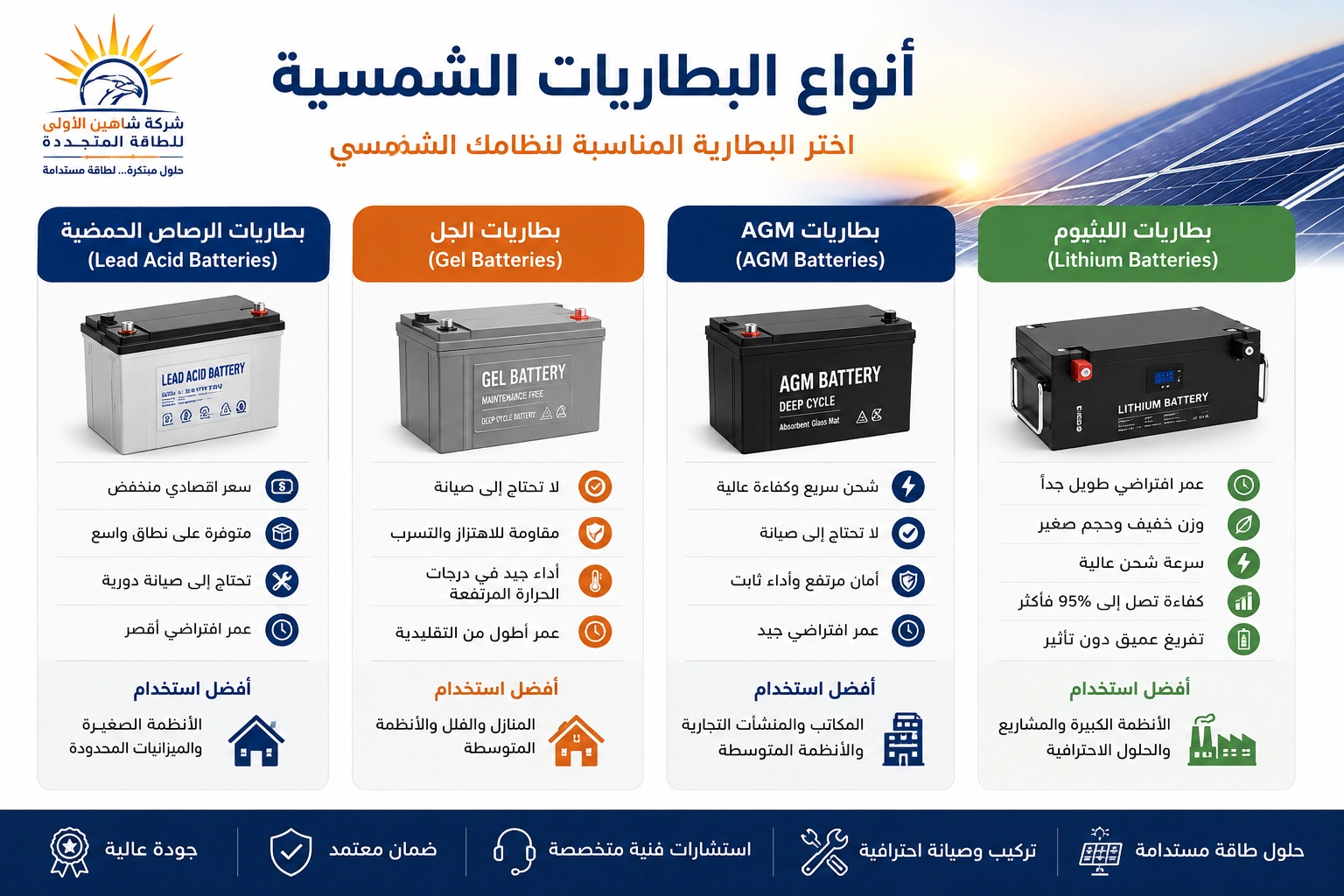
Types of Solar Batteries
Several types are available, differing in technology, lifespan, efficiency, and price. The right choice depends on how you intend to use the system and on your budget.
1. Lead-Acid Batteries
These are among the oldest and most widely used types of solar batteries.
Advantages
- Affordable price.
- Easy to maintain.
- Readily available on the market.
- Well suited to small systems.
Disadvantages
- Shorter lifespan.
- Require regular maintenance.
- Lower efficiency compared with newer types.
2. Gel Batteries
These use a gel substance instead of a liquid electrolyte inside the battery.
They rank among the best solar batteries for residential use.
Advantages
- Maintenance-free.
- Resistant to vibration.
- Longer lifespan than conventional batteries.
- Strong performance in high temperatures.
3. AGM Batteries
AGM batteries use glass fiber mats that absorb the acid inside the battery.
They are one of the most popular solar battery types for homes and offices.
Advantages
- Fast charging.
- Maintenance-free.
- Consistent performance.
- High level of safety.
4. Lithium Batteries
Lithium-ion batteries are the most advanced option among all the types of solar batteries available today.
Advantages
- Long lifespan.
- Lightweight.
- Very fast charging.
- Efficiency exceeding 95%.
- Deep discharge without affecting lifespan.
Disadvantages
- Higher cost compared with other types.
A Comparison of Solar Battery Types
| Type | Lifespan | Maintenance | Efficiency | Price |
| Lead-acid | 3–5 years | Required | Moderate | Low |
| Gel | 5–8 years | None needed | Good | Moderate |
| AGM | 5–8 years | None needed | Very good | Moderate |
| Lithium | 10–15 years | None needed | Excellent | High |
How Do You Choose the Right Battery?
Choosing among the types of solar batteries comes down to several key factors:
Project Size
The more electricity you consume, the larger the battery capacity you’ll need.
Hours of Operation
If you need power throughout the night, choose batteries with high storage capacity.
Budget
You’ll want to balance the purchase cost against the expected lifespan.
Number of Charge Cycles
The more charge cycles a battery supports, the longer it will last.
Applications of Solar Batteries
Solar batteries are used across a wide range of applications, including:
- Homes.
- Villas.
- Farms.
- Factories.
- Hospitals.
- Hotels.
- Schools.
- Telecom stations.
- Lighting systems.
- Water pumps.
Advantages of Lithium Batteries Over Other Types
Many users prefer lithium-based solar batteries because of:
- Fast charging.
- Light weight.
- No maintenance required.
- Long lifespan.
- High efficiency.
- A smaller footprint.
Factors That Affect Battery Life
Even the best solar batteries can have their lifespan shortened by several factors, including:
- Temperature.
- Depth of discharge (DoD).
- Charger quality.
- The number of charge cycles.
- Installation quality.
- Regular maintenance.
Tips for Extending the Life of Solar Batteries
To get the most years out of your solar batteries, we recommend the following:
- Avoid fully discharging them.
- Use a suitable charge controller.
- Keep the connections clean.
- Check the voltage regularly.
- Install the batteries in a well-ventilated space.
- Rely on qualified technicians.
Common Mistakes When Choosing Batteries
Some people make mistakes that hurt the performance of their solar batteries, such as:
- Buying a battery with less capacity than they actually need.
- Ignoring the number of charge cycles.
- Focusing on price alone.
- Using counterfeit batteries.
- Installing the batteries incorrectly.
Why Choose Shahen for Renewable Energy?
Shahen is a leading provider of complete solar energy solutions, offering:
- Genuine solar batteries.
- Professional system design.
- Installation by specialized engineers.
- A certified warranty.
- Scheduled maintenance services.
- Ongoing technical support.
- The best prices.
- Solutions to fit projects of every scale.
Choosing the right type of solar battery is an essential step toward ensuring the success of any solar power system and achieving the highest possible efficiency. With so many options available, from lead-acid batteries to modern lithium-ion batteries, it becomes crucial to define your actual needs before you buy. Through Shahen, you can get expert technical advice and select the battery that fits you best, backed by professional installation and maintenance services that guarantee peak performance and a long-term investment.
Frequently Asked Questions
What is the best type of solar battery?
Lithium-ion batteries are considered the best in terms of efficiency, lifespan, and charging speed, while lead-acid batteries are a good fit for tighter budgets.